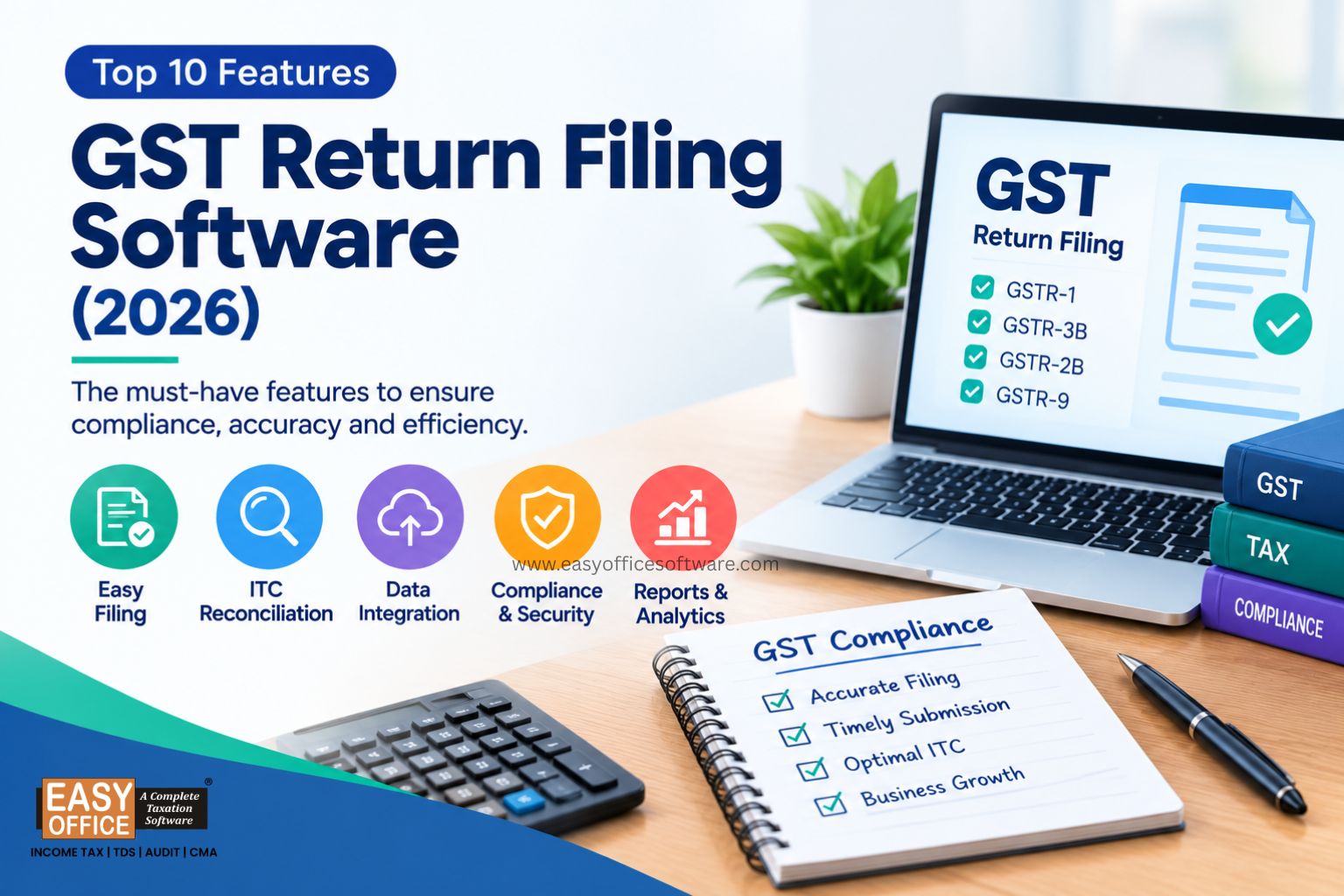
GST compliance in 2026 means GST filing with accuracy, quick reconciliation and instant validation. If you’re still running the show on spreadsheets or by hand, you’re risking delays, mismatched records, and even penalties.
With stricter ITC rules and increased data checks, choosing the best GST Return Filing Software that actually fits your business has turned into a serious decision.
This guide explains the top 10 features that are important for GST return filing, so you can keep your business compliant and running smoothly.
Why is Accurate GST return filing important?
GST brought all sorts of taxes like VAT, service tax, and under one roof. It ensures seamless tax payments and removes cascading tax effects. It helps businesses report their outward supplies, tax liability and eligible Input Tax Credit.
Accurate and timely filing helps businesses:
(i) Claim accurate Input Tax Credit (ITC)
(ii) Avoid penalties and interest
(iii) Reconcile purchase records with GSTR-2B.
(iv) Maintain compliance rating
(v) Build trust with vendors and customers
Every mistake drains working capital. That’s why using high-quality GST Return Filing Software like EasyGST becomes a prerequisite.
Core GST compliance requirements in 2026
Businesses must manage multiple filings and reconciliations. Here’s what you have to keep up with:
| Compliance Area | Requirement |
|---|---|
| GSTR-1 | Report details of outward supplies |
| GSTR-3B | Declare tax liability and eligible ITC. |
| GSTR-2B | Verify ITC eligibility (to Reconcile Data) |
| E-invoicing | Mandatory above threshold |
| E-way bills | Required for goods movement |
| GSTR-4 | Annual return composition scheme Assessee |
| GSTR-9 / GSTR-9C | Annual return & Reconciliation statement |
Trying to handle all of this manually? It’s a minefield. The right GST return filing software simplifies the process, saves you time and helps you keep pace with every new rule that comes along.
Top 10 features every GST return filing software must have
1. One-click GST return filing
Good software lets you prepare and file
• GSTR-1
• GSTR-3B
• GSTR-4
• GSTR-9 and 9C
It needs to handle JSON uploads and offer direct filing through API or portal integration.
2. Intelligent ITC reconciliation
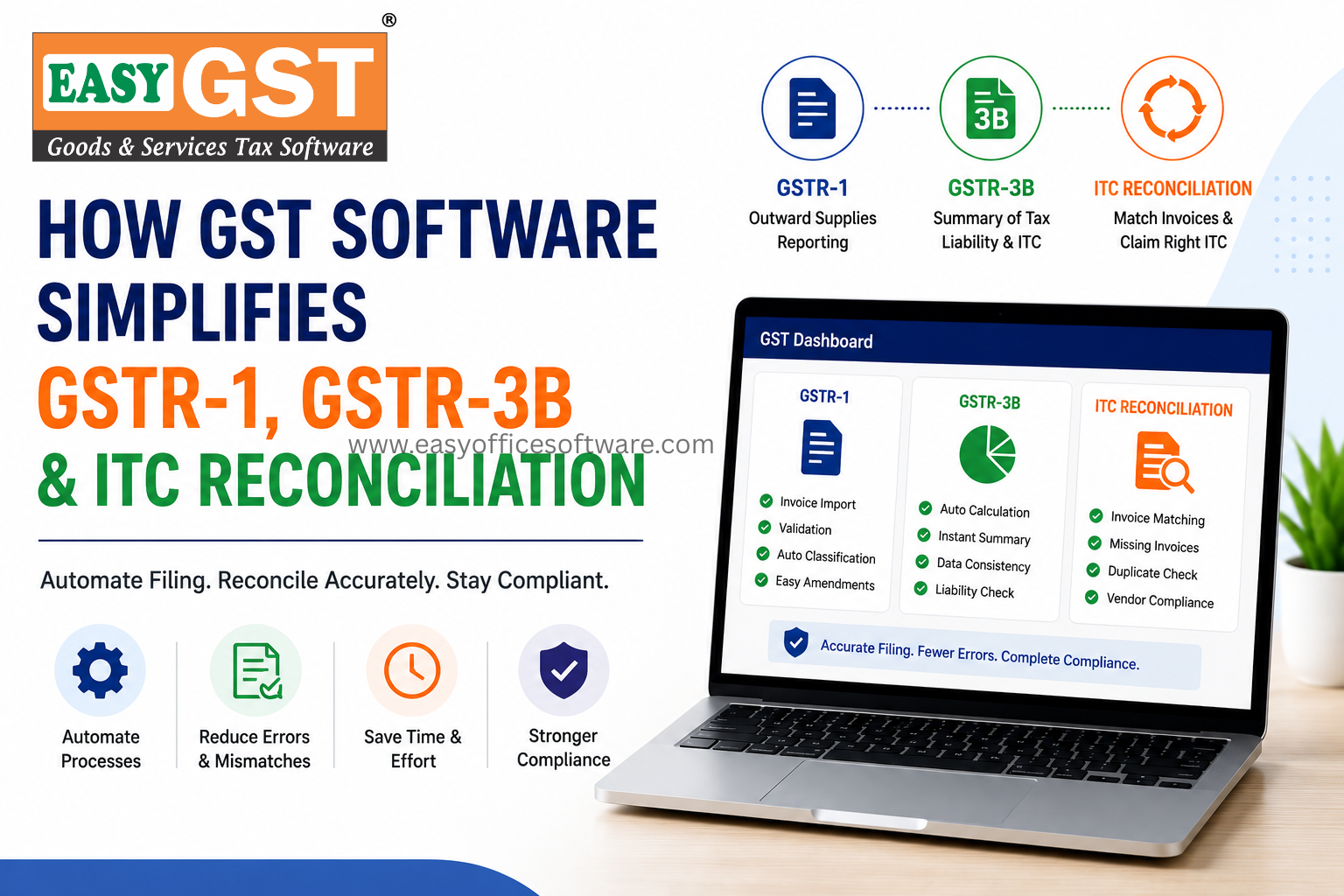
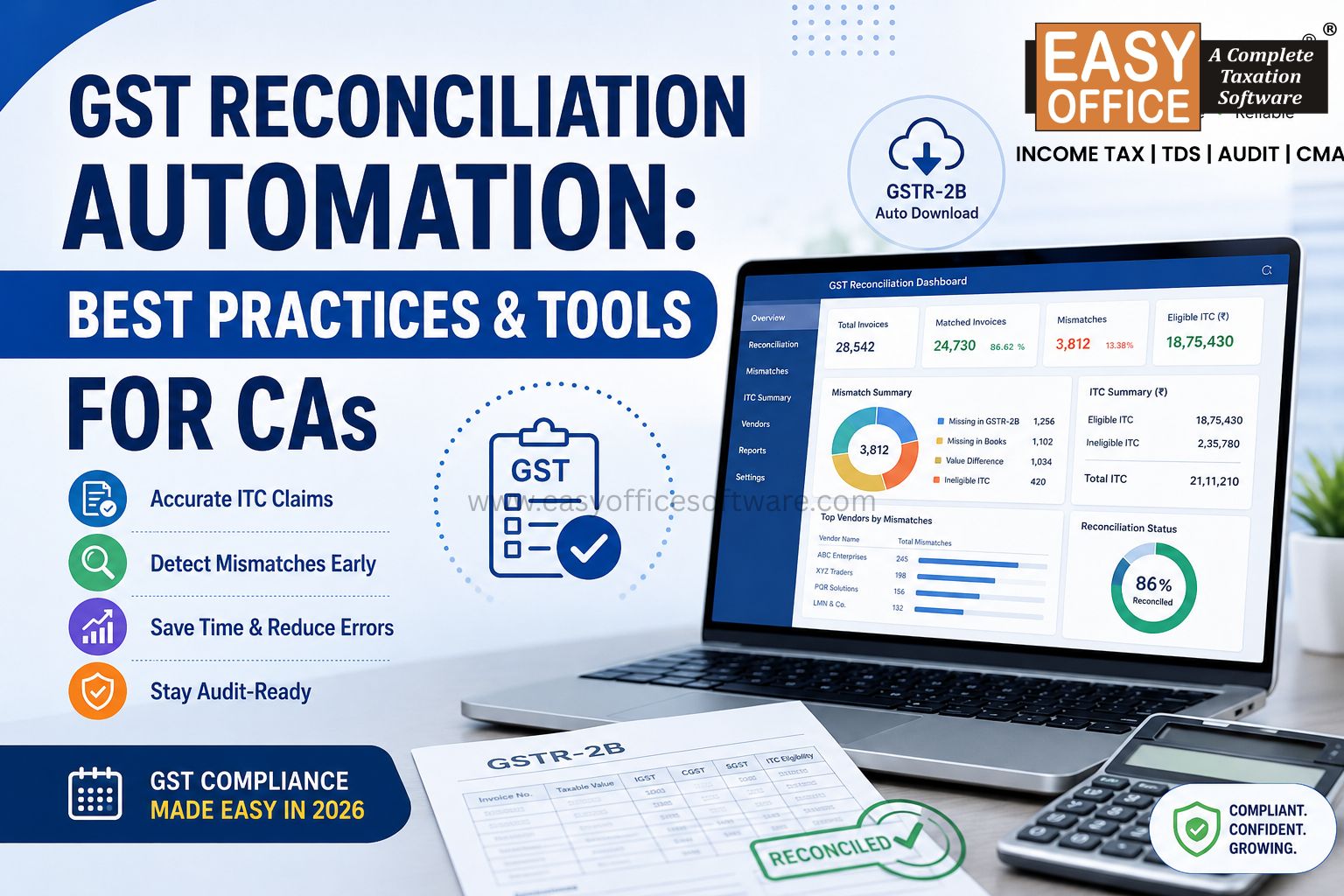
Getting ITC right enables you to maintain good standing with the tax authorities. The software should quickly match GSTR-2A and GSTR-2B with your accounting records, identify eligible or ineligible ITC and flag mismatches instantly ln basis of GSTIN, invoice number, date, taxable value and tax amount.
The system enables you to maintain control of your tax obligations, while taxpayers must review eligibility and make required reversals based on applicable rules.
3. Automated data import and integration
Nobody wants to type the same numbers twice. Great software support:
• Excel and JSON import
• Tally and ERP integration
• Accounting Software data integration
• Bulk data upload
This means less manual work and fewer manual errors.
4. Pre-validation and error detection
Spot mistakes before they cost you. The software needs to check GSTINs, invoice formats, tax calculations and watch out for duplicate entries. Pre-validation help identify errors before submission and save time.
5. Comprehensive dashboard for tracking
You need a clear view, not a guessing game. A solid dashboard shows you everything:
• ITC summary
• Return status
• Tax liability
• Filing deadlines
This dashboard will help businesses track compliance.
6. Multi-level reconciliation capability
The advanced reconciliation system has become an essential requirement in 2026. A software needs to handle below reconciliation:
• GSTR-2B vs books
• GSTR-2A vs books
• GSTR-2A vs GSTR-2B
• GSTR-1 vs books
• GSTR-3B vs GSTR-2B
• GSTR-1 vs GSTR-3B vs GSTR-2B
• Table 8A reconciliation
The feature enables you to maintain complete compliance while ensuring your tax submissions stay accurate.
7. E-invoice and e-way bill integration
As e-invoicing rules get stricter, good integration saves a ton of headaches. Your software should support e-invoice and e-way bill workflows where applicable, such as :
• Automatically generate IRN
• Build QR codes
• Connect e-way bills with invoices
This streamlines the process and reduces the duplication of work.
8. Multi-user access and role control
If you run a CA firm or any business with a finance team, you need teamwork features. That means:
• Role-based permissions
• Tracking user activity
• Secure login management
It keeps accountability clear and workflow control.
9. Advanced reporting and analytics
The process of reporting delivers essential information that helps organizations make decisions while ensuring they meet compliance requirements and identify discrepancies and review records before filing. Your business should focus on achieving its goals through the following report types:
• Invoice-wise reports
• Party-wise reconciliation
• ITC comparison reports
• Return summaries
• Tax-liability reports
The reports show potential risks that being a professional you need to address before they create actual problems.
10. Data security and backup
GST data requires protection because it contains sensitive information. The right software will protect this sensitive data through:
• Strong data security
• Reliable backup and restore
• Options for offline control
The process of safeguarding your data establishes trust while helping you meet regulatory requirements.
How the right software improves compliance
The right GST Return Filing Software changes everything, it can make routine compliance more manageable by organising invoice data, helping identify reconciliation differences and supporting return preparation. Dashboards and reports can also help businesses track pending tasks and review tax figures before filing.
It cuts down on manual mistakes and saves hours, especially during those peak filing periods. It boosts the accuracy of your ITC and helps you steer clear of penalties and notices. And when an audit comes up, you’re ready. With the right tools, compliance stops being a fire drill and starts feeling like a well-oiled routine.
FAQs
What is GST Return Filing Software?
It’s a tool that helps you get your GST returns ready, check them for mistakes and file them without a hitch.
Why does reconciliation matter?
Reconciliation is the only way to ensure your ITC claims are right and software provides you the intelligent reconciliation module for comparison of accounts v/s 2B/2A Records.
Can a software file return directly?
Absolutely. The smarter tools connect straight to the GST portal and can handle direct filing for you.
Is e-invoicing mandatory from 2026?
Yes, it is mandatory for businesses above the prescribed turnover limit and may expand further.
How often do I need to file GST returns?
You file either every month or every quarter, based on your turnover and scheme.
How should a CA firm choose the right GST return filing software?
A CA firm should evaluate GST return filing software based on return preparation and filing support, GSTR-2B reconciliation, data import options, error validation, multi-client management, reporting, data security and customer support. The software should fit the firm’s client volume, workflow and budget and the solution is EasyGST.
Final Thoughts
The correct software solution performs half of the essential tasks for any project. The automation of GST compliance operations requires businesses to purchase software that provides fast results, accurate information and continuous system updates. Businesses that adopt this technology decrease their exposure to danger and gain back lost time.
EasyGST - Best GST Return Filing & Reconciliation Software
With EasyGST, users can complete their filing and reconciliation work without experiencing any complicated procedures. Chartered Accountants, tax professionals and businesses across India rely on it for fast, accurate GST returns. EasyGST provides businesses with complete compliance capabilities, which include ITC matching and real-time dashboard monitoring.
Do you want to make GST simpler? Download a free demo of EasyGST today and see firsthand how it can transform your GST workflow.
GST Software, GST Return Filing, Tax Software India
Related Blogs


All in one Software
- Income Tax Software
- TDS & TCS Software
- Audit e-filing Software
- CMA Data Software







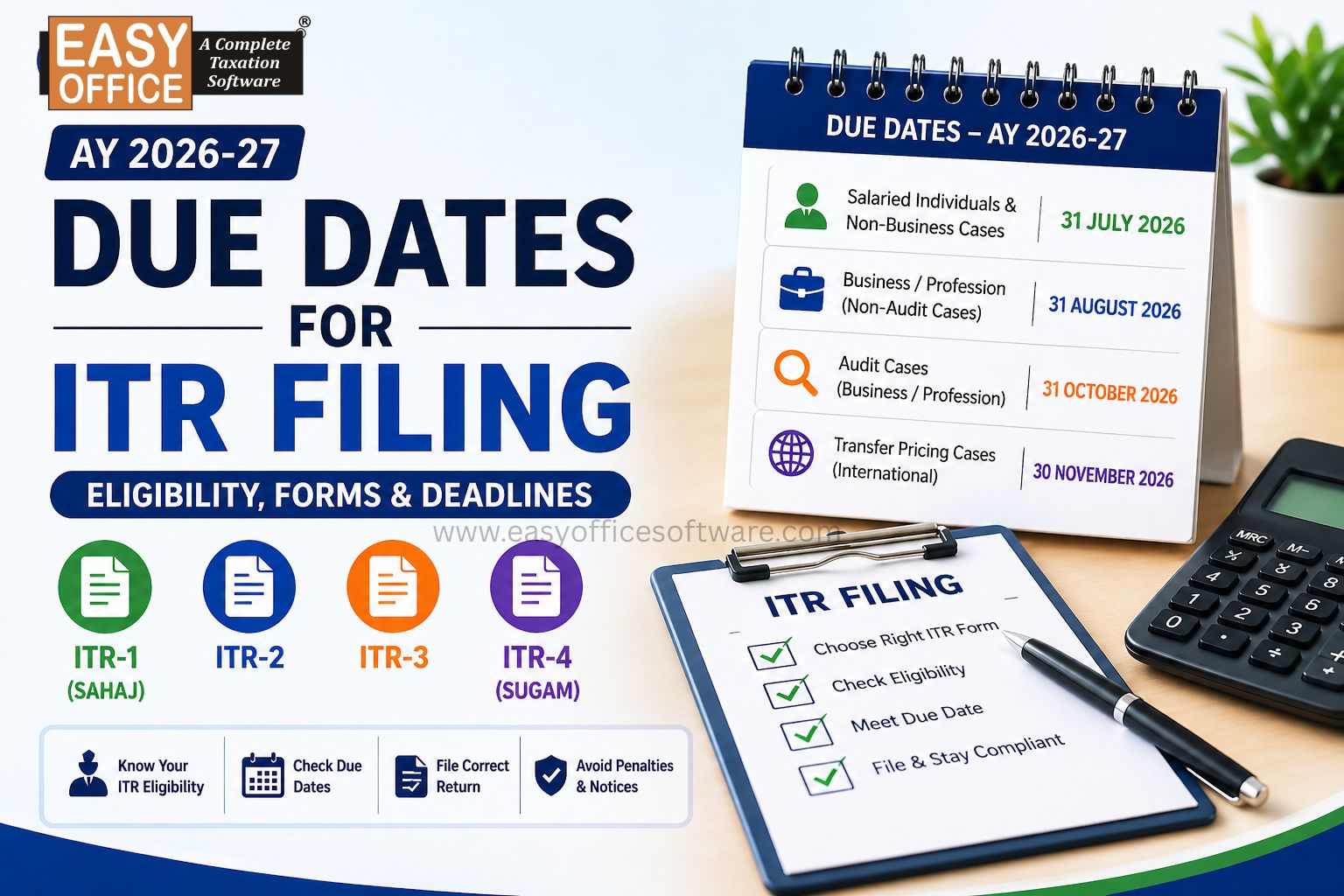
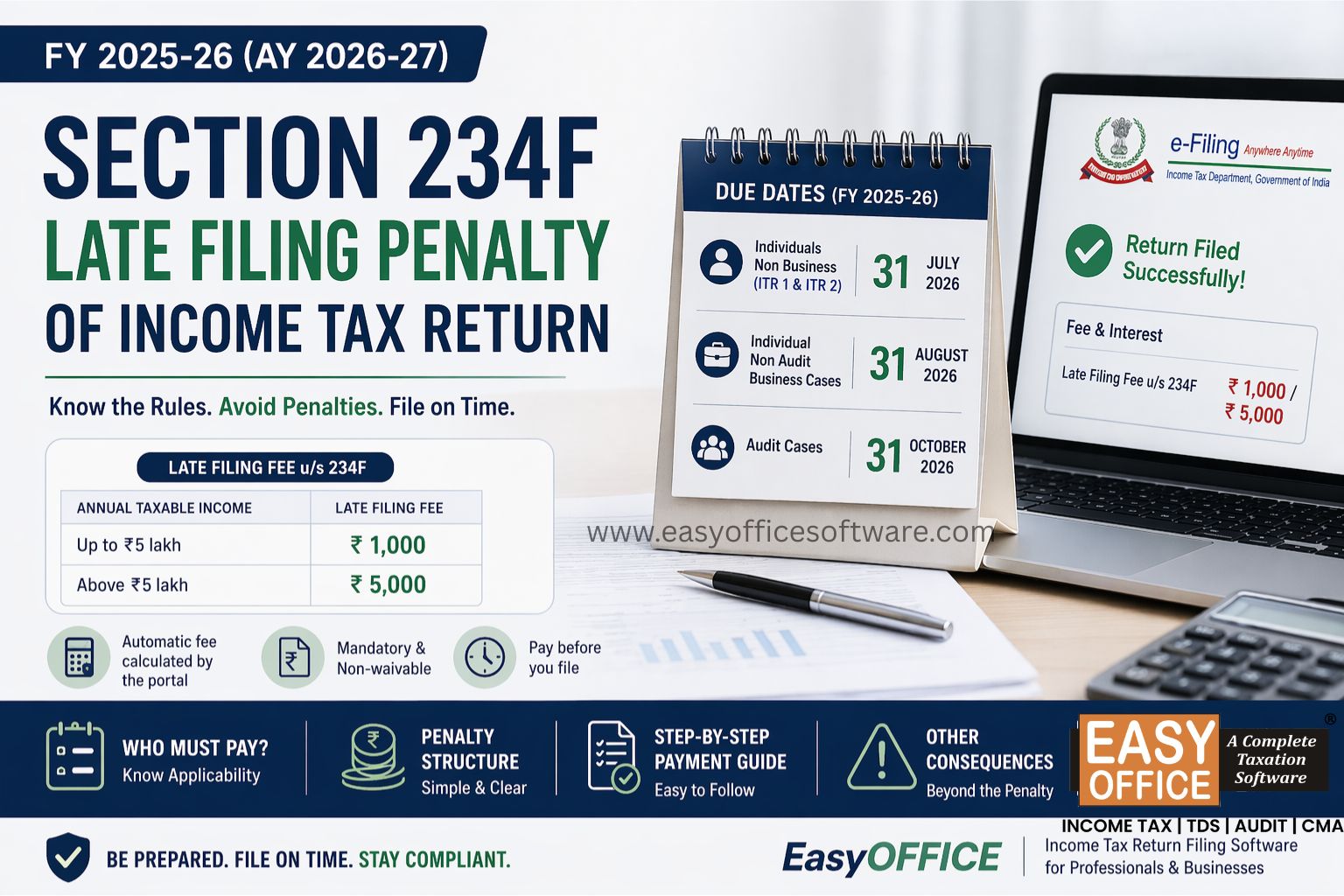
Penalty for Late Filing of Income Tax Return for FY 2025-26 – Section 234F of Income Tax Act 1961
#ITR