The Income tax rules in India is evolving to simplify compliance and reduce duplication. One key change under the Income Tax Act, 2025 is the replacement of Form 15G and Form 15H with a single declaration - Form 121, effective 1 April 2026.
Earlier, taxpayers used different forms depending on age criteria to avoid Tax Deducted at Source (TDS). Now, Form 121 brings all eligible taxpayers under one declaration system.
Form 15G
Form 15G was applicable to individuals (below 60 years) and HUFs to claim exemption from TDS on certain incomes.
Key conditions:
1. Age must be below 60 years
2. Total taxable income should be below the basic exemption limit (₹2.5/₹3 lakh)
3. Tax liability must be NIL
4. Applicable for income such as:
a. Interest income
b. Dividend income
c. Rental income
d. Other eligible incomes
Form 15H
Form 15H was applicable exclusively to senior citizens (60 years or above).
Key conditions:
1. Age must be 60 years or above
2. Tax liability must be NIL
3. Unlike Form 15G, total income could exceed the basic exemption limit, provided tax payable was zero
Introduction of New Form 121
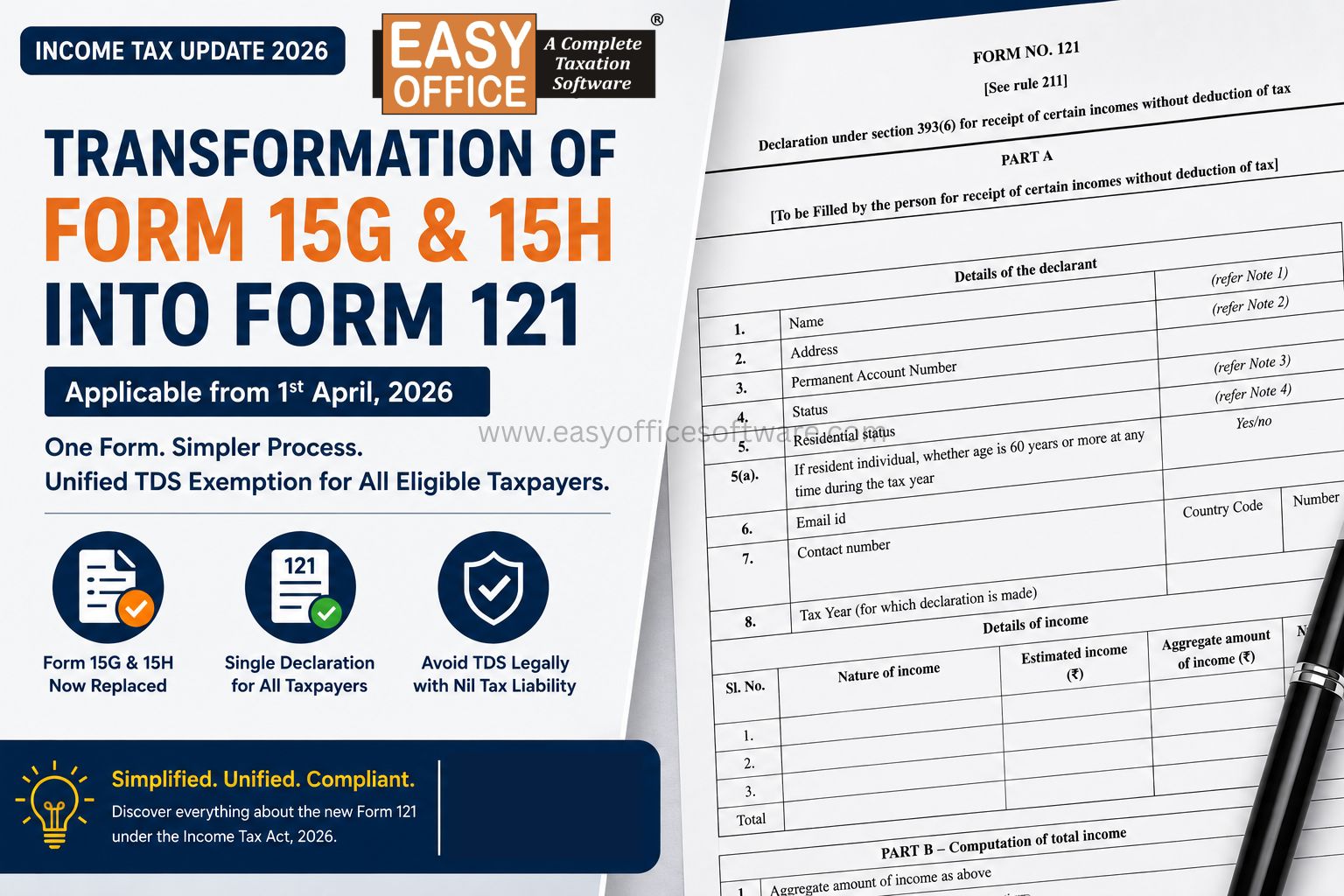
Form 121 is replaces earlier forms - Form 15G and From 15H. Both Type of Tax payer above and below age of 60 have to fill only 1 form which is Form 121. A self declaration by Tax Payer for his nil tax liability.
Purpose of Form 121
To avoid TDS deduction on eligible income
To simplify compliance by eliminating multiple forms
To standardize TDS exemption declarations across taxpayer
How to Fill Form 121?
You can refer to the official Form 121 format as notified by the Income Tax Department.
📌 Information Required:
- Name of the taxpayer
- PAN
- Residential status
- Nature of income (interest, dividend, rent, etc.)
- Estimated income for the financial year
- Aggregate amount of income
- Declaration confirming nil tax liability
🧾 Structure of Form 121:
1. Part A:
Basic details (Name, PAN, address)
Income particulars
2. Part B:
Computation of total income
Tax calculation to establish NIL liability
Documents Required for Filing Form 121
PAN card
Income estimation details (FD interest, dividend statements, rent details, etc.)
Residential status proof (if required)
Previous year income reference (optional but recommended)
Important Points to Remember
Form 121 must be submitted at the beginning of the financial year
Incorrect declaration may attract penalty or interest
If tax liability arises later, TDS provisions will apply
Late submission means TDS will already be deducted, and refund can only be claimed through ITR
Conclusion
The introduction of Form 121 is a significant step toward simplifying TDS exemption compliance. By replacing Form 15G and Form 15H with a unified form, the Income Tax Department has reduced confusion and improved consistency.
However, timely and accurate filing is crucial. Any error or delay can lead to unnecessary TDS deductions and refund hassles. To ensure accuracy, automation, and compliance, tax professionals and Chartered Accountants can rely on smart solutions like EasyOFFICE, which streamlines TDS filing, declarations and overall tax compliance saving time and improving efficiency.
Related Blogs


All in one Software
- Income Tax Software
- TDS & TCS Software
- Audit e-filing Software
- CMA Data Software








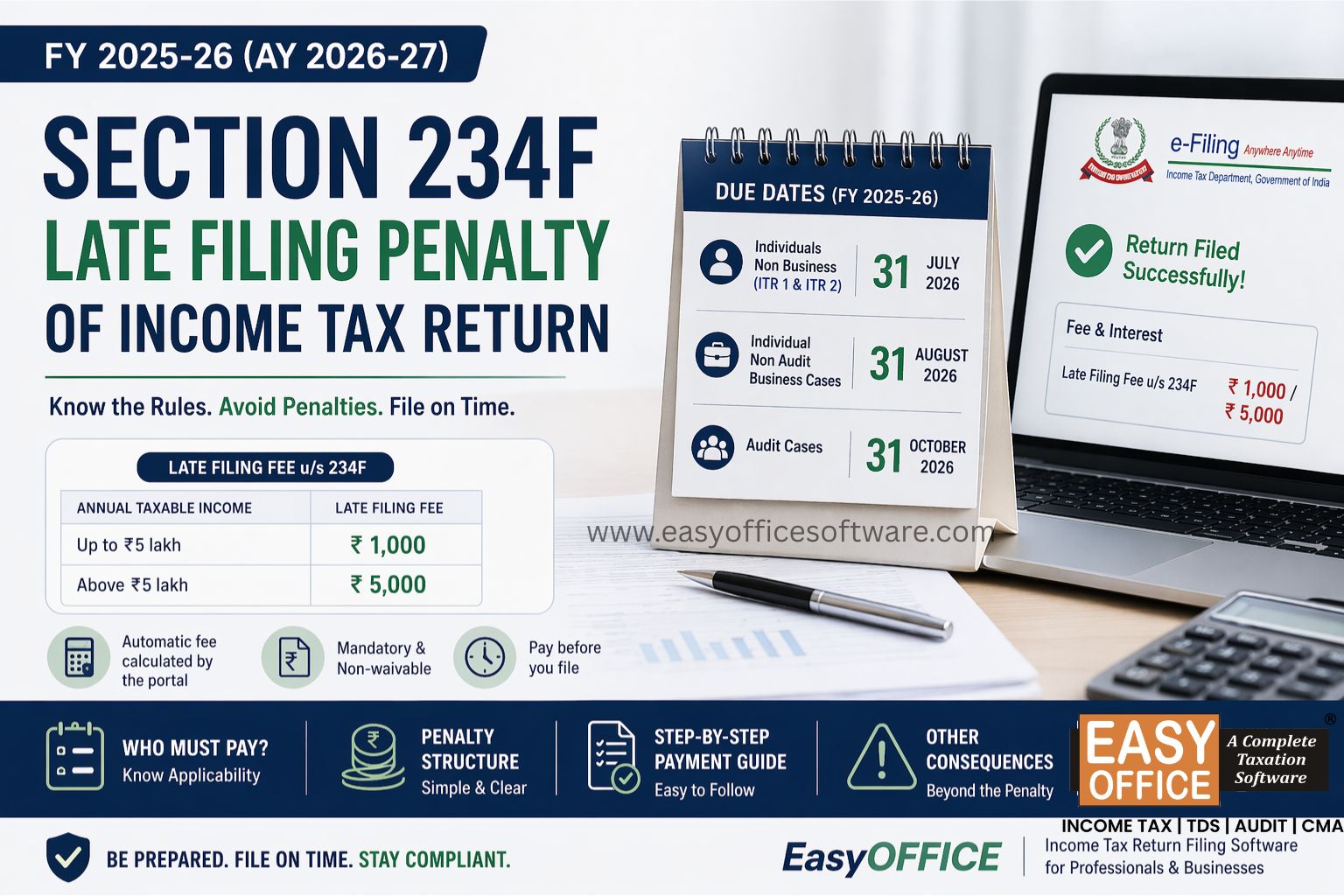
Penalty for Late Filing of Income Tax Return for FY 2025-26 – Section 234F of Income Tax Act 1961
#ITR