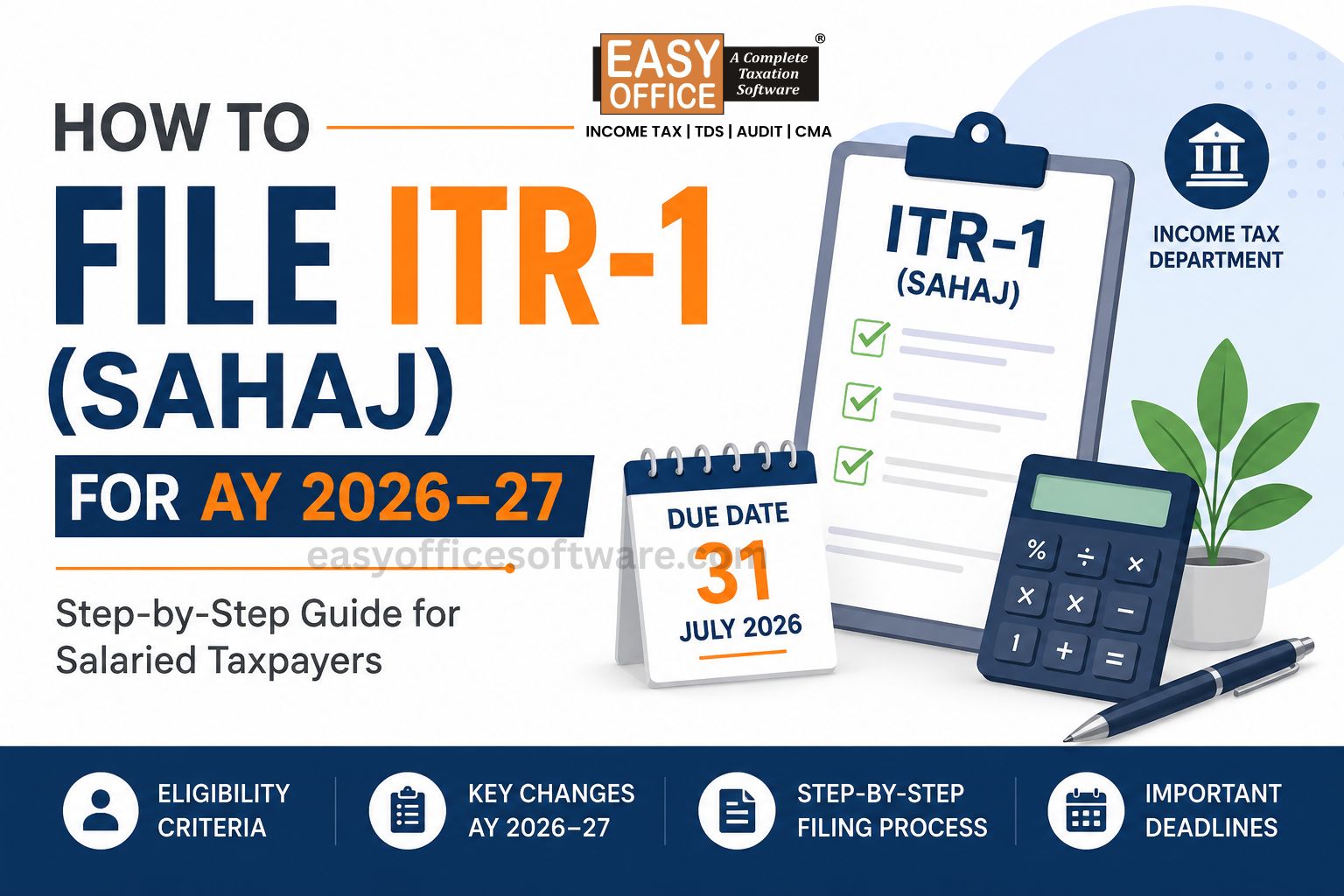
ITR-1 (Sahaj) is the simplest return the Income Tax Department offers. If you earn income from a salary, pension, a couple of house properties, or bank interest for FY 2025-26 (AY 2026-27), this is everything you need to know before filing your ITR-1.
What is ITR-1 (Sahaj)?
ITR-1, commonly known as Sahaj (Easy), is the most basic ITR form. It is made for resident individuals with the simplest sources of income, such as a salary, pension and limited income from house property and bank interest.
Its main objective is to make tax-filing simple, quick and hassle-free for the majority of India’s salaried workforce.
Eligibility Criteria in AY 2026-27
✔ To be eligible to file ITR-1, you must meet these conditions.
✔ Only a Resident Individual is eligible.
✔ Total income from all the sources must not exceed Rs. 50 Lakhs.
✔ Includes income from salary or pension.
✔ Income or loss from up to 2 house properties is allowed.
✔ Interest from savings accounts, fixed deposits, family pension and dividends, etc., is allowed.
✔ Long-term capital gain (LTCG) from listed equity shares or equity mutual funds up to Rs. 1.25 Lakhs allowed. (Only with no brought forward or carried forward capital losses).
✔ Agricultural Income up to Rs. 5000 is allowed.
Who cannot file ITR-1?
✔ You are not eligible if any of these apply to you:
✔ NRIs, RNOR, and Non-residents.
✔ Individuals with income exceeding Rs. 50 Lakhs
✔ Income from business or profession.
✔ Capital gains above Rs. 1.25 Lakhs
✔ Any short-term capital gain (STCG)
✔Any carried forward or brought forward capital losses.
✔ More than 2 House Properties
✔ Director in any company
✔ Holder of unlisted equity shares
✔ Any foreign income or foreign assets
✔ Agricultural income exceeding Rs. 5000
Key Changes in ITR-1 for AY 2026-27
1. Income or loss from up to 2 house properties is allowed, which was previously one house property.
2. Small Investors with LTCG up to Rs. 1.25 Lakhs from listed equity shares or equity mutual funds can now report them in ITR-1
3. A dedicated field for Unrealized rent for landlords dealing with non-paying tenants.
4. Where TDS is claimed on rental income, specific details of tenants have to be provided.
5. Reporting of foreign retirement benefits has been removed.
6. If spending on a certain high-value item exceeds the specified threshold, additional details are needed.
7. The new tax regime is the default.
8. ITR-1 filers can switch to the old regime directly without filing Form 10-IEA.
Documents to Keep Handy
Since ITR-1 is an annexure-less form, nothing is to be physically attached or uploaded. But the following documents might be needed to verify details:
Form 16, issued by your employer, showing gross salary, exemptions and TDS deducted.
Form 26AS to verify TDS credits, advance tax paid and TCS entries.
Annual Information Statement (AIS) and Taxpayer Information Summary (TIS) to cross-check interest income, dividends and LTCG reported by brokers.
Bank statements for computing savings account interest (Section 80TTA) and FD interest.
Aadhaar and PAN must be linked on the portal before filing.
Capital gains statement from your broker or mutual fund house if you have LTCG under Section 112A.
Step-by-step Filing Guide
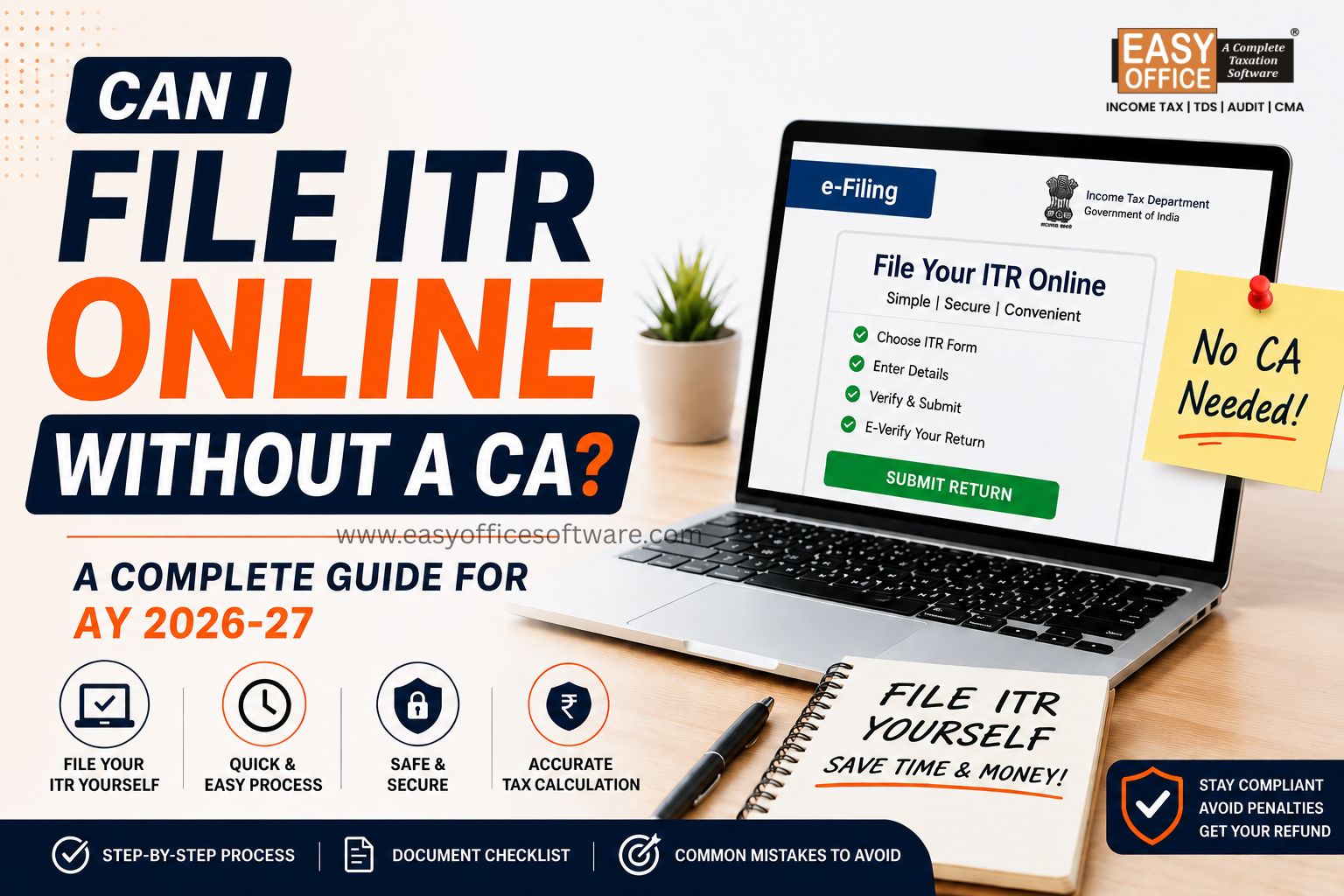
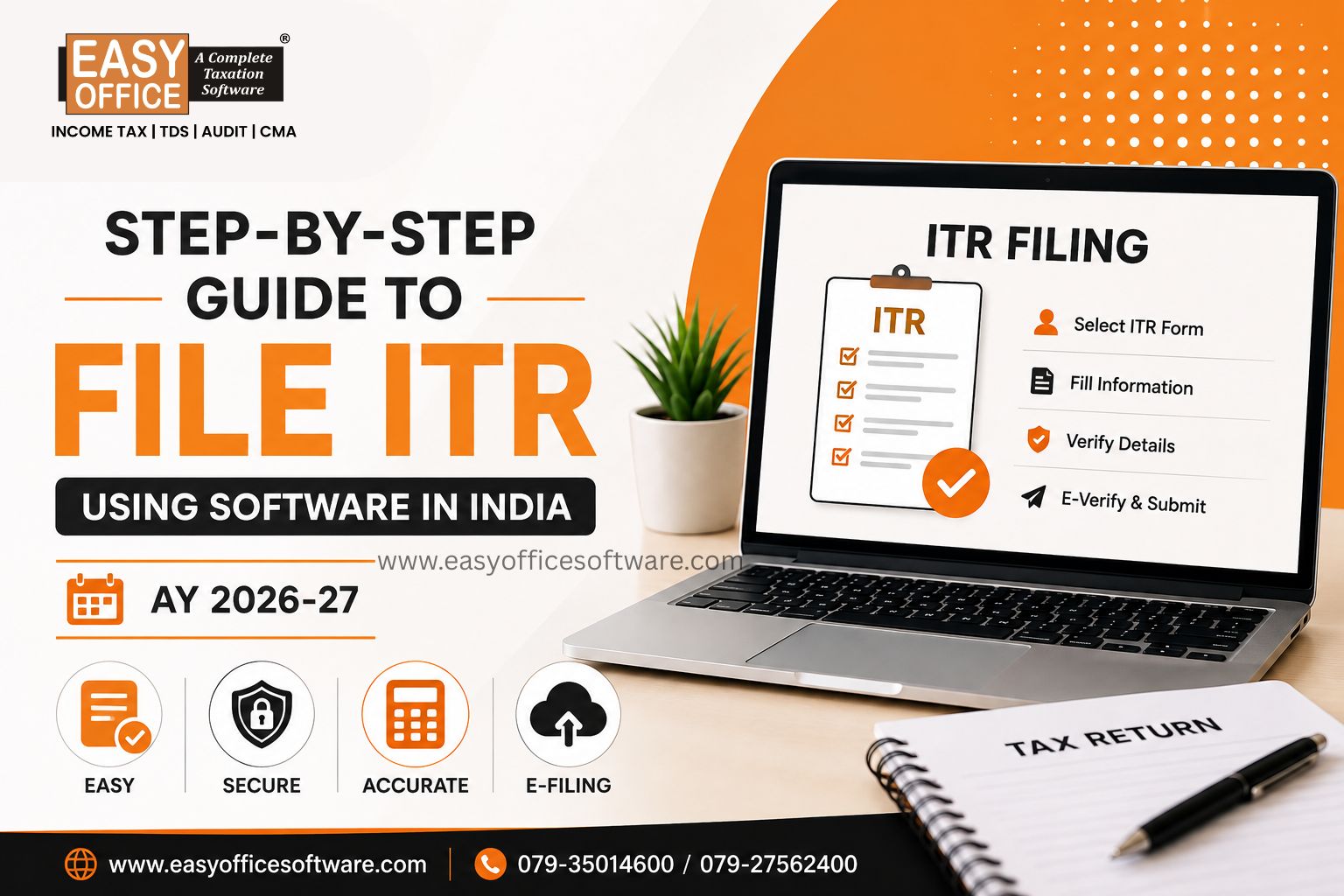
1. Visit incometax.gov.in and sign in using your PAN/Aadhaar and password. First-time users can register with their PAN.
2. Go to e-File > Income Tax Returns > File Income Tax Return. Select Assessment Year AY 2026-27 and choose Online mode.
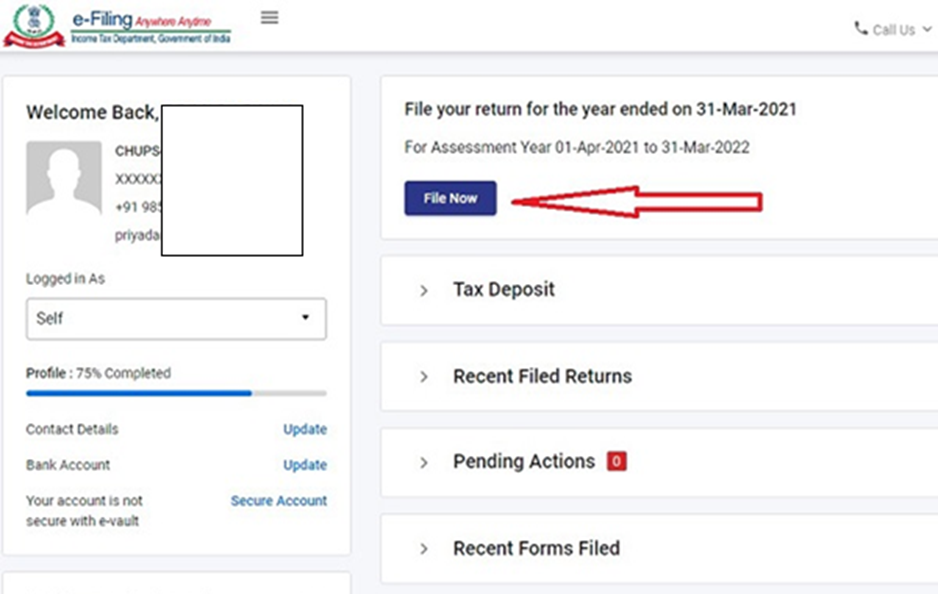
3. Choose your filing status as Individual and select ITR-1 (Sahaj). If unsure, use the "Help me decide which ITR to file" tool on the portal before proceeding.
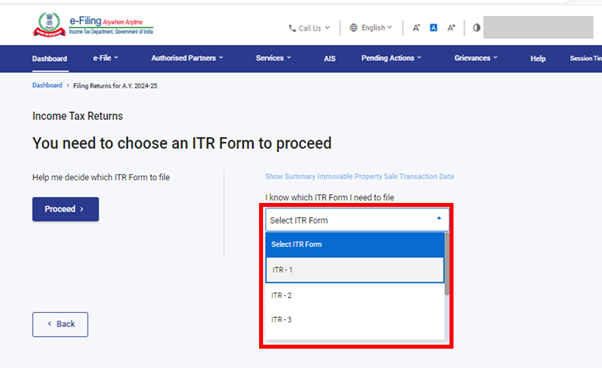
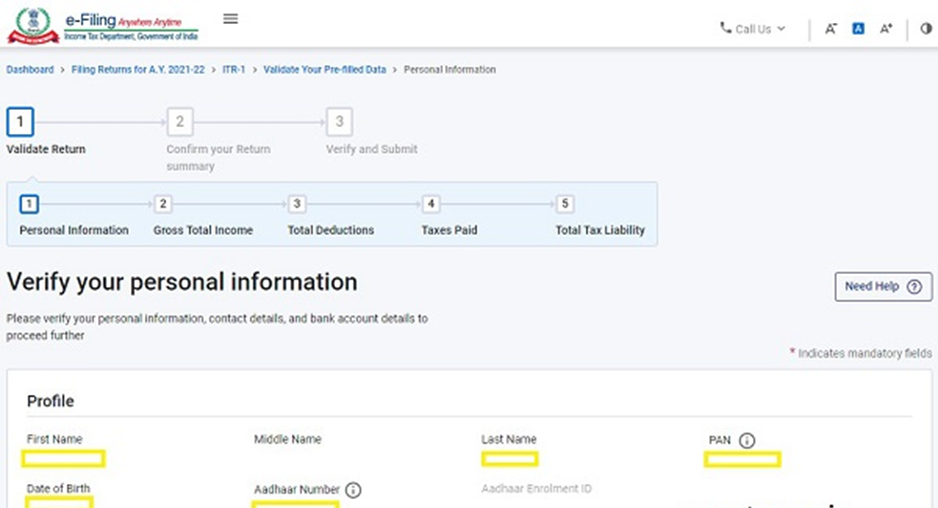
4. The portal auto-populates your name, PAN, date of birth, and contact details. Review carefully and correct any discrepancies. Select your preferred tax regime here. New Regime is the default. You can switch to the Old Regime directly in the form.
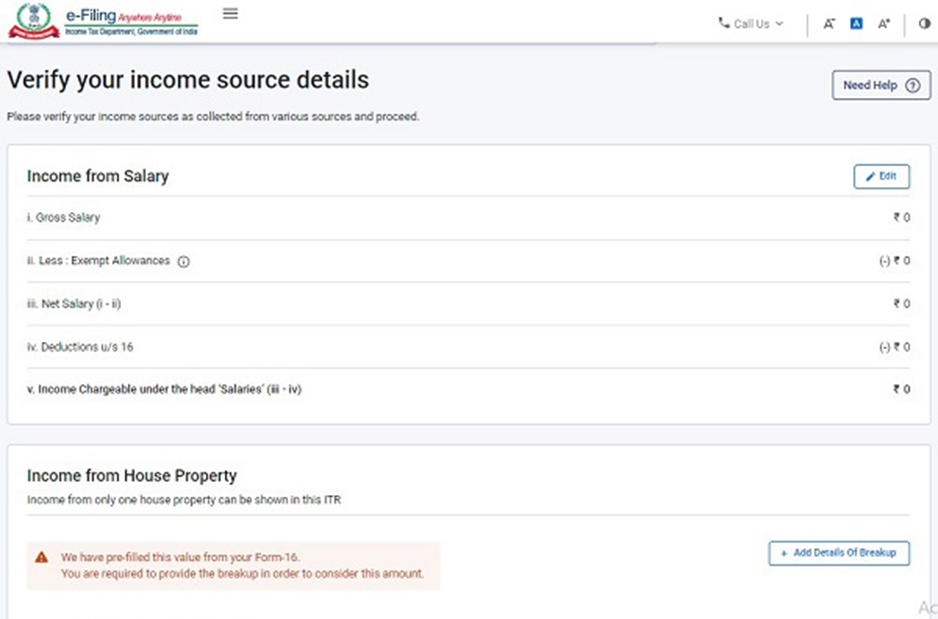
5. Enter income details
For Salary/Pension, refer to your Form 16 and verify against auto-filled figures.
For House Property, report income or loss from up to two properties; enter annual rent, municipal taxes, unrealised rent and tenant TDS details where applicable.
For Other Source, add savings interest, FD interest, family pension, dividends.
For Capital Gains, report LTCG under Section 112A up to ₹1.25 Lakhs if applicable.
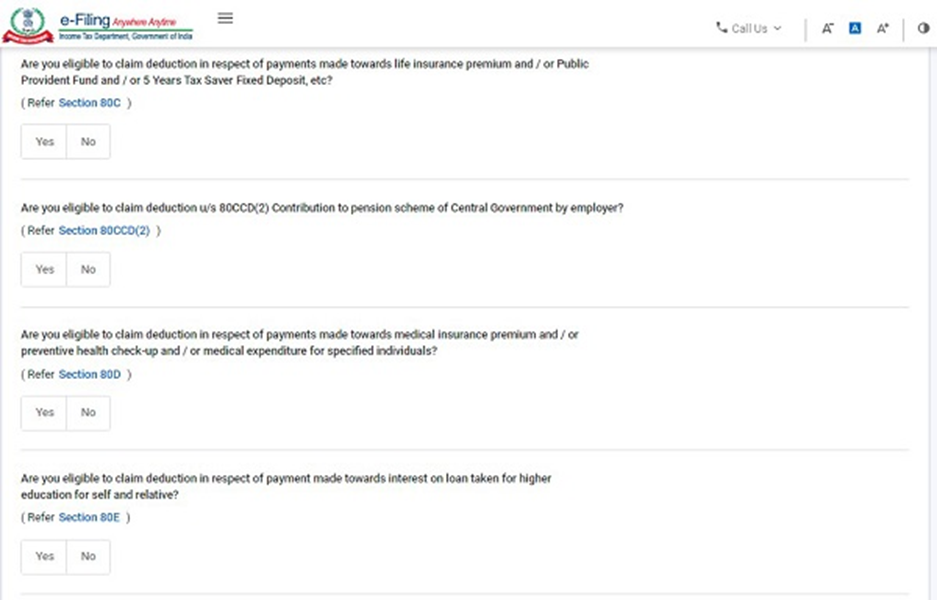
6. Under the Old Regime, claim deductions from the descriptive drop-down, such as 80C (PPF, ELSS, LIC), 80D (health insurance), 80TTA (savings interest), 80G (donations), and others. Most deductions are not available under the New Regime.
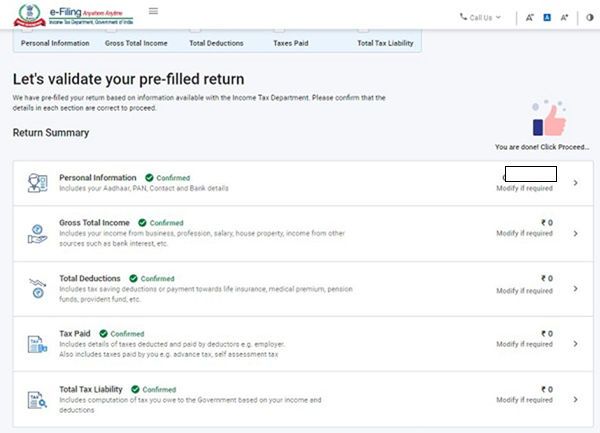
7. The portal pre-fills TDS from Form 26AS. Verify these figures match your Form 16. If any tax remains payable, pay it online as Self-Assessment Tax before submitting.![Step 15[1]](https://www.easyofficesoftware.com/public/news/imgs/1782654273_image.jpeg)
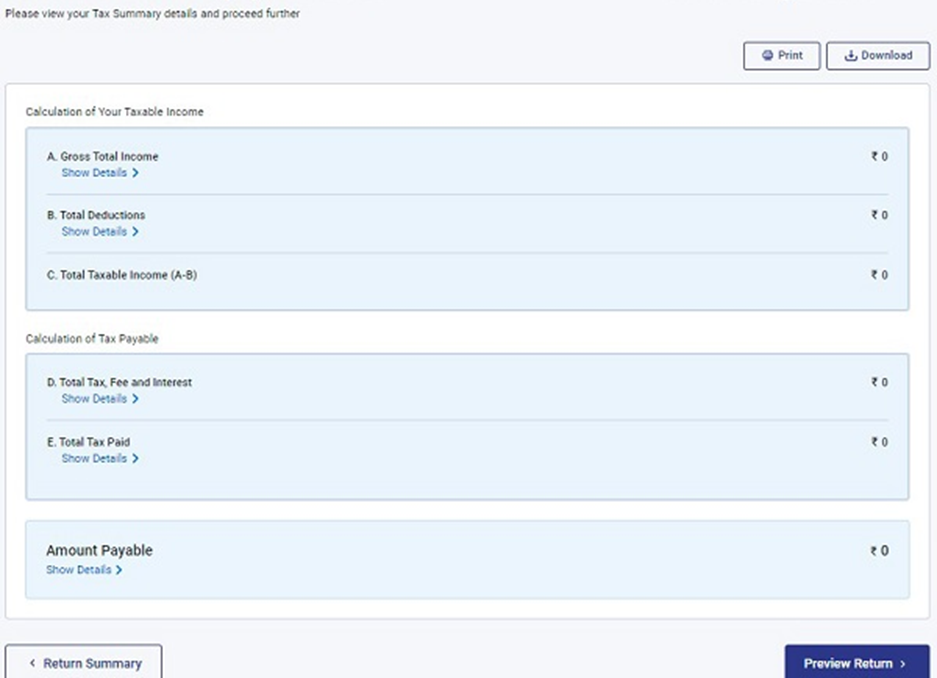
8. Click Preview Return and review all sections. Then click Proceed to Validation to ensure the system finds zero errors.
9. Click Proceed to Verification and e-verify instantly using Aadhaar OTP, Net Banking, or Bank Account EVC. Your return is not considered filed until it is e-verified and this must be done within 30 days of submission. Failure to e-verify makes the return invalid.
Important Deadlines
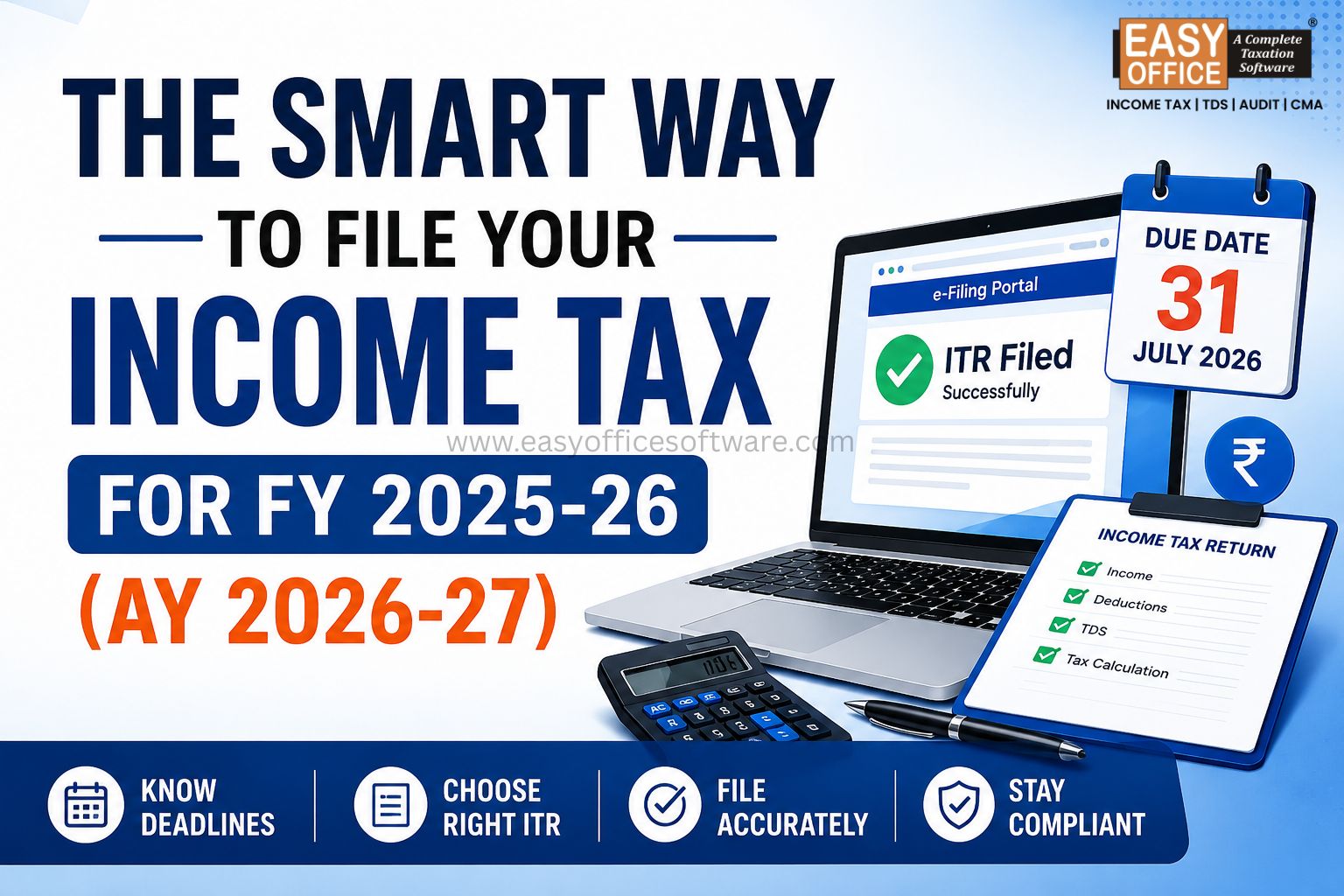
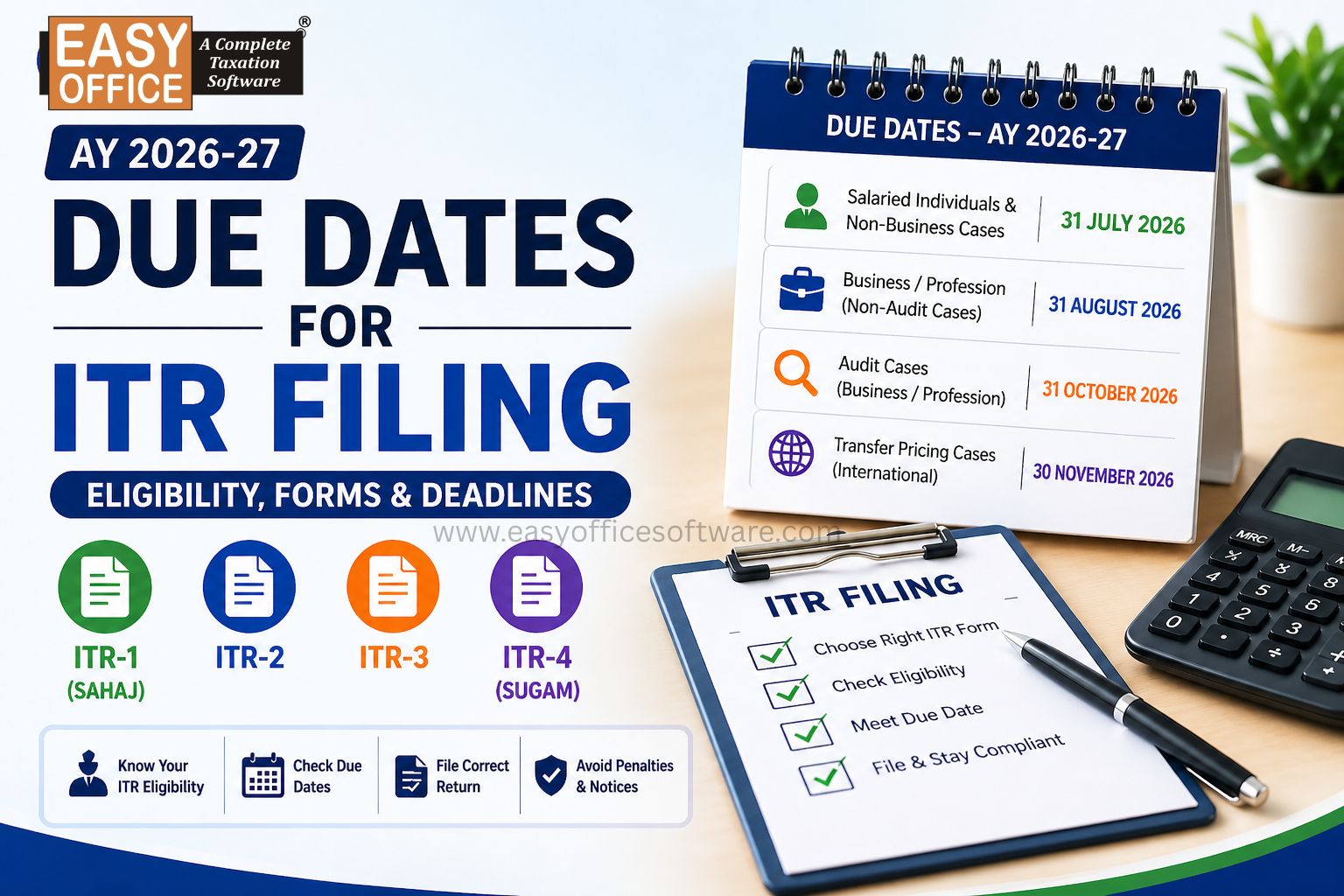
Original filing deadline 31 July 2026 (ITR 1 and 2) (For non-audit salaried taxpayers) | Belated return 31 December 2026 (Late fee under Sec 234F up to ₹5,000) |
Conclusion
The filing process is straightforward and can be done within an hour. The key is to choose the correct form, ensure all the details are correct and file before 31 July 2026. These simple steps will make you a fully compliant taxpayer.
Pro Tip for CAs & Tax Professionals:
Many professionals minimise return-filing errors by using integrated tax software such as EasyOFFICE Software, which auto-selects the applicable ITR forms, auto-fetches Form 26AS/AIS/TIS and flags validation errors - helping streamline compliance compared to manual processes.
FAQs
Can ITR-1 be filled by a freelancer or a self-employed individual?
No, ITR-1 cannot be filed by freelancers, self-employed professionals, or persons having business or professional income. They are supposed to file ITR-4/3 in case they have opted for presumptive taxation under Section 44ADA or 44AD.
What is the last date of filing ITR-1 for AY 26/27?
The last date for filing ITR-1 for AY 2026-27 is 31 July 2026 for those whose income is not subject to audit.
Are there any capital gains taxable in ITR-1 from mutual funds or stocks?
Yes, long-term capital gains (LTCG) on listed equity shares/equity mutual funds, when the total LTCG is up to ₹1.25 Lakhs.
Are two house properties allowed under the ITR-1?
Yes. ITR-1 (Sahaj) allows reporting of income/loss of up to 2 house properties starting from AY 2026-27.
ITR-1 filing, Sahaj form, AY 2026-27 income tax return, how to file ITR-1 online, ITR-1 eligibility criteria

All in one Software
- Income Tax Software
- TDS & TCS Software
- Audit e-filing Software
- CMA Data Software









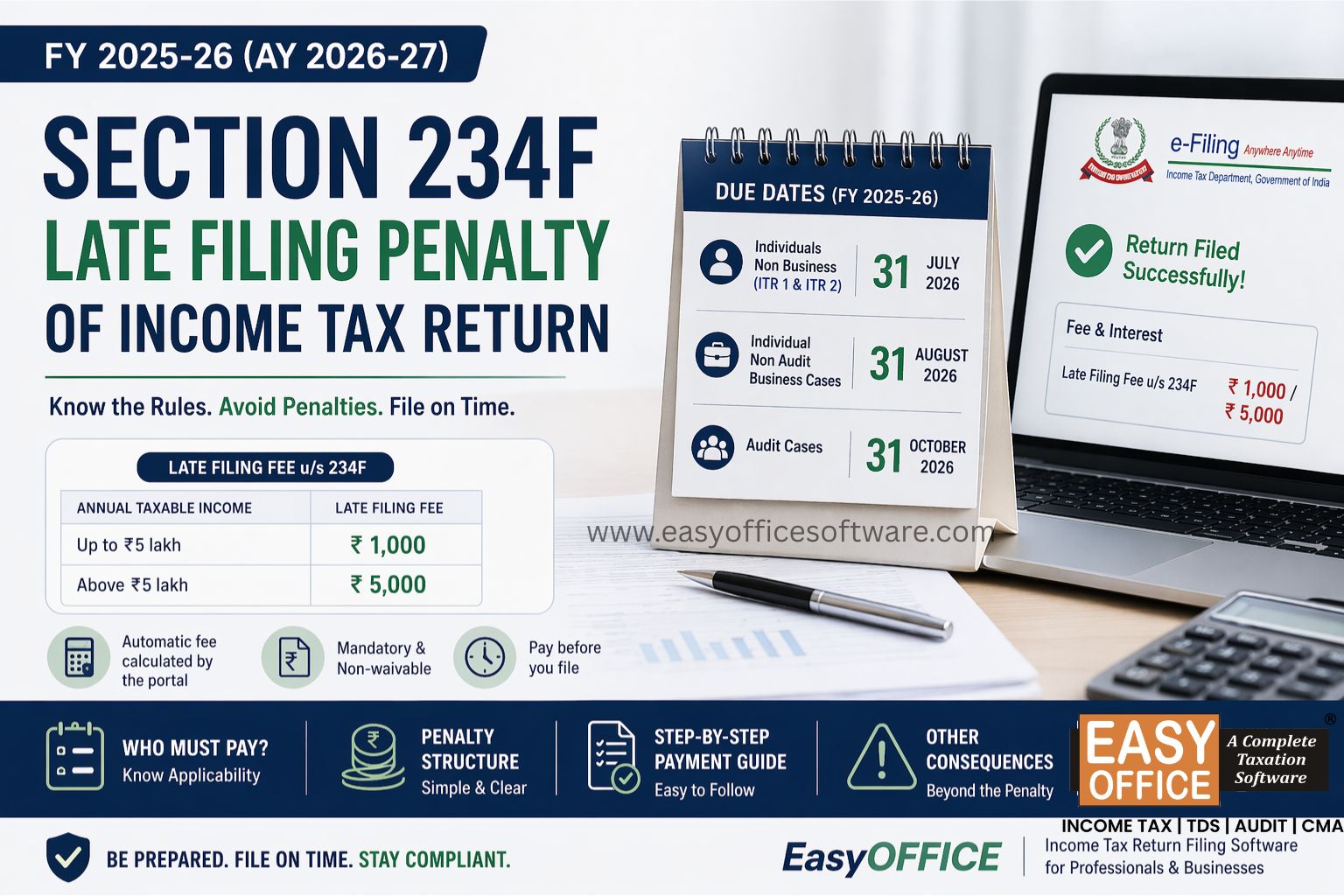
Penalty for Late Filing of Income Tax Return for FY 2025-26 – Section 234F of Income Tax Act 1961
#ITR