Businesses and tax professionals in India feel that the GST annual return gets complicated because of reconciliations, shifting rules, and harsh deadlines. In fact, GSTR-9 is not just a compliance formality. Rather, it is an annually updated view of all your GST activities and a crucial document that gets examined by the tax authorities.
In this guide, GSTR-9 is explained in simple language, including the filing requirement, turnover limits, due dates, format, rules, and practical filing tips for Indian businesses and professionals.
Understanding GSTR-9 Annual Return
GSTR-9 is the annual GST return that is required from registered regular taxpayers. It is a total of the data already submitted during the financial year via GSTR-1, GSTR-3B, and the automatically populated purchase details from GSTR-2A or 2B.
The return shows the details of outward supplies, inward supplies, tax payable, tax paid, and input tax credit under CGST, SGST, IGST, and cess. The taxpayers should report everything consistently. Any disparities among the monthly or quarterly returns will be revealed. So, it is necessary to perform careful reconciliation of the books with GST returns for the filing of GSTR-9.
Applicability and Turnover Limit
Who must file GSTR-9?
- Regular GST-registered taxpayers
- Turnover exceeding ₹2 crore in the relevant financial year
- Filing is GSTIN-wise, not PAN-wise
Important points to note:
- For taxpayers below ₹2 crore, filing may be optional, subject to government notification
- Turnover limits are not fixed permanently and may change from year to year
- Always check the latest GST notification before filing
Who is exempt from filing GSTR-9
The following categories are not required to file GSTR-9:
- Composition scheme taxpayers
- Casual taxable persons
- Non-resident taxable persons
- Input Service Distributors
- Persons deducting TDS under GST
- E-commerce operators collecting TCS
Each of the above categories follows a different return structure under the GST law.
Eligibility Rules You Should Know
Even if a GST registration is cancelled during the same financial year, GSTR-9 still needs to be filed for the period the registration was active. In case a taxpayer switched between the composition scheme during the financial year, they would have to file separate annual returns for each respective period.
Zero transactions do not excuse the obligation. A registered person who has not made any sales or purchases during the year must still submit a Nil GSTR-9, provided the registration stayed active.
Types of GSTR-9 Forms
GSTR-9 is not simply a uniform form, but it has different versions for different taxpayers.
| Form Type | Applicable To | Current Status |
| GSTR-9 | Regular taxpayers | Active |
| GSTR-9A | Composition dealers | Replaced by GSTR-4 |
| GSTR-9B | E-commerce operators (GSTR-8) | On hold |
| GSTR-9C | Audit & reconciliation | Mandatory above ₹5 crore |
GSTR-9C Turnover Limit
Taxpayers with an annual aggregate turnover of more than ₹5 crore are required to file GSTR-9C. It consists of the reconciliation of GSTR-9 figures with audited financial statements and has to be self-certified and submitted on the GST portal.
Due Date for GSTR-9
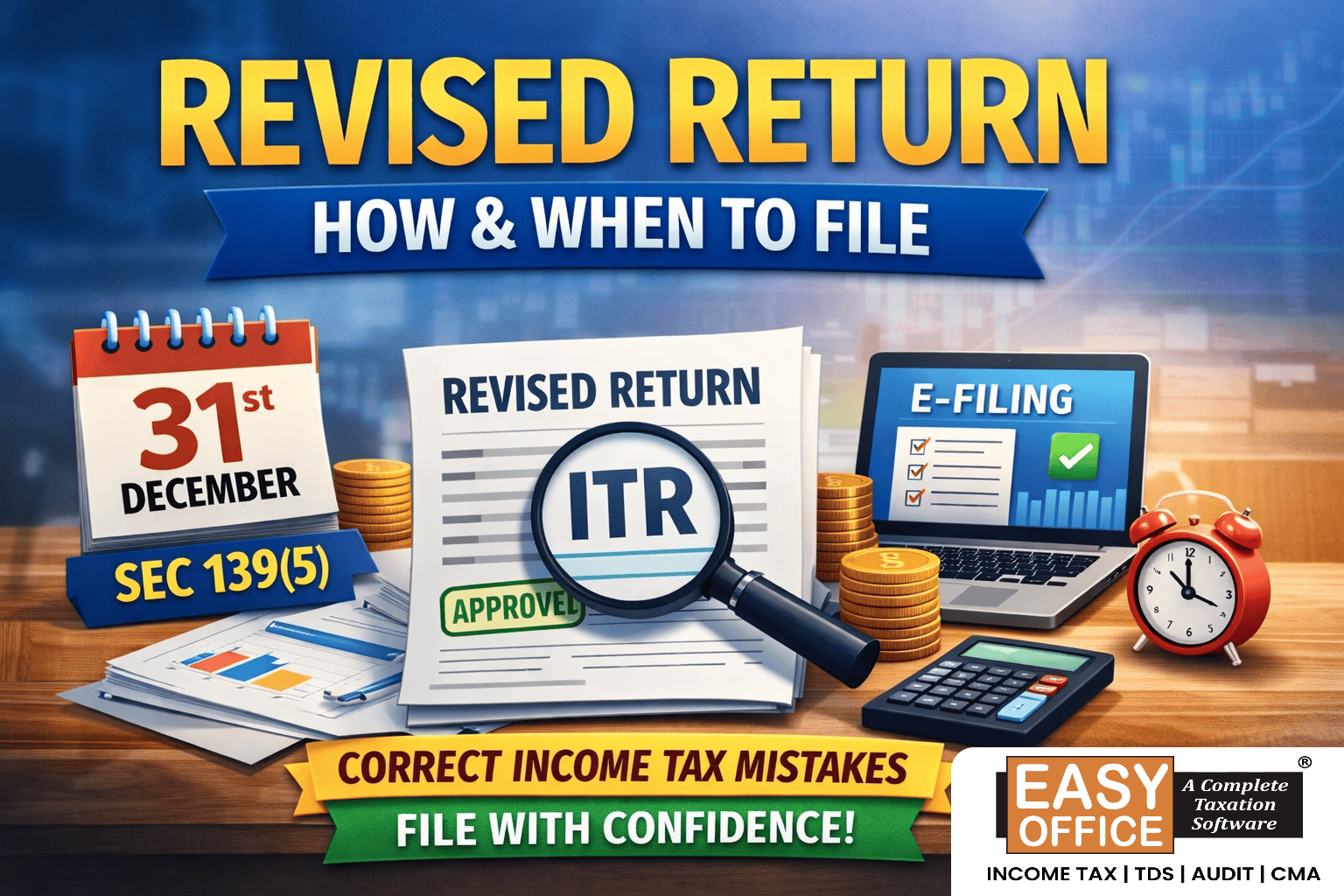
Standard due date: 31st December, following the end of the financial year
To illustrate, the annual return for the fiscal year 2024-25 will be accepted until 31st December 2025.
Note: Due dates may be extended by government notification, so it is important for companies and Chartered Accountants to keep a close eye on them.
GSTR-9 Format and Structure
The GSTR-9 yearly return is a total statement that unifies all monthly or quarterly GST returns filed within the financial year, mainly GSTR-1 and GSTR-3B, along with the auto-populated ITC data from GSTR-2A/2B. For the tax authorities, it gives a thorough year-end view of the GST compliance of the taxpayer.
Overall Structure of GSTR-9
- Divided into 6 parts
- Contains 19 tables
- Data is auto-populated from previously filed returns. However, manual checking and reconciliation are compulsory.
| Part | Section Name | Tables Covered | Key Details Captured |
| Part I | Basic Taxpayer Details | Tables 1 to 3 | Data about the fiscal year, GSTIN, official name, trade name, and registration-related information |
| Part II | Outward & Inward Supplies | Tables 4 to 5 | Taxable sales to consumers, exports, and SEZ, supplies with reverse charge, inward supply (taxable and non-taxable), exempt, nil-rated, and non-GST sales |
| Part III | Input Tax Credit (ITC) Details | Tables 6 to 8 | Input tax credit claimed during the year, ITC split into raw materials, input services, and capital goods, as well as ITC reversals or ineligibility as per GST regulations. |
| Part IV | Tax Paid Details | Table 9 | Overview of tax paid via electronic cash and credit ledgers under CGST, SGST, IGST, and cess |
| Part V | Previous Year Amendments | Tables 10 to 14 | Current year returns regarding the previous financial year's transactions, including invoice corrections, debit/credit notes, and differential tax payments |
| Part VI | Other Information | Tables 15 to 19 | Information on assessments and refunds, supplies from composition dealers, deemed supplies, and an HSN-wise summary of both outward and inward supplies |
Late Fees and Penalties
Starting from the fiscal year 2022-23, the government has implemented a new late fee structure for GSTR-9 that is now related to taxpayers’ yearly income. This revision is seen as a boon to small and medium enterprises and yet imposes tighter limitations on big corporations.
GSTR-9 Late Fee Structure (Turnover-wise)
| Annual Turnover | Late Fee per Day | Maximum Late Fee (of turnover in State/UT) |
| Up to ₹5 Crore | ₹50 (₹25 CGST + ₹25 SGST) | 0.04% (0.02% CGST + 0.02% SGST) |
| ₹5 Crore to ₹20 Crore | ₹100 (₹50 CGST + ₹50 SGST) | 0.04% (0.02% CGST + 0.02% SGST) |
| Above ₹20 Crore | ₹200 (₹100 CGST + ₹100 SGST) | 0.50% (0.25% CGST + 0.25% SGST) |
Important Points to Note
• No late fee under IGST: The IGST Act does not impose any separate late fee.
• Interest on unpaid tax:
The 18% per annum interest gets charged on the unpaid tax from the due date till its payment.
• Payment process:
The late fees are automatically calculated by the GST portal, which must be paid through the electronic cash ledger.
• Penalties for non-filing:
Issuing of GST notices, audits, or assessments might be the consequences of not filing GSTR-9, and they increase the compliance risk.
Filing on time not only eliminates the possibility of paying penalties but also guarantees a proper reconciliation and lowers the chances of future scrutiny.
File Smarter with EasyGST
GSTR-9 is not merely a yearly duty. It mirrors your GST discipline throughout the year. Correct filing shields your company against possible disputes and notices in the future.
EasyGST BY ELECTROCOM is the best GST return filing software for Chartered Accountants, tax professionals, and companies in India that allows the easiest GST return filing.
End the year without any GST return hassles. Let EasyGST take care of the complexity while you concentrate on growing your business.
Frequently Asked Questions
1. Is GSTR-9 compulsory for all GST taxpayers?
Absolutely. GSTR-9 is a must for the regular taxpayers whose turnover limits are above the notified limit. The others may have an exception as per the GST rules.
2. Is GSTR-9 needed in case there were no transactions?
Yes, a Nil GSTR-9 must be filed showing zero transactions if the registration was active during that year.
3. Is it possible to amend GSTR-9 after submission?
Not at all. GSTR-9 cannot be amended after submission. However, corrections of the earlier are possible only through subsequent returns where applicable.
4. Is GSTR-9 submitted based on PAN or GSTIN?
GSTR-9 is filed for every GSTIN separately.
5. What happens if additional tax liability is identified?
Any extra tax should be cleared through Form DRC-03 before the GSTR-9 is submitted.
GSTR-9 Annual Return: Due Date, Applicability, Turnover Limit, Format, Eligibility, Rules
Related Blogs


All in one Software
- Income Tax Software
- TDS & TCS Software
- Audit e-filing Software
- CMA Data Software






















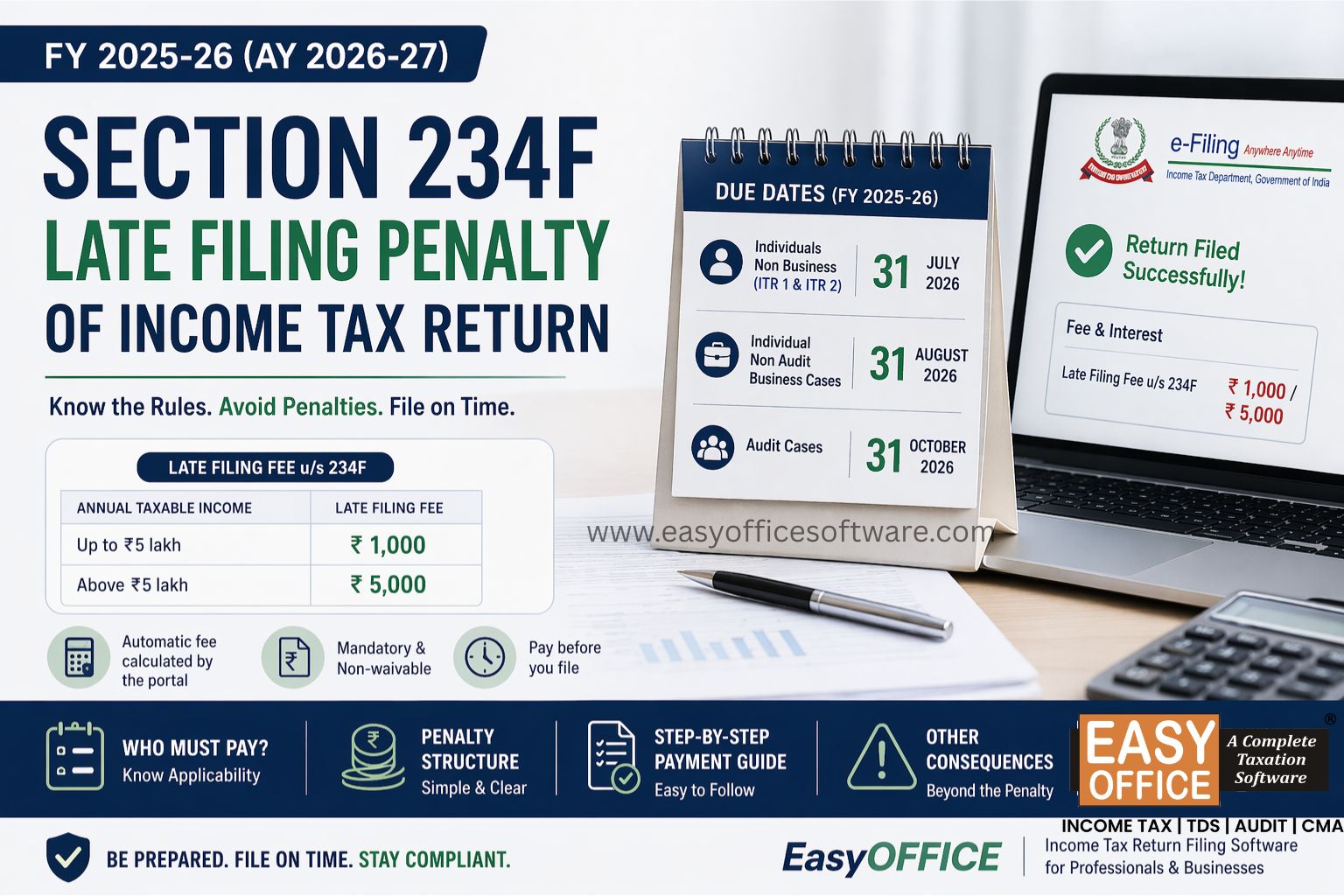
Penalty for Late Filing of Income Tax Return for FY 2025-26 – Section 234F of Income Tax Act 1961
#ITR