The 2026 Monthly and Quarterly GST and Tax Filing Calendar extends beyond being a compliance checklist. It is an essential operational tool for companies that need to follow India's GST regulations.
As return types increase and timelines overlap, missing a single due date can trigger late fees, interest charges, and restricted ITC and compliance difficulties.
The guide presents the GST filing structure for 2026 in a practical way. It demonstrates common mistakes made by taxpayers, and explains how proper software for GST return filing eliminates all risks of missing deadlines.
Understanding GST filing frequency in 2026
The GST compliance in 2026 requires taxpayers to submit their financial reports through three different time intervals, which include monthly, quarterly, and annual filing schedules. The frequency of taxpayer obligations depends on taxpayer type, turnover, and registration category.
Monthly filings mostly apply to regular taxpayers, which contain information about their outward supply reporting, summary returns, ISD filings, TDS, and TCS returns.
Quarterly filings are common for QRMP scheme taxpayers, composition dealers, and job work-related disclosures.
Annual filings consolidate the year’s activity and are critical for reconciliation and audits.
The 2026 GST filing calendar provides businesses with a reliable framework that enables them to schedule their cash flow needs, ITC claims, and tax payments instead of reacting at the last minute.
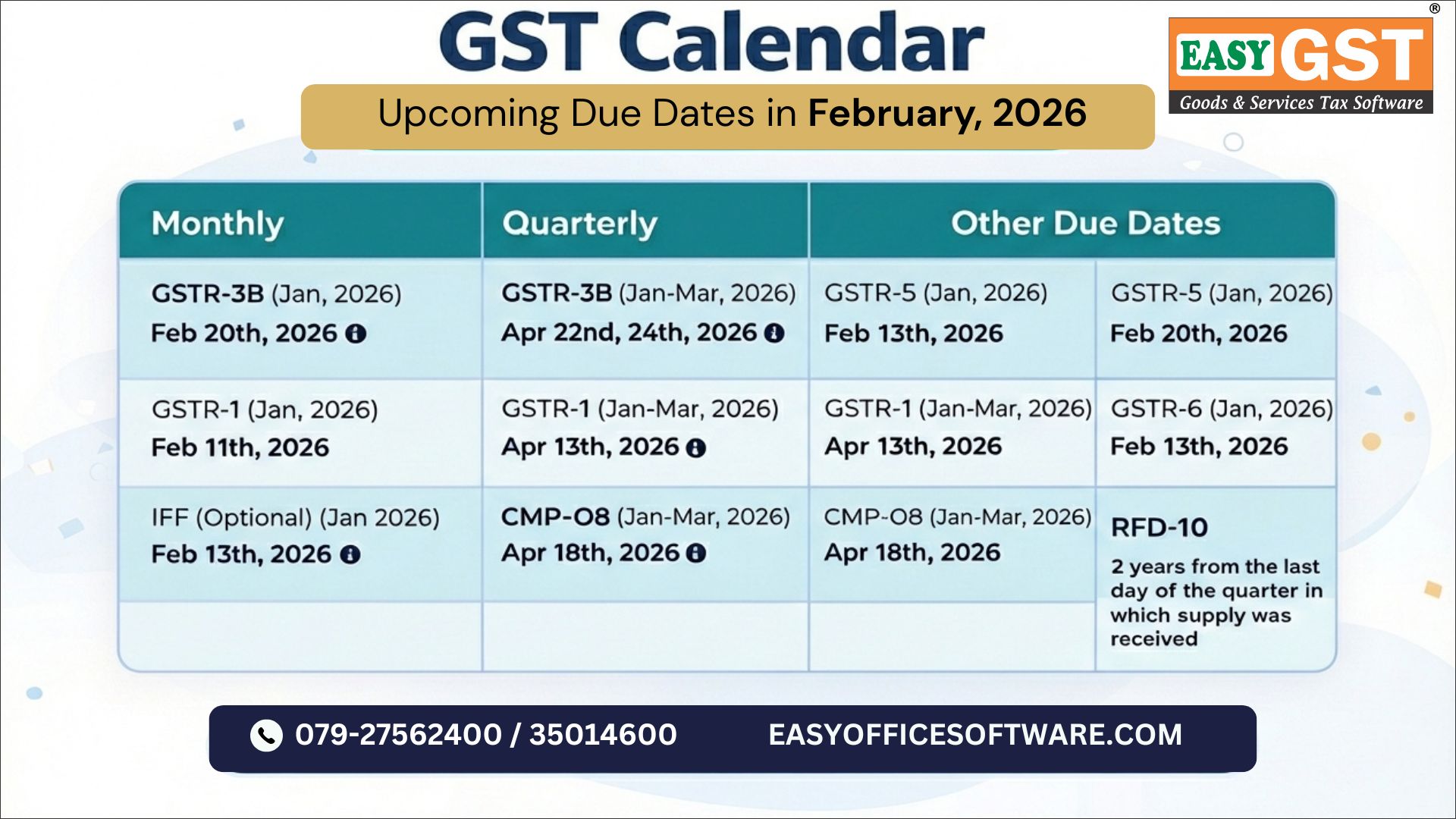
Key monthly GST return deadlines to track
The compliance cycle for 2026 requires all its monthly activities to follow its established procedures.
| GST Form / Activity | Applicable Taxpayers | Due Date |
|---|---|---|
| GSTR-1 | Regular taxpayers | 11th of the following month |
| GSTR-3B | Regular taxpayers | 20th of the following month |
| GSTR-6 | Input Service Distributors | 13th of the following month |
| GSTR-7 | TDS deductors | 10th of the following month |
| GSTR-8 | E-commerce operators | 10th of the following month |
| GSTR-5 | Non-resident taxable persons | 13th of the following month or within 7 days of registration expiry |
| GSTR-5A | OIDAR service providers | 20th of the following month |
| IFF (GSTR-1 IFF) | QRMP taxpayers | 13th of the following month (for first two months of quarter) |
Quarterly and annual GST obligations in 2026
Quarterly compliance is equally critical and often ignored.
| Return / Form | Who Should File | Due Date |
|---|---|---|
| CMP-08 | Composition scheme taxpayers | 18th of the month following the quarter |
| ITC-04 | Businesses sending goods for job work | 25th of the month following the quarter |
| PMT-06 | QRMP taxpayers | 25th of the following month |
| GSTR-4 | Composition taxpayers | 30th April following the financial year (Annually) |
| GSTR-9 | Regular taxpayers | 31st December, following the financial year |
| GSTR-9C | Taxpayers above the turnover limit | 31st December following the financial year |
A well-structured GST filing calendar 2026 keeps these quarterly and annual filings visible so they don’t get buried under monthly tasks.
Common GST compliance mistakes businesses make
The most frequent mistake is treating GSTR-1 and GSTR-3B as independent filings. The mismatches between documents create problems that lead to ITC notices and reconciliation issues.
>> Another common error is relying only on GSTR-2A instead of GSTR-2B for ITC eligibility. The static nature of GSTR-2B makes it the main source for reference purposes.
>> QRMP taxpayers often forget PMT-06 payments because there is no return filing that month. This situation causes interest charges to occur even when taxpayers quarterly returns are filed correctly.
>> Composition dealers frequently miss CMP-08 deadlines, assuming their annual GSTR-4 submission will fulfill their requirements.
The GST filing calendar for 2026 still relies on manual tracking through spreadsheets, which remains the main reason that people miss their deadlines.
Why is GST return filing software no longer optional
The GST compliance process requires multiple data sources, auto-populated statements, and strict validations. Manual filing cannot keep up.
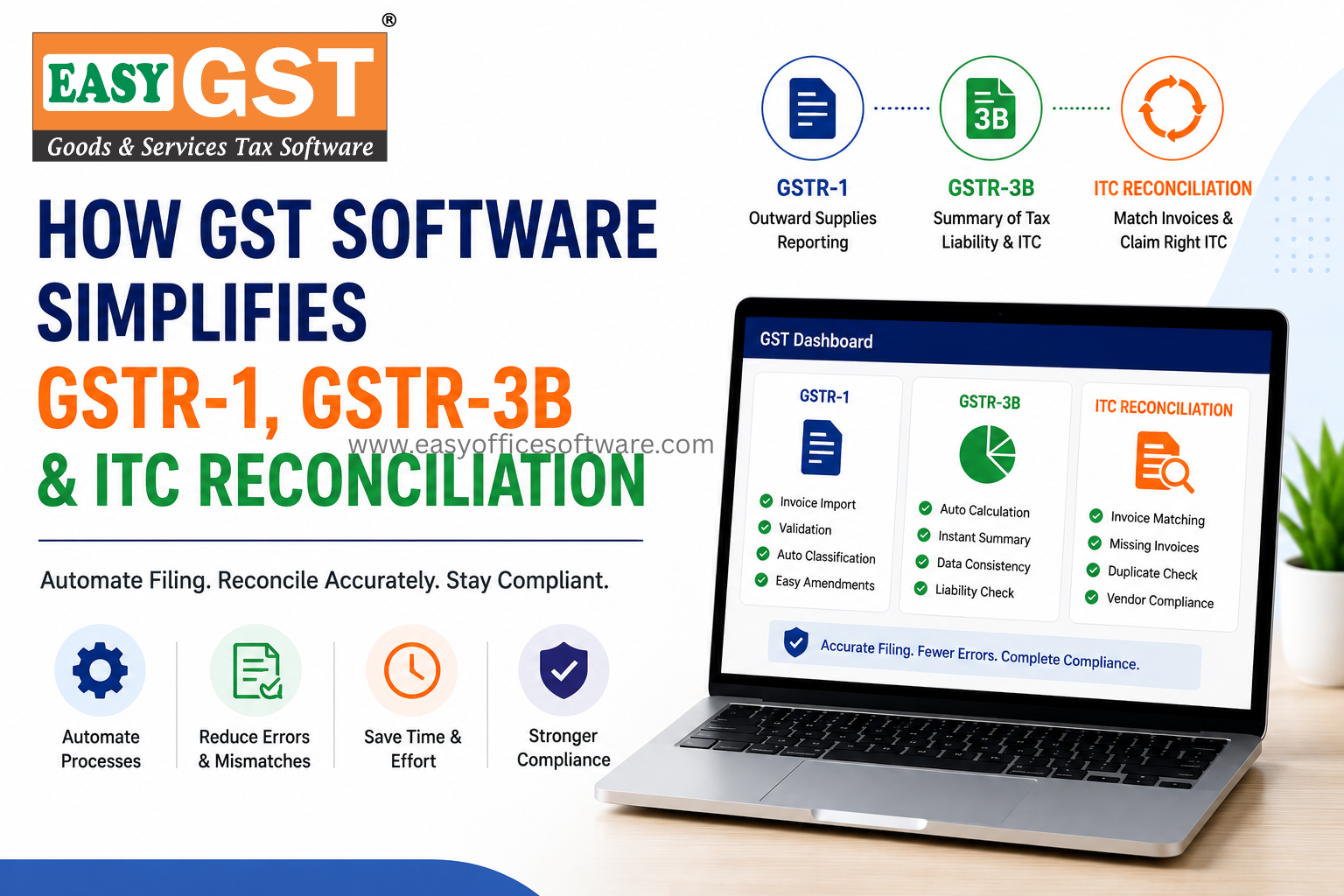
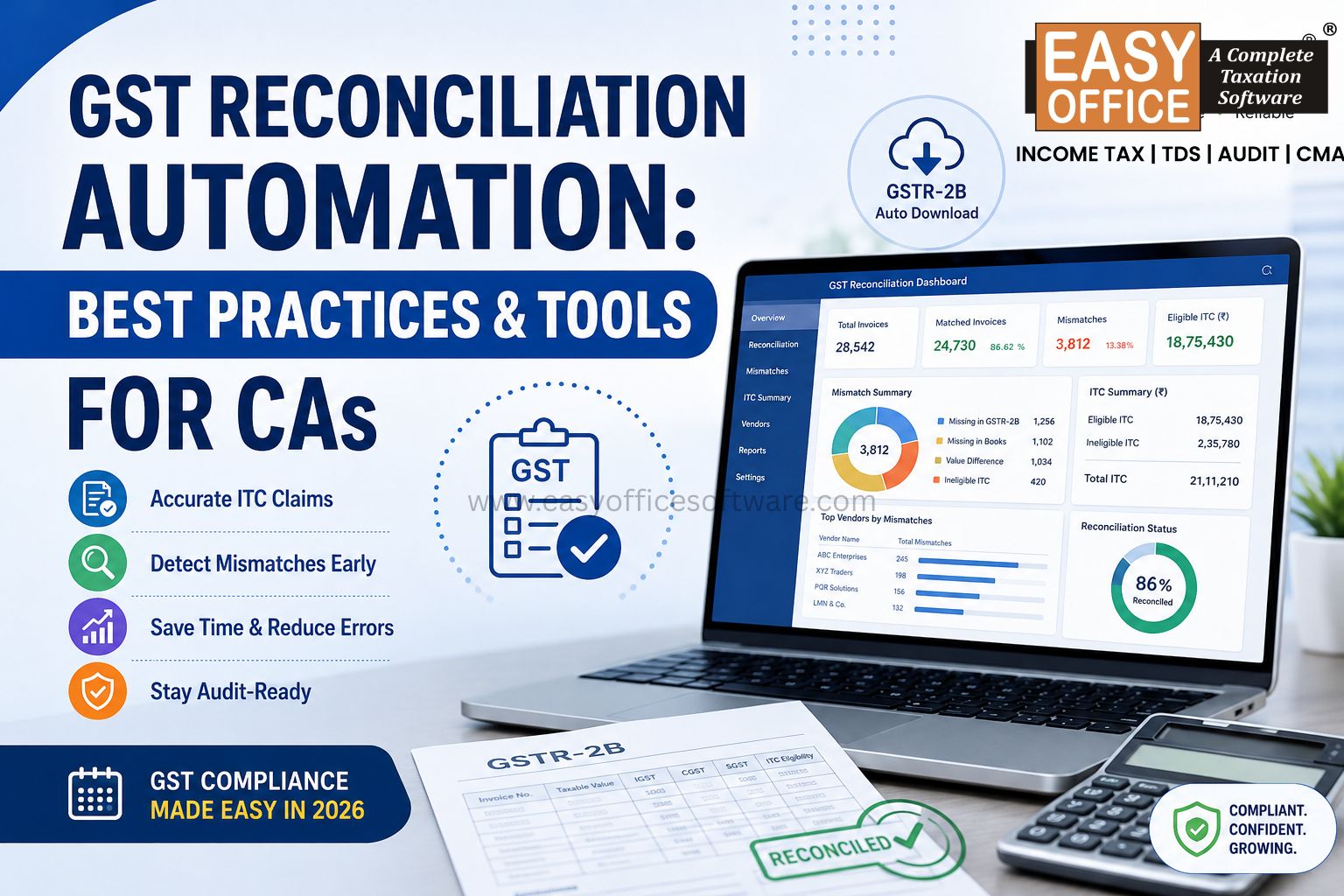
The GST return filing software provides a complete solution that automatically assigns outward supplies to GSTR-1 while it uses GSTR-2B to reconcile ITC and generates GSTR-3B with minimal human effort.
Software-based alerts remove the need for people to remember information. The system generates automatic tax returns, leading to fewer mistakes. The system detects errors through real-time validation, which identifies discrepancies before the submission process begins.
The GST return filing software provides tax professionals with multiple client management features, which include centralized dashboards and real-time filing progress tracking to ensure complete client coverage.
The 2026 GST filing calendar can be effectively managed through software for GST return filing that requires no additional work from users.
Who benefits most from automated GST compliance?
The people who gain the greatest advantage from automated GST compliance systems are.
1. Freelancers enjoy advantages through simplified filing processes, which decrease their need for external accounting services.
2. Small businesses achieve improved cash flow management through tax payment schedules that match their actual business obligations.
3. Chartered Accountants and tax professionals achieve business growth through their ability to manage operations without facing compliance difficulties.
4. Mid-sized businesses achieve lower audit risks through their practice of maintaining accurate financial records and preparing precise annual tax documentation.
GST return filing software changes compliance from a potential danger into a standard operational process across all business types.
Frequently Asked Questions
1. What is the penalty for missing GST returns in 2026?
The late fees for GSTR-1 and GSTR-3B, along with interest on unpaid tax.
Late Fees for GSTR-1
| Particulars | Late Fee |
| Nil return | ₹20 per day (₹10 CGST + ₹10 SGST) |
| Other than Nil return | ₹50 per day (₹25 CGST + ₹25 SGST) |
| Maximum late fee | ₹5,000 per return |
Late Fees for GSTR-3B
| Particulars | Late Fee |
| Nil return | ₹20 per day (₹10 CGST + ₹10 SGST) |
| Other than Nil return | ₹50 per day (₹25 CGST + ₹25 SGST) |
| Maximum late fee | ₹5,000 per return |
2. Can GST returns be revised after filing?
The system does not permit any revisions. Corrections must be made in subsequent returns.
3. Which statement should be used for ITC claims?
GSTR-2B should be used as it is a fixed monthly statement.
4. Do QRMP taxpayers have monthly compliance?
Yes. Tax payments through PMT-06 must occur every month, although companies submit their tax returns four times a year.
5. Is GST return filing software useful for single-person businesses?
Yes. The software reduces errors, provides alerts, and protects scheduled document submission even with minimal resources.
Final Thoughts
GST compliance in 2026 demands discipline, visibility, and accuracy. A clearly defined GST filing calendar 2026, combined with intelligent automation, is the most secure method to protect against penalties while preserving input tax credits.
The EasyGST software for GST return filing by ELECTROCOM serves freelancers, Chartered Accountants, tax professionals, and emerging businesses who need fast solutions without experiencing stress. EasyGST provides a more intelligent approach to filing GST as it allows you to maintain compliance while you concentrate on business expansion.
GST Filing Calendar 2026, Tax Due Dates India, GST Compliance, Income Tax Filing
Related Blogs


All in one Software
- Income Tax Software
- TDS & TCS Software
- Audit e-filing Software
- CMA Data Software

















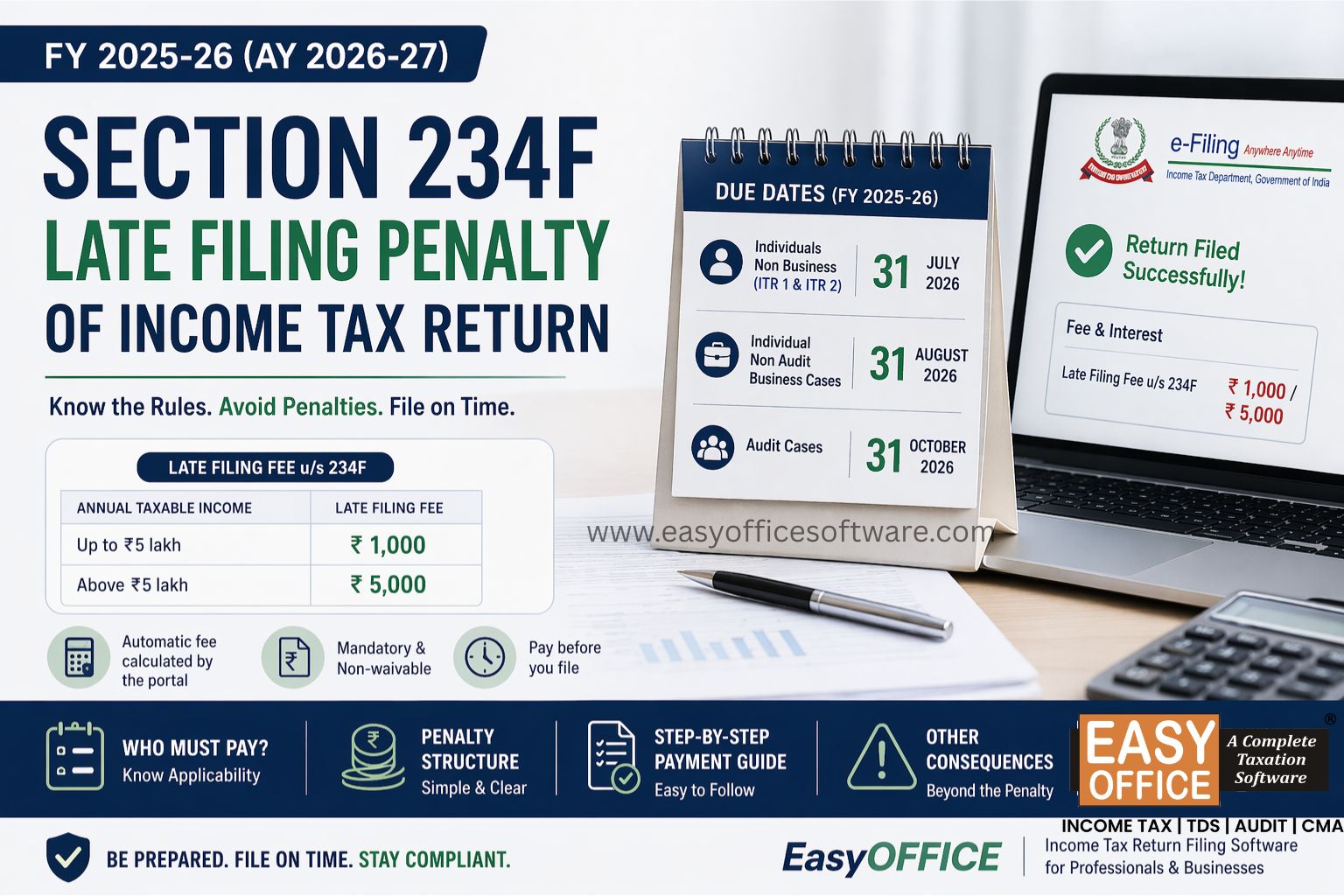
Penalty for Late Filing of Income Tax Return for FY 2025-26 – Section 234F of Income Tax Act 1961
#ITR