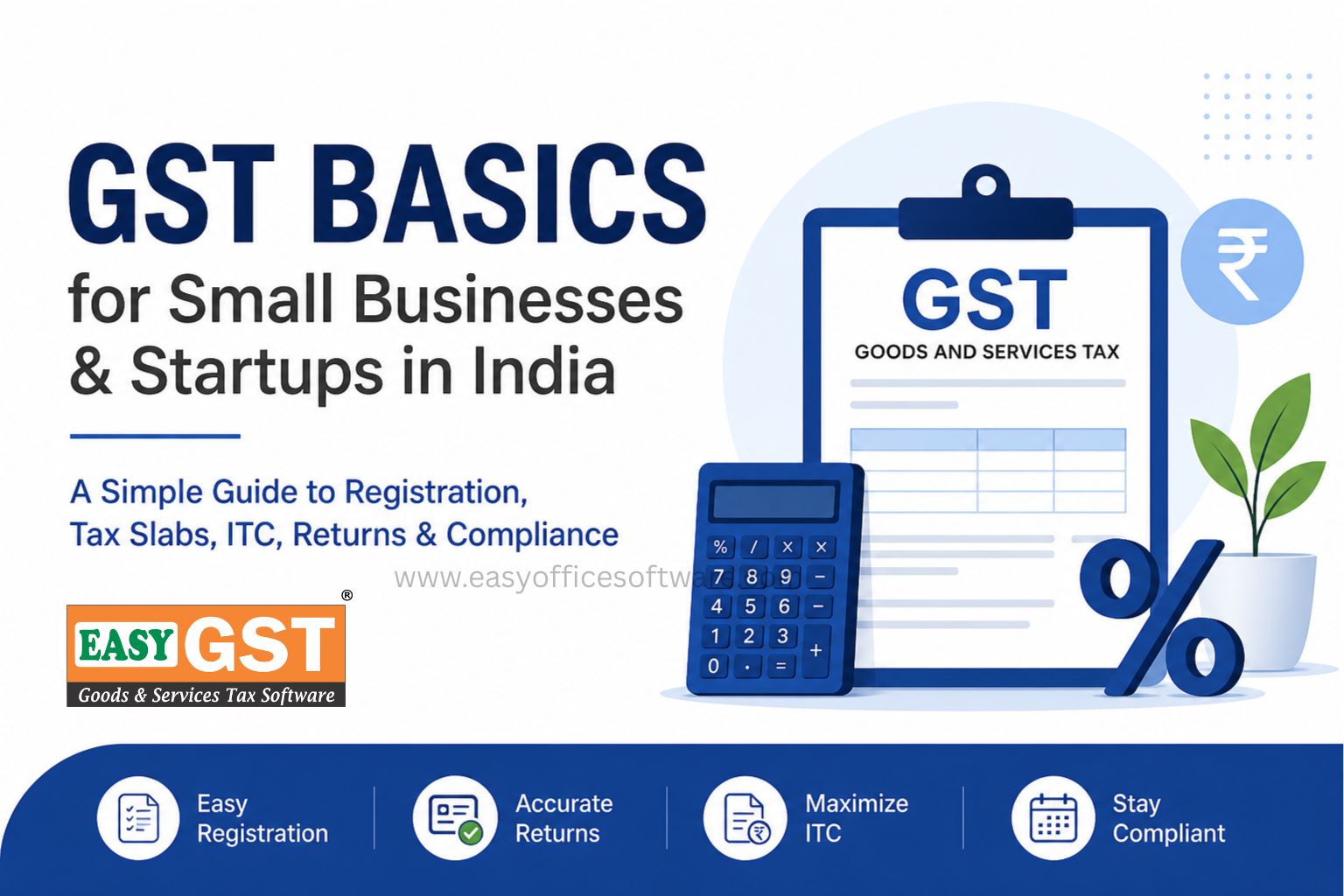
If you are running a small business or a startup in India, understanding GST is not optional - it’s essential. Whether you’re selling products, offering services or running a SaaS startup, GST impacts your pricing, cash flow, and compliance.
GST is an indirect tax on the supply of goods and services, collected in a single, destination-based manner throughout India. It replaced value-added tax (VAT), service tax, excise duty and other indirect taxes - removing the "tax on tax" effect that pushed up prices at every step of the value chain.
Why GST Matters for Startups
- One nation, one tax: One tax regime for all states, making it easier to operate across state borders.
- Destination-based: Tax is calculated where goods or services are used, rather than where they're produced.
- Input tax credit: Only pay tax on value added - receive credit for tax paid on inputs.
- Digital-first: Online filing and payments on the GST portal.
The Four Types of GST
There are different components depending on whether the transaction is intra-state (within state) or inter-state (across states):
- CGST (Central GST): Charged by the central government on intra-state (within state) supplies. Split 50/50 with SGST.
- SGST (State GST): Charged by the state government on intra-state sales. Collected by state government.
- IGST (Integrated GST): Charged on inter-state supplies and imports. Collected and distributed by the Centre.
- UGST (Union Territory GST): Charges levied in Union Territories without a legislature in place of SGST.
Simple rule: Selling within your state? CGST + SGST apply. Selling to another state or exporting? IGST applies. This is the same rate - just paid to a different authority.
GST Tax Slabs - What Tax Rate Are You In?
GST in India is a multi-slab system. Most startups, freelancers, consultants, IT service providers, and SaaS businesses fall under the 18% GST slab. Here are all the slabs:
| TAX RATE | ITEMS |
|---|---|
| 0% | Fresh fruits and vegetables, milk, bread, education, and healthcare |
| 5% | Imported goods, transport, small restaurants, newspapers |
| 12% | Laptops, junk food, first class travel |
| 18% | IT services, SaaS, financial services, most B2B services |
| 28% | Cars, cigarettes, luxury items, soft drinks |
If you are providing services to overseas customers, they are zero-rated supplies - you don't charge GST, and can claim input tax credit (ITC).
Who Has to Register for GST?
You must register once you surpass these turnover limits (or immediately in some cases):
GST Registration Thresholds
- ₹40L (Goods suppliers): Businesses selling physical products in most states must register once annual turnover crosses ₹40 lakh.
- ₹20L (Service providers): Freelancers, consultants, SaaS founders, and agencies must register at ₹20 lakh annual revenue.
- ₹10L (Special category states): Manipur, Mizoram, Nagaland, Tripura have a lower threshold of ₹10 lakh.
🚨 Mandatory Registration (Regardless of Turnover)
- ✅ Inter-state supply of goods/services
- ✅ E-commerce sellers and operators
- ✅ Selling through online marketplaces
💡 Pro Tip for Startups: Voluntary registration is a good idea, even if you are below the threshold, as you can claim Input Tax Credit on your purchases - a great cash flow boost if you are purchasing equipment, software or services.
How to Register for GST - Step by Step
GST registration is free and online. The process will usually take 3-7 days:
- Visit gst.gov.in: Enter Part A: PAN, mobile number, and email on Form GST REG-01. Verify via OTP.
- Complete Part B: Provide business information - type of business, address, bank account details, authorized signatures, and HSN/SAC codes.
- Upload documents: PAN, Aadhaar, proof of business address, bank statement, and digital signature (companies only).
- Submit and track: Submit using DSC or e-signature. Monitor the application status using the ARN (Application Reference Number).
- Receive your GSTIN: Your 15-digit GST Identification Number (GSTIN) is issued in 3-7 days. You're now GST-registered.
⚠ Common Error: Avoid incorrect address proof, mismatched PAN-Aadhaar details or wrong HSN/SAC codes - these delay approval.
Input Tax Credit (ITC) - A Big Win
Input tax credit (ITC) helps offset the GST you pay on your business expenses against the GST you collect on sales. You only pay GST on the value you created - not the total sale.
ITC Calculation Example:
You buy materials (₹10,000 + ₹1,800 GST) → You sell a product (₹20,000 + ₹3,600 GST) → You pay the government: ₹3,600 − ₹1,800 = ₹1,800
To claim ITC, you need to have a tax invoice, you must have received the goods and services, the supplier must have paid their GST to the government and you need to file your returns on time.
❌ Common Error: ITC is not allowed on personal expenses, motor vehicles (with exceptions) or blocked credits under GST law.
GST Returns - What to File and When
| Return | What it Covers | Frequency | Due Date |
|---|---|---|---|
| GSTR 1 | Outward supply details (your sales invoices) | Monthly / Quarterly | 11th of next month |
| GSTR 3B | Summary return — taxes paid, ITC claimed | Monthly | 20th of next month |
| GSTR 9 | Annual return — full year reconciliation | Annual | 31st December |
| GSTR 9C | Audit reconciliation (turnover above ₹5 crore) | Annual | 31st December |
QRMP Scheme: If your annual turnover is below ₹5 crore, you can opt for quarterly GSTR-1 filing and pay tax monthly via a simple challan. Fewer filings, same compliance.
Practical Tips to Stay GST-Compliant
Here are some tips to avoid getting into trouble with GST:
- Register early, before reaching the threshold or you’ll risk missing out on the input tax credit.
- Keep all invoices, bills, and payment vouchers in soft copy for at least 6 years.
- Compare your GSTR-2B every month. Discrepancies between your purchases and supplier returns may affect ITC.
- Set monthly reminders for GSTR-1 (11th) and GSTR-3B (20th) because interest starts from the next day.
- Explore GST return filing software such as EasyGST for auto-calculating GST and returns.
- If you provide services for export, apply for LUT (Letter of Undertaking) to supply services without charging IGST, and get ITC refunds.
- Engage a GST registered CA for rapid turnover or for interstate supplies.
Penalties for Non-Compliance
Timely filing is a must. Late filing leads to penalties and disallows ITC. Here's what you pay in case of non-compliance:
| Offence | Penalty Amount |
|---|---|
| Late return filing | ₹50/day (₹20/day for nil returns) |
| Non-filing of returns | 10% of tax due (min ₹10,000) |
| Tax evasion | 100% of the tax amount |
| Wrong ITC claims | 10% penalty or ₹10,000 |
| Fake invoice generation | 100% of tax amount |
| Not issuing invoices | ₹25,000 per offence |
Conclusion
GST is simple. Timely registration, proper invoicing, timely returns, and claiming all the ITC available to you. That's 90% of your GST compliance for small businesses and startups. Start early, automate where possible and seek professional support as you scale.
Frequently Asked Questions
Q. I have registered for GST, but I have no sales this month. Should I still file GST Returns?
A. Yes, you will have to file a "Nil Return". You must log in and file GSTR-1 and GSTR-3B on time, even if there were no sales. Not filing a Nil return will still attract late fees (at ₹20 per day).
Q. Can I claim back the GST on my office, PC, and software subscriptions?
A. Yes. This is one of the biggest benefits of the GST regime. If you use these items exclusively for business use and receive a valid GST invoice with your GSTIN from your landlord/vendor, you can claim Input Tax Credit (ITC).
Q. Can I cancel my GST registration if I change my business or close shop?
A. Yes. You can apply for Voluntary Cancellation of your GST registration on the GST portal if your turnover is less than the threshold or if you want to close your business. File a Final Return (GSTR-10) within three months from the date of cancellation.
Q. Can I switch from composition scheme to regular GST later?
A. Yes, you can switch by applying on the GST portal at the beginning of a financial year.
Q. Is GST software mandatory for filing returns?
A. GST software is not mandatory, but tools like EasyGST make return filing faster, more accurate and far less error-prone especially for growing businesses.
Related Blogs



All in one Software
- Income Tax Software
- TDS & TCS Software
- Audit e-filing Software
- CMA Data Software





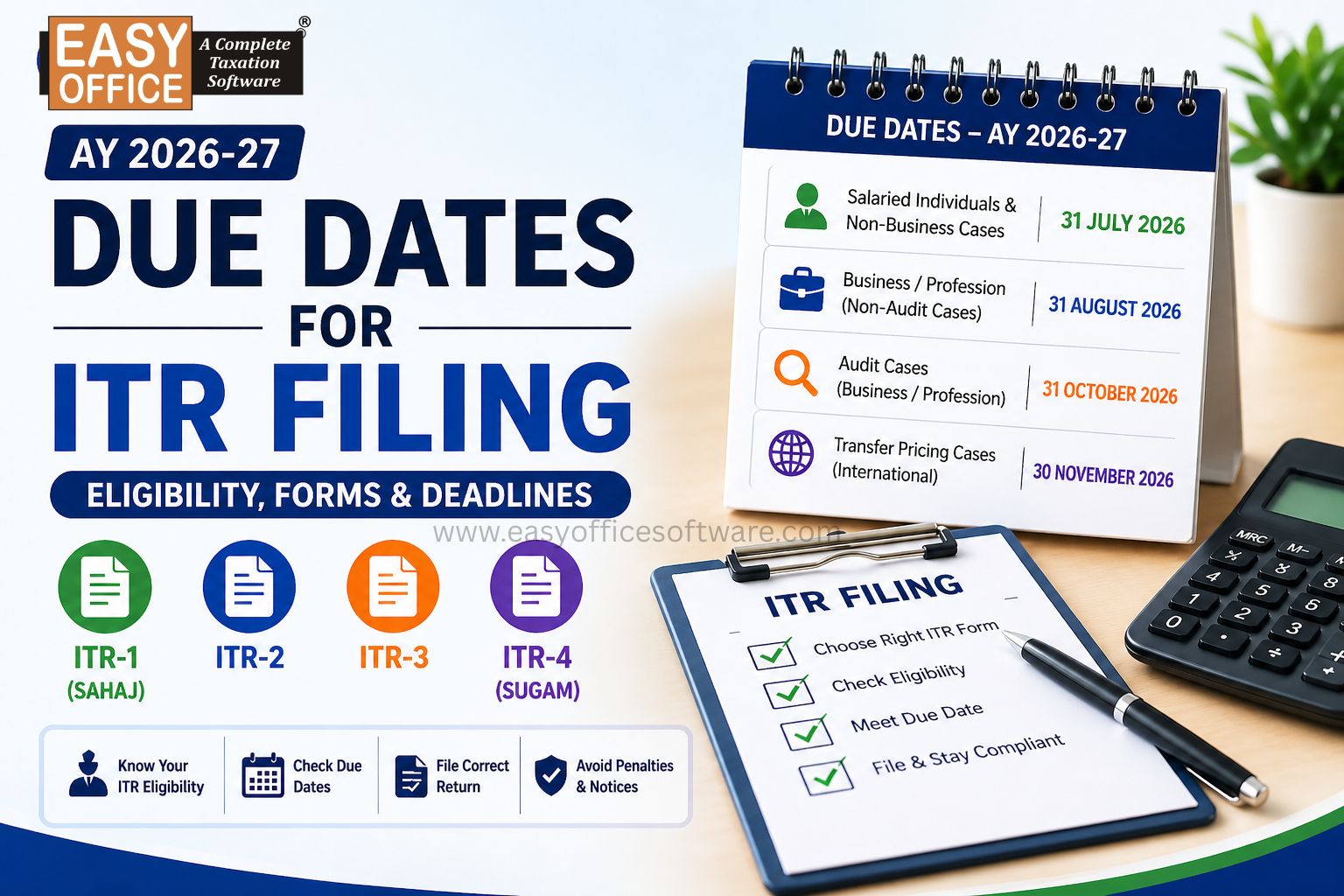
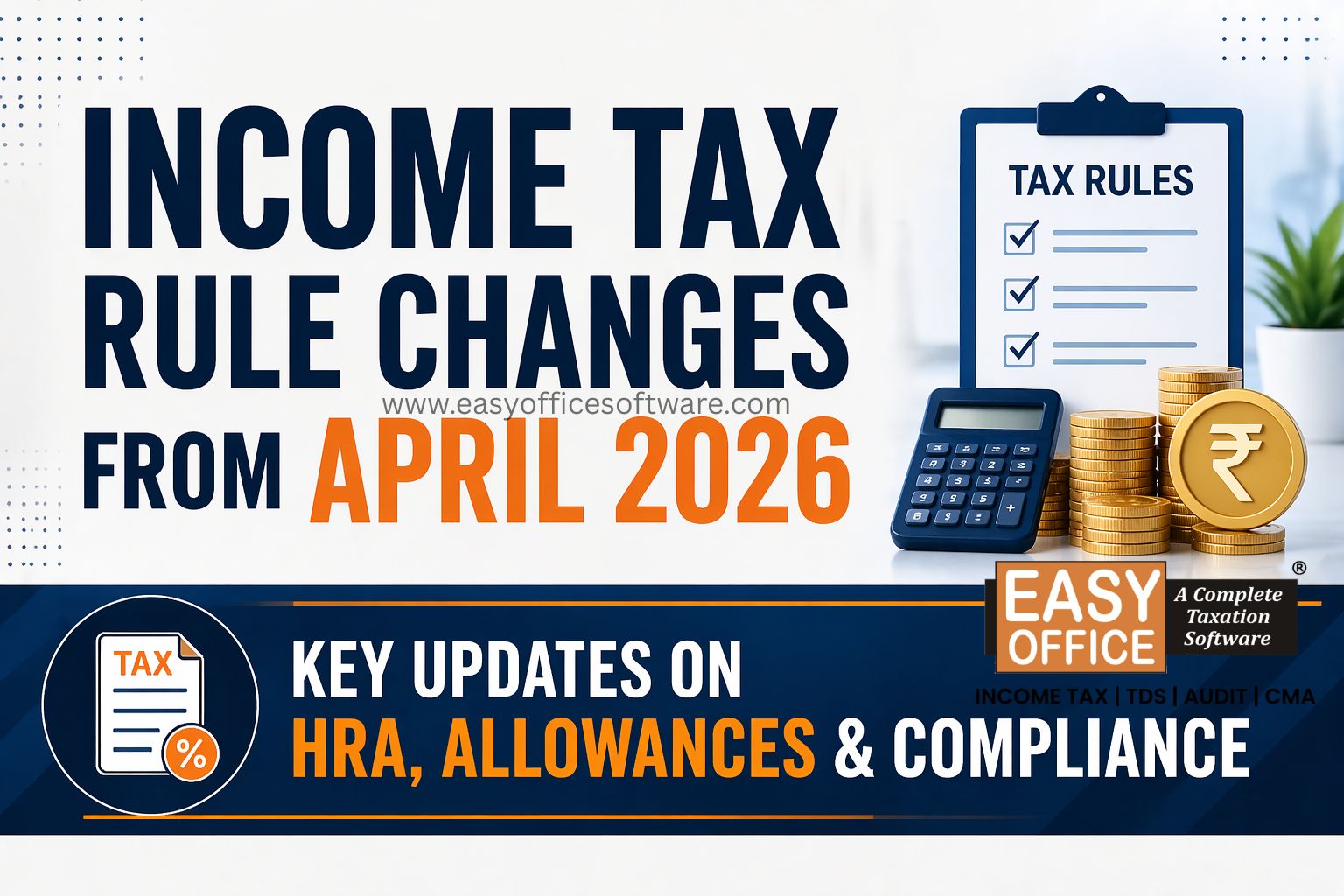
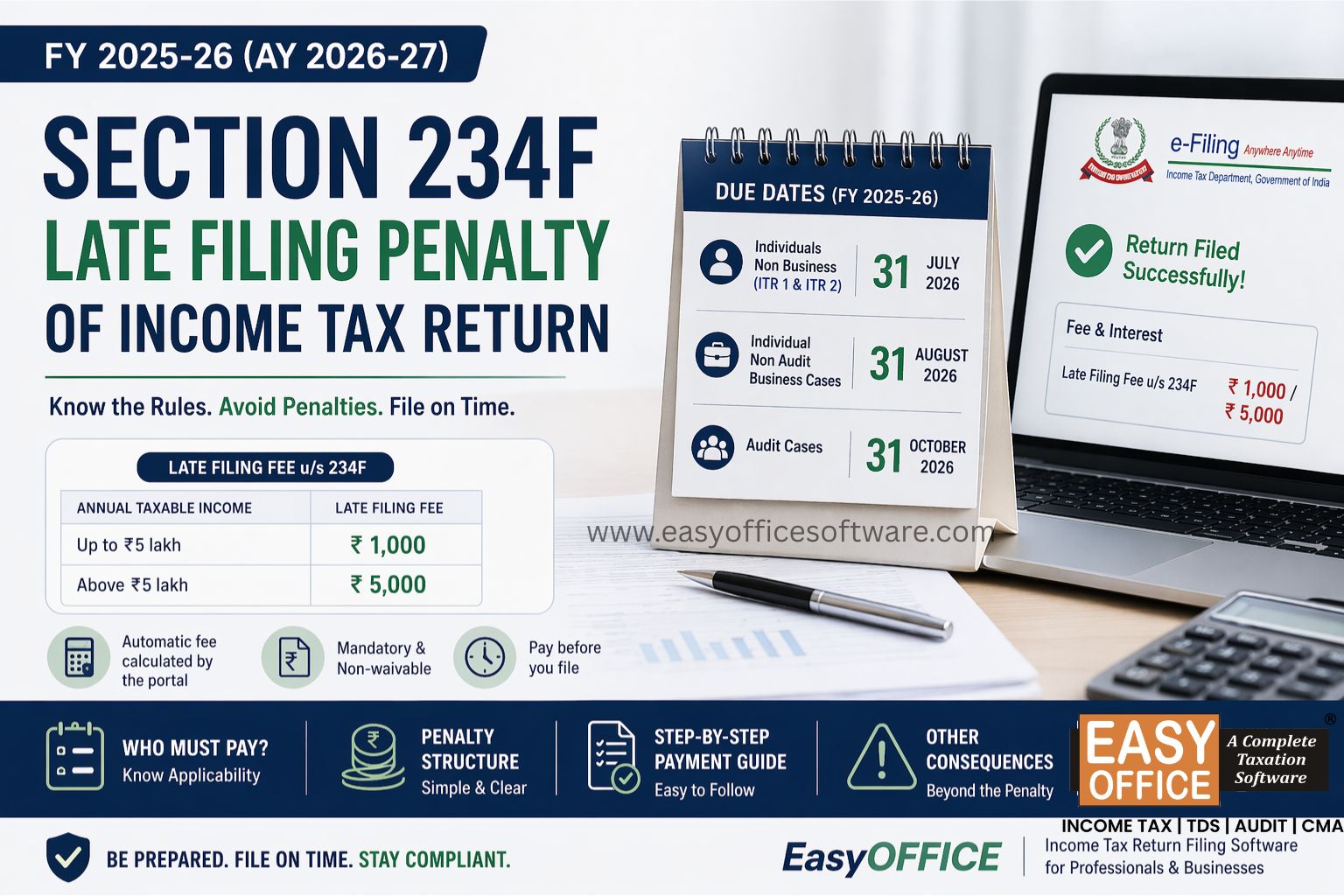
Penalty for Late Filing of Income Tax Return for FY 2025-26 – Section 234F of Income Tax Act 1961
#ITR