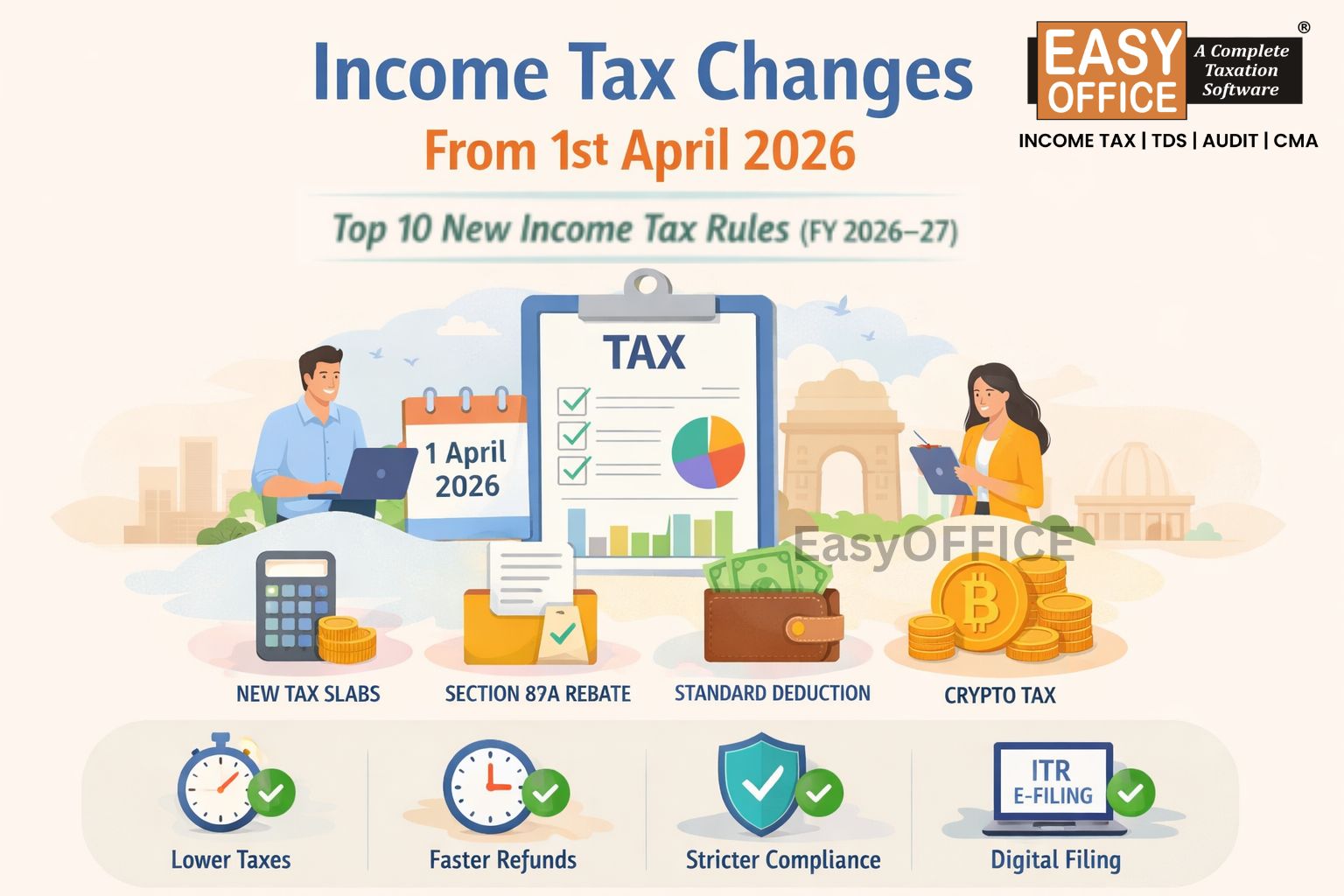
If you are a salaried employee, freelancer, or business owner in India, then 1st April 2026 is an important date for you. From 1st April 2026, Income Tax system enters a new phase with the implementation of Income Tax Act 2025 for FY 2026-27. Several income tax rules have been updated that directly impact how much tax you pay and how you file your returns.
Whether you’re searching for the best itr filing software, trying to understand the new tax regime, or simply want to save more tax, this guide will break everything down in simple, easy-to-understand Indian English.
Let’s get straight into it 👇
Top 12 New Income Tax Rules From 1st April 2026
1. New Tax Regime Becomes Default (Again)
The new tax regime continues as the default option for taxpayers.
Key highlights:
✔ Lower tax rates
✔ Limited deductions
✔ Simple structure
👉 If you don’t choose anything, your tax will automatically be calculated under the new regime.
📌 Tip: Use a good itr filing software to compare the old vs. the new regime before filing.
2. Revised Income Tax Slabs (New Regime)
The government has further optimised tax slabs to reduce the tax burden.
Updated Income Tax Slabs (New Regime)
| New Regime Slab | New Regime Rate |
| Up to ₹4,00,000 | Nil |
| ₹4,00,001 - ₹8,00,000 | 5% |
| ₹8,00,001 - ₹12,00,000 | 10% |
| ₹12,00,001 - ₹16,00,000 | 15% |
| ₹16,00,001 - ₹20,00,000 | 20% |
| ₹20,00,001 - ₹24,00,000 | 25% |
| Above ₹24,00,000 | 30% |
3. Standard Deduction Continues
Good news for salaried employees!
Standard deduction of ₹75,000 continues in the New Tax regime and ₹50,000 for Old Tax Regime
📌 Impact:
Direct reduction in taxable income
Saves up to thousands of tax annually
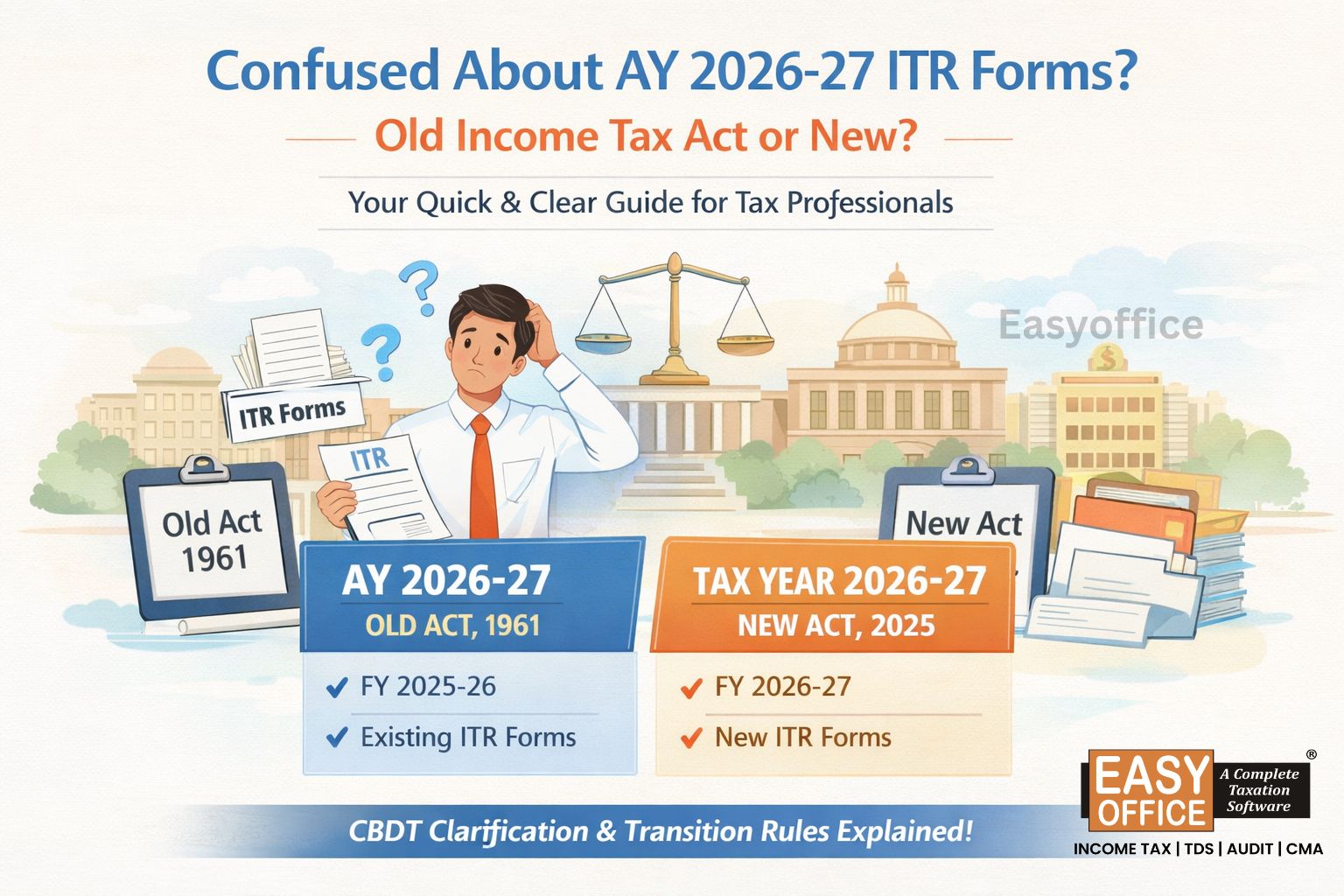
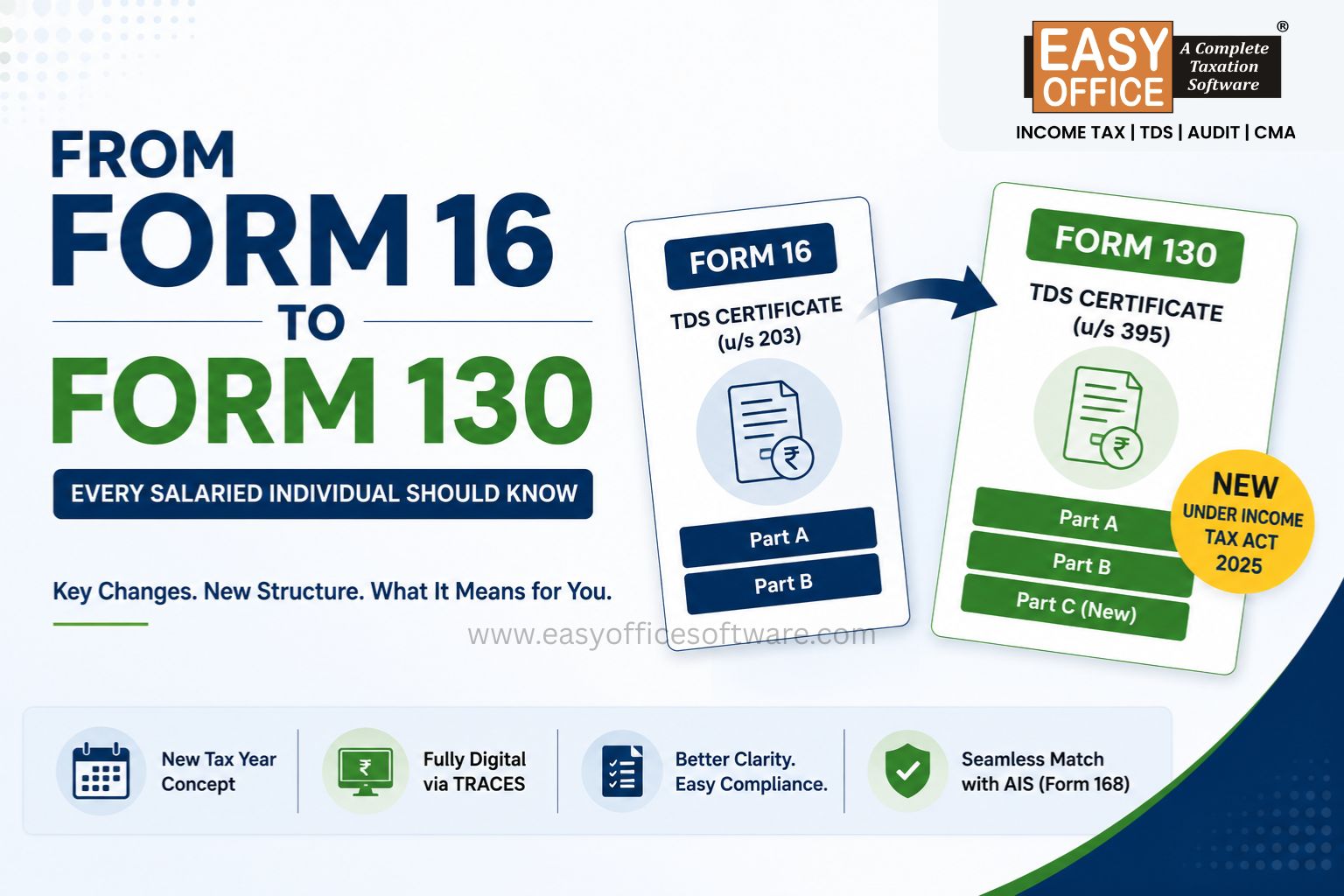
4. "Tax Year" will replace FY & AY term
The phrase "Tax Year" will take the place of the terms Financial Year and Assessment Year. The main aim of this change is to reduce confusion.
5. Higher Rebate Under Section 87A
The tax rebate limit has been increased.
i. Income up to ₹12 lakh → Zero tax (after rebate)
ii. Effective tax-free income can go up to ₹12.75 lakh due to the standard deduction
📊 Nearly 50% taxpayers fall in this bracket, meaning many people may not pay any tax at all.
📌 Important: Rebate will not be received against any Special Rate Taxable Income.
6. Expanded Exemptions & Allowances
The Income Tax Rules, 2026 to Act 2025 include updated allowances and exemptions:
✔ Higher House Rent Allowance (HRA) relief – more cities qualify for enhanced HRA under metro cities.
✔ Revised meal card / food benefit exemptions.
✔ Increased children’s education and hostel allowances compared to older limits.
📌This help reduce taxable salary for eligible employees if structured correctly.
7. ITR Filing Deadlines Revised
Under the transitional framework being adopted:
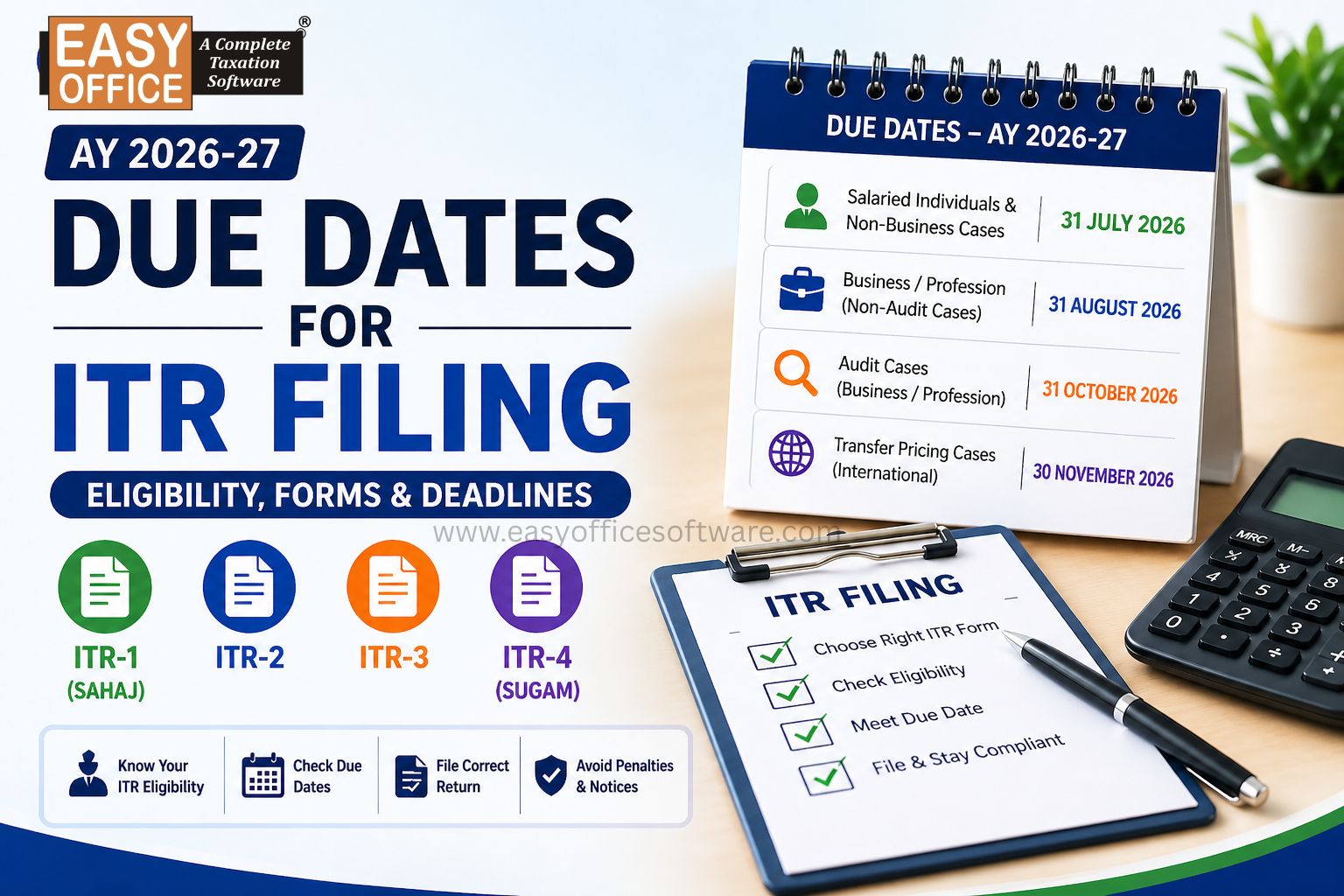
✔ ITR-1 & ITR-2 due by 31 July 2026 (unchanged)
✔ ITR-3 & ITR- 4 (non-audit business cases) may have extended deadlines (e.g., 31 August 2026) – depending on CBDT notifications.
8. Digital Assets & Crypto Tax Updates
Crypto is still taxable, but the rules are clearer.
✔ 30% tax continues on gains
✔ Improved reporting requirements
✔ Stricter compliance tracking
📊 India has over 1 crore crypto investors, so this is highly relevant.
9. Updated ITR Forms & Faster Filing
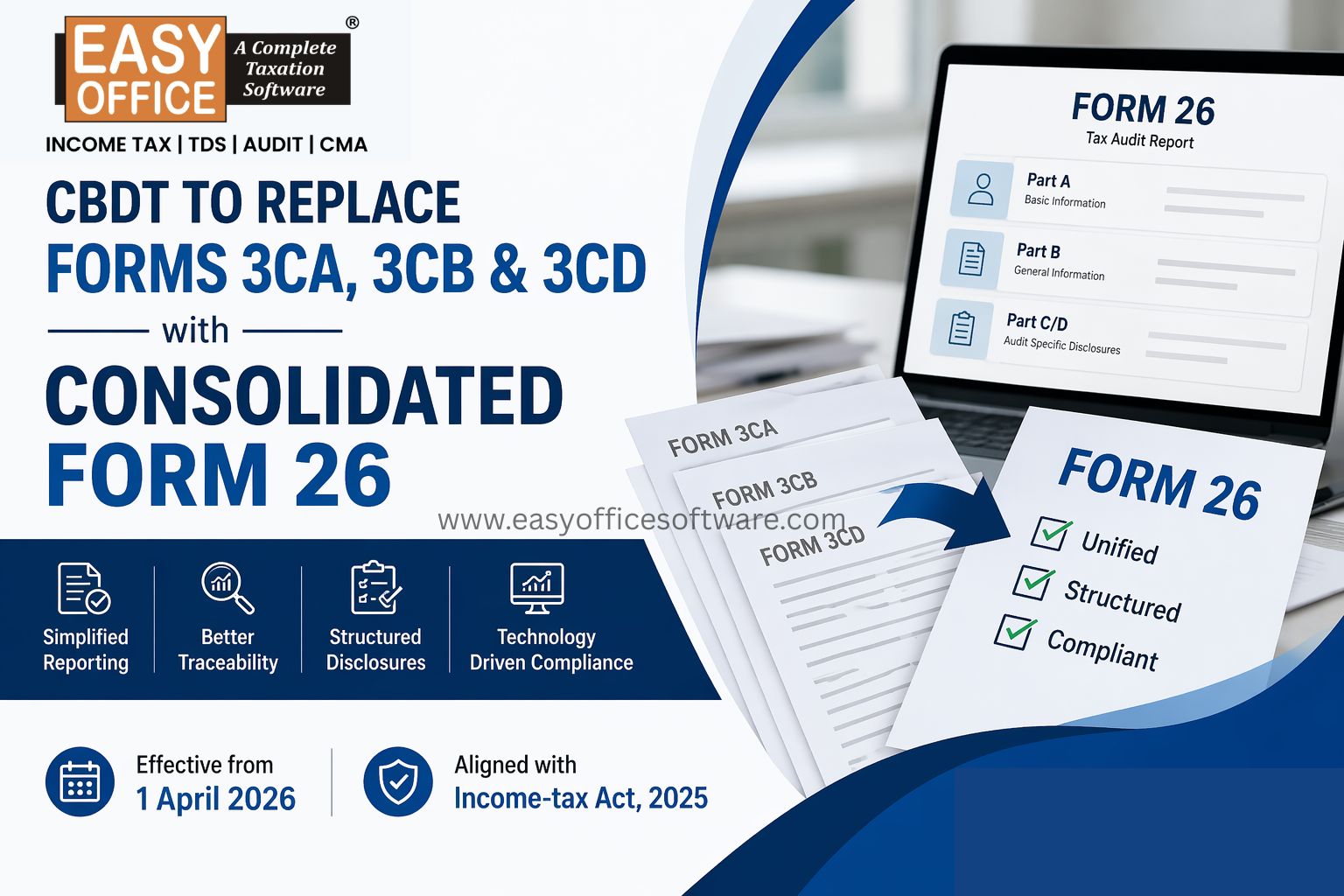
New ITR forms are expected to be:
✔ Simpler
✔ More automated
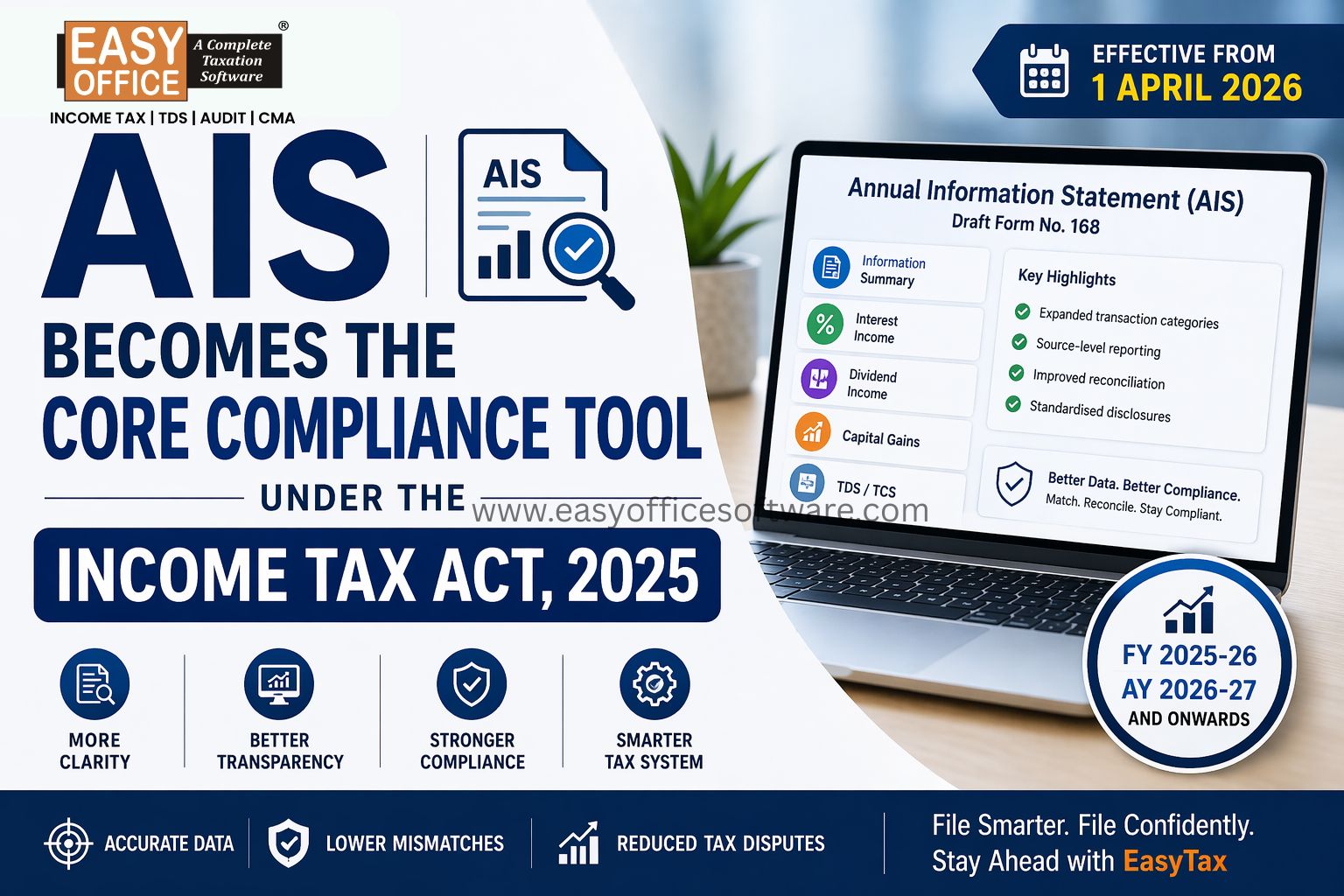
✔ Pre-filled with AIS data
👉 Filing returns will become easier using itr filing software
📌 Benefits:
Less manual entry
Fewer errors
Faster refunds
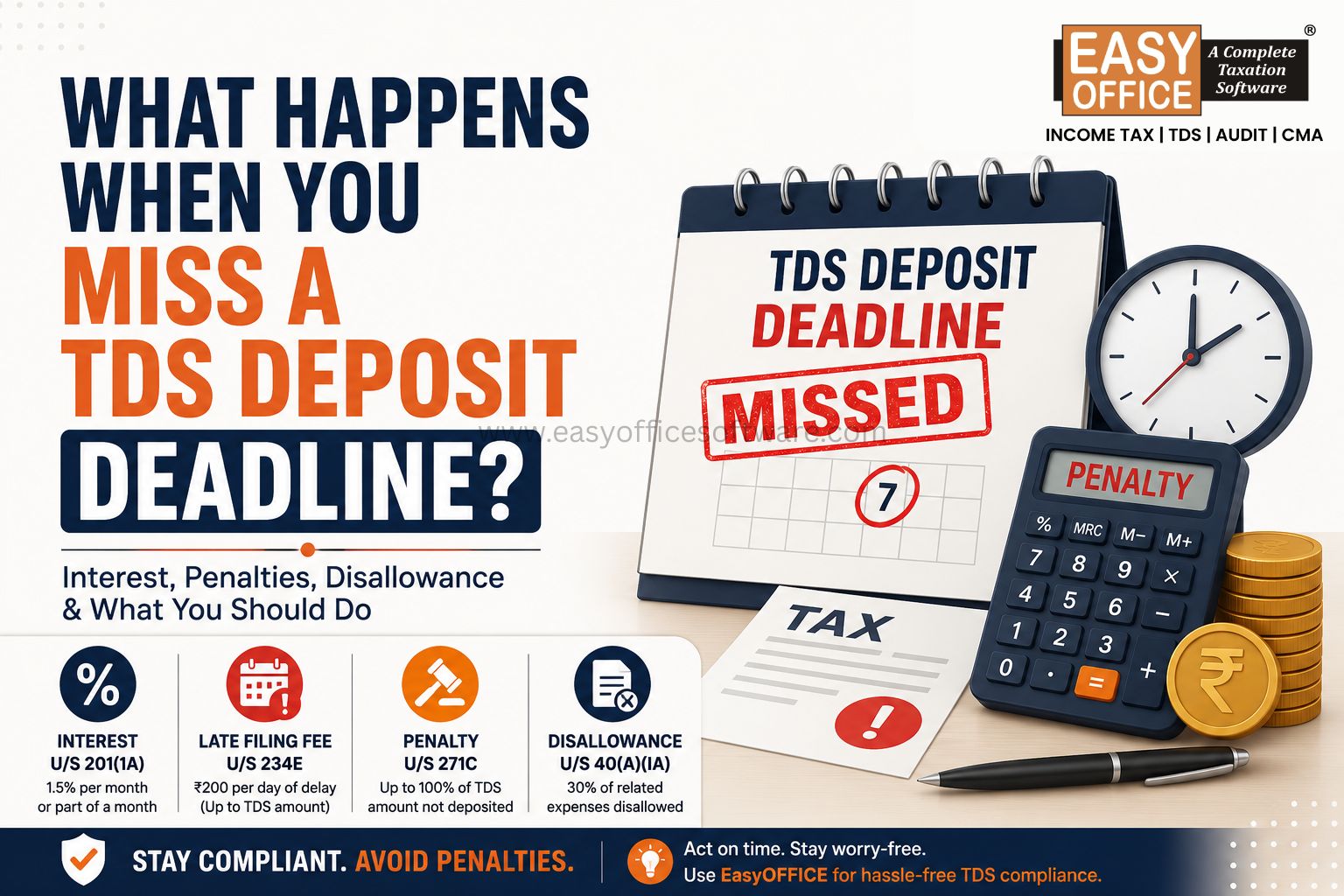
10. Stricter Compliance & Penalties
The government is focusing on compliance.
Changes include:
✔ Better tracking of high-value transactions
✔ AIS and TIS data cross-verification
✔ Higher penalties for incorrect filing
👉 Even small mismatches can trigger notices.
📌 Using reliable itr filing software helps avoid mistakes.
11. More Focus on Digital Filing & Automation
India is moving towards 100% digital tax ecosystem.
✔ AI-based scrutiny
✔ Pre-filled returns
✔ Integration with banks & financial platforms
📊 As per industry estimates Over 95% ITRs are already filed online
👉 Manual filing will soon become outdated.
Why You Should Use ITR Filing Software in 2026
With so many changes, manual filing is risky.
Benefits of using itr filing software:
✔ Auto calculation of tax
✔ Compare old vs new regime
✔ Pre-filled data from AIS
✔ Error detection
✔ Faster filing
✔ Expert assistance (in some tools)
📊 More than 70% taxpayers now use itr filing software for filing returns.
Final Thoughts
The income tax changes from 1st April 2026 are clearly designed to make taxation:
✔ Simpler
✔ Faster
✔ More digital
✔ More transparent
For most taxpayers, especially salaried individuals, the new regime offers lower taxes and less hassle.
But with stricter compliance and AI tracking, accuracy has become very important.
👉 That’s why using a reliable itr filing software is not just helpful — it’s essential.
Income Tax 2026, New Tax Rules India, Tax Updates, Income Tax Act 2025
Related Blogs




All in one Software
- Income Tax Software
- TDS & TCS Software
- Audit e-filing Software
- CMA Data Software














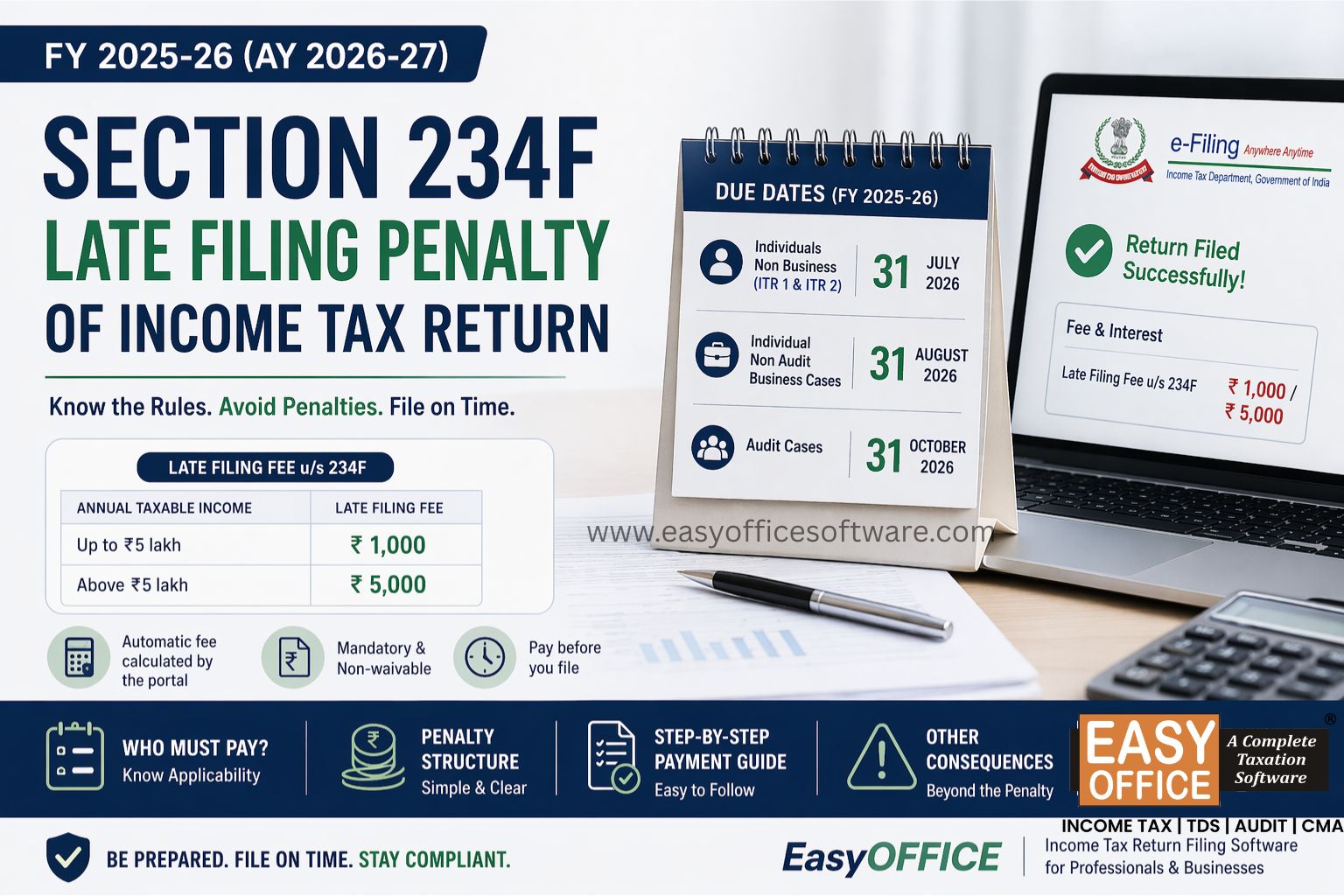
Penalty for Late Filing of Income Tax Return for FY 2025-26 – Section 234F of Income Tax Act 1961
#ITR