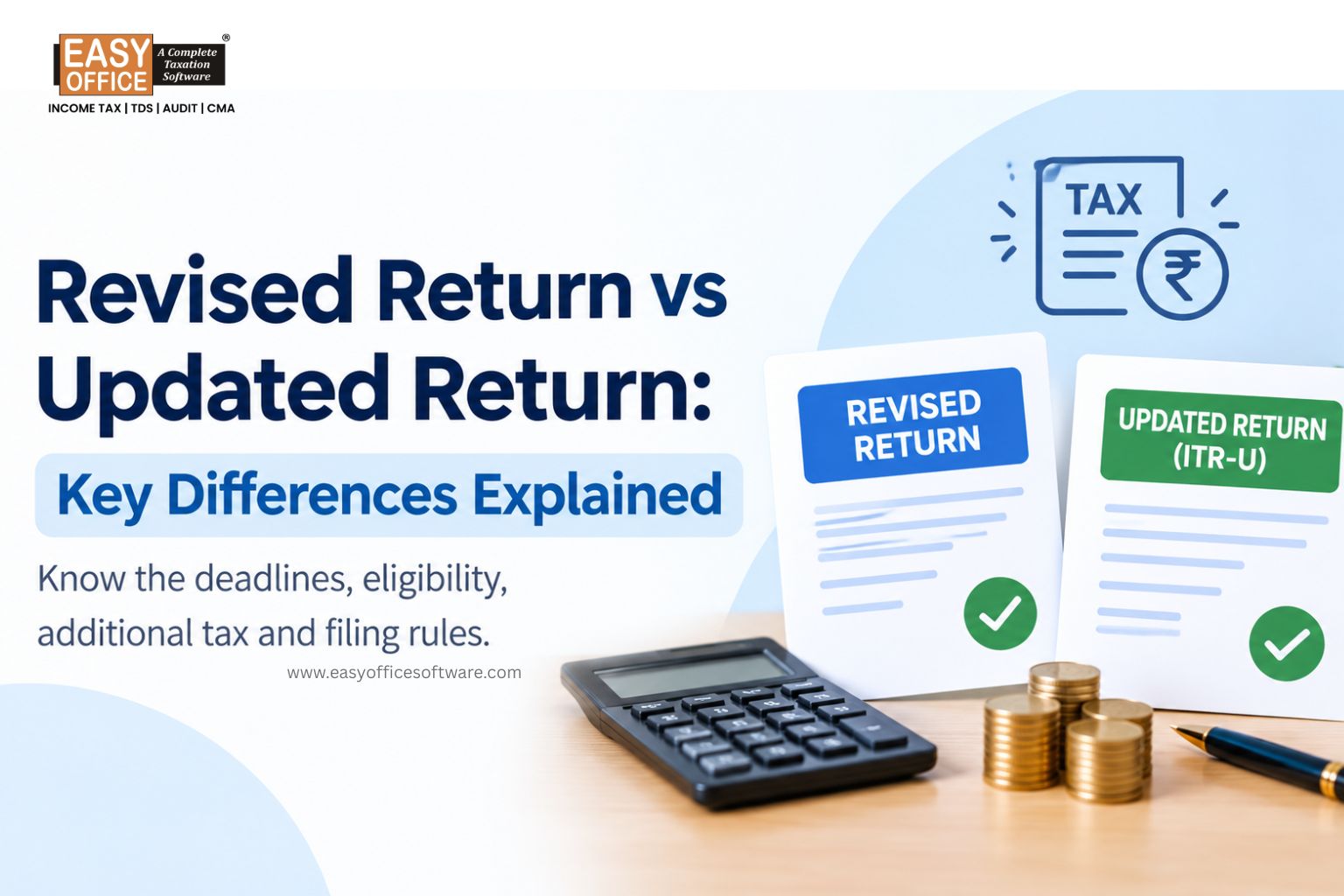
Filing an income tax return is not always the final step. You may discover later on that there was some income which you forgot to include in the return, or maybe some wrong deductions or other errors in the return. The Income Tax Act offers various options for correcting or amending your income tax return in such cases.
Two confusing concepts in income tax are 'revised return' and 'updated return'. Even though these two types of returns provide the opportunity to correct one’s income tax return, they differ in timing and tax effects.
If you use income tax filing software, knowing which one to choose can save you from extra tax and unnecessary notices.
What Is a Revised Income Tax Return?
A revised return is a corrected version of a return you have already filed. You file it when you spot a mistake or something you left out.
For example, a taxpayer files an ITR and later realises the savings account interest was missed. If the revised return window is still open, they can file a corrected return with that income added.
Once filed, the revised return replaces your earlier one for processing.
You can file one when:
Original return is filed
You found an error
Deadline hasn't passed
Correct details are ready
There is no extra tax just because a return is revised. You only pay any tax difference that comes out of the correction, along with interest if it applies.
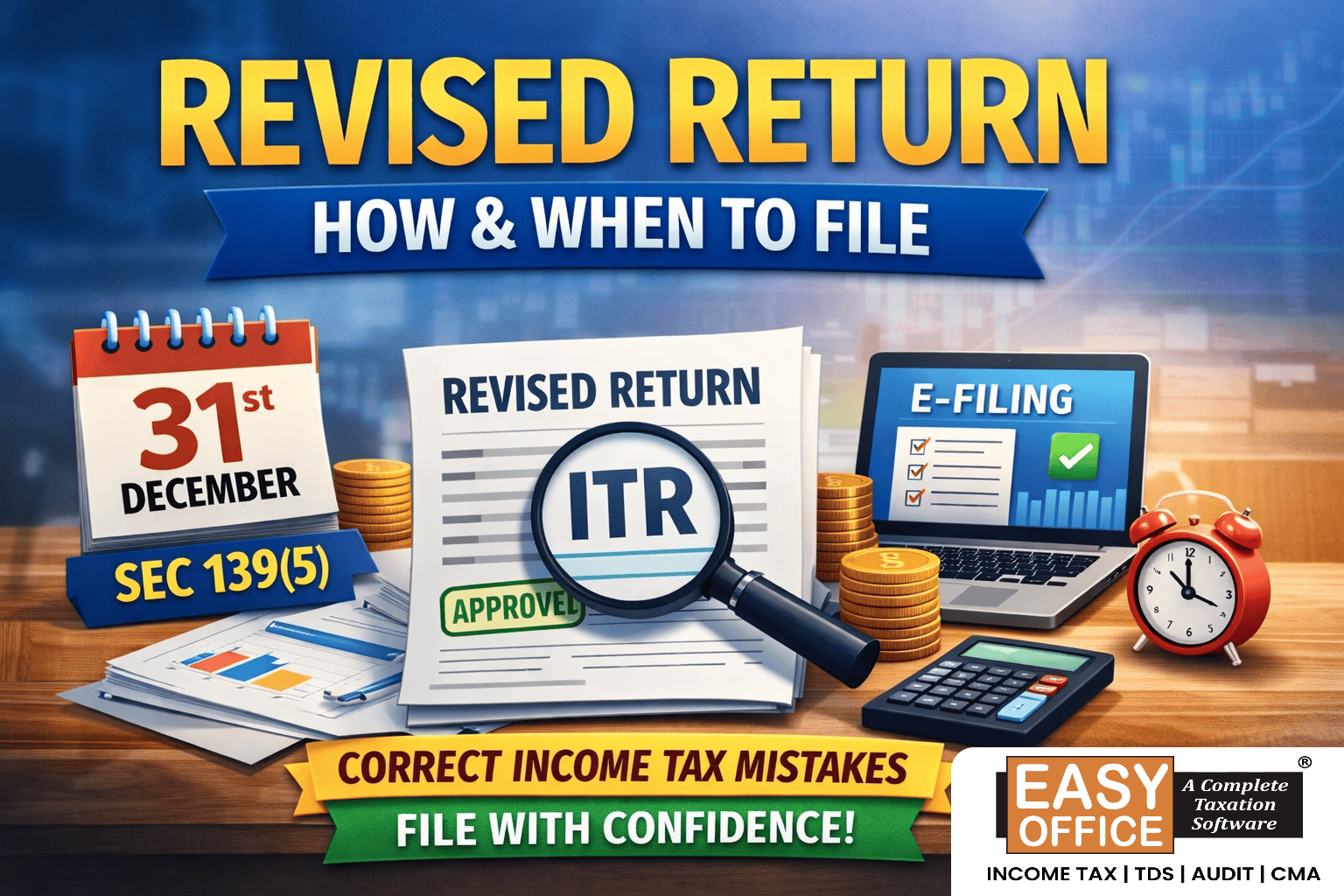
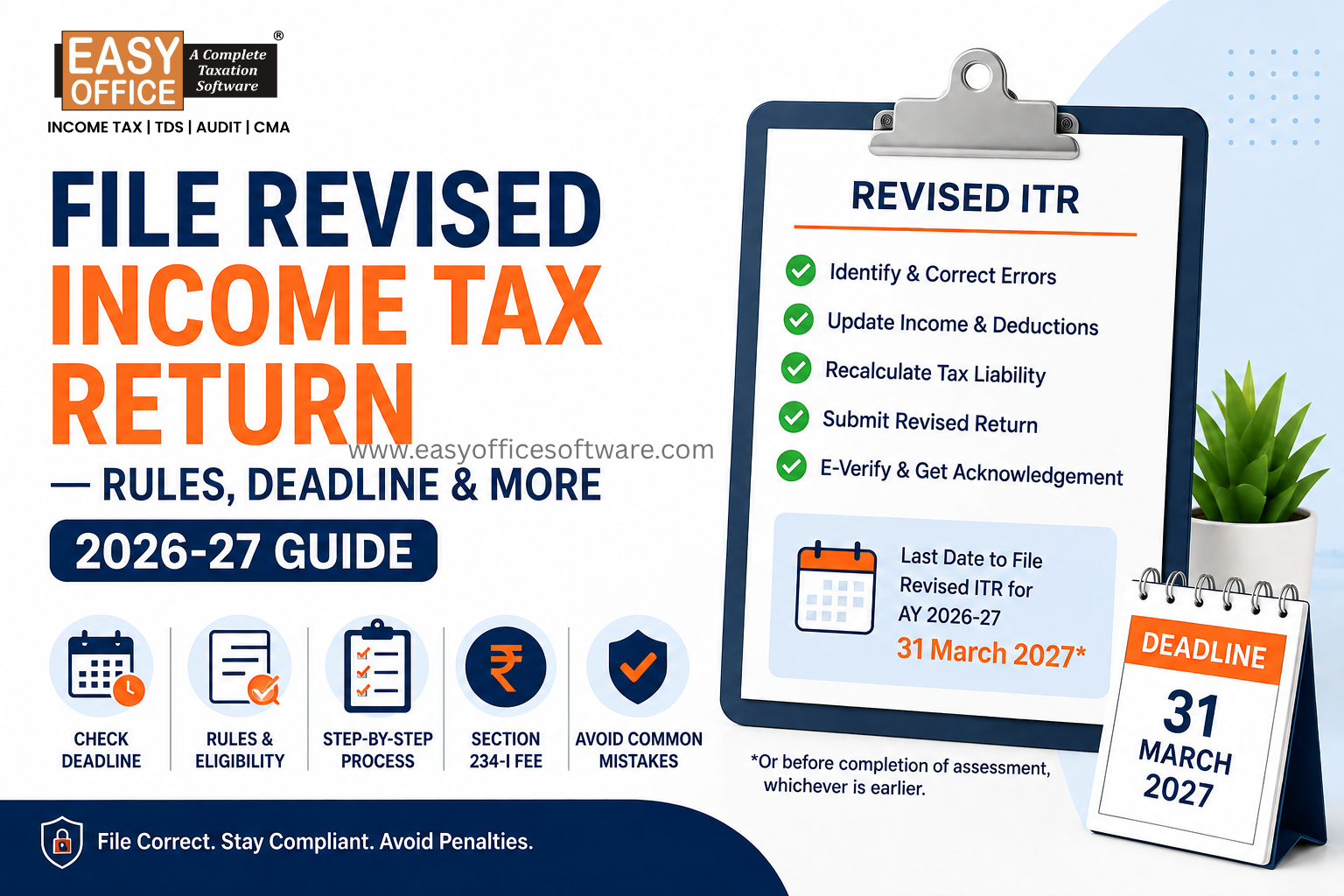
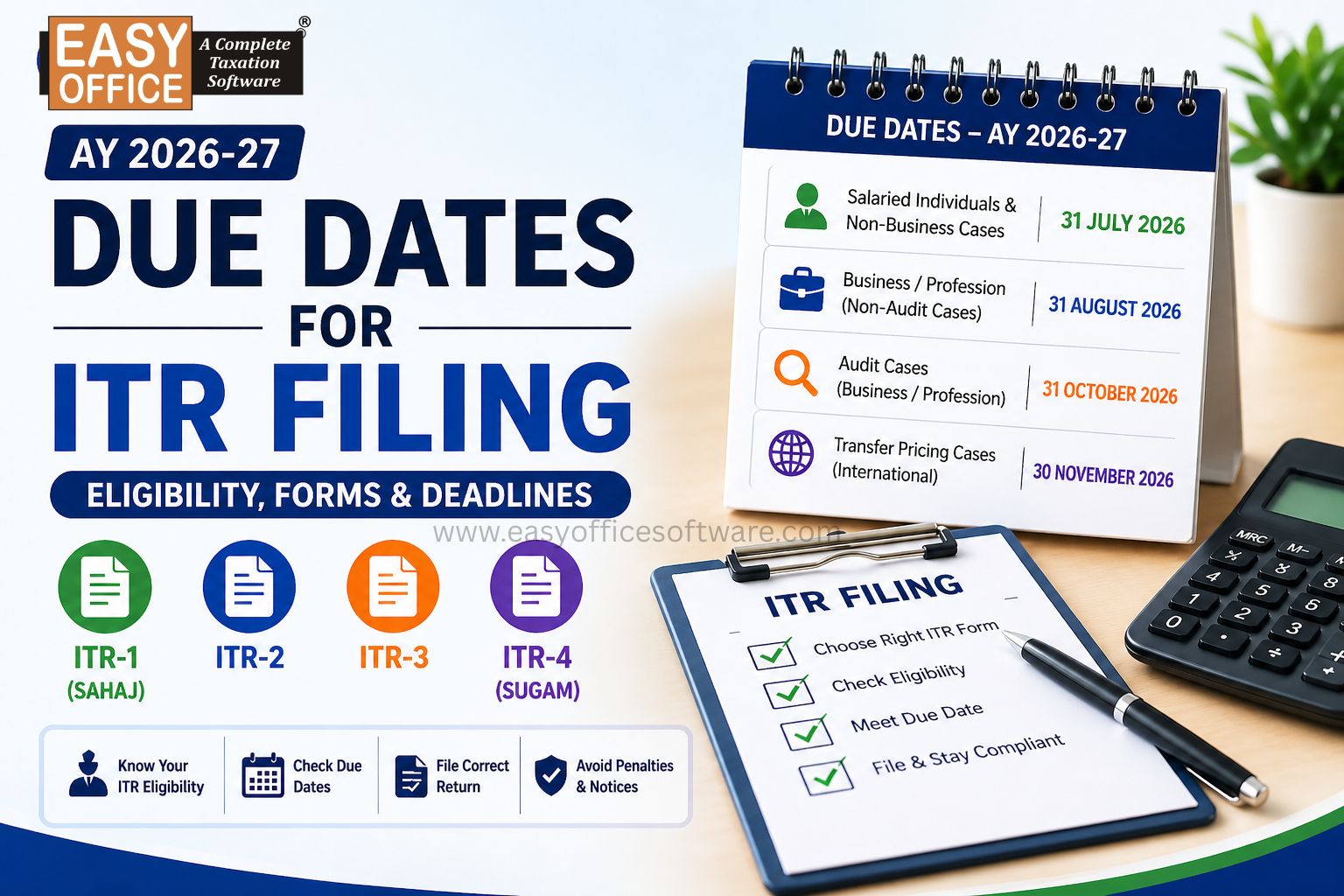
Deadline note: For AY 2026–27, a revised return can generally be filed up to 31 March 2027 or before completion of assessment, whichever is earlier. An additional fee may apply when a revised return is filed after 31 December 2026. Check the current rules before filing.
What Is an Updated Return?
An updated return, also called ITR-U, is a second chance, allows an eligible taxpayer to disclose previously unreported income or correct their tax position after the normal filing and revision deadlines have passed.
It is mostly useful when you need to report income you missed earlier or when the earlier return showed less tax than it should have.
But it is not just another revised return. Update Return has its own eligibility rules, and assessee usually pay additional tax on top.
The department brought it in so that people could come forward and fix their records on their own. It works as a voluntary clean-up route.
Keep in mind:
Separate form (ITR-U) (It must meet the eligibility conditions under the applicable law)
Additional tax is generally payable along with the applicable tax and interest.
It cannot generally be used to claim or increase a refund or reduce the tax liability.
The applicable time limit and additional-tax rate must be checked for the relevant assessment year or tax year.
Revised Return vs Updated Return: What Is the Difference?
The simplest way to see it is purpose and timing. One is a quick fix. The other is a late fix that costs more.
| Point | Revised Return | Updated Return |
| Purpose | Fix errors in a filed return | Report or correct income later |
| Form | Applicable ITR form | ITR-U with the applicable ITR form |
| Timing | Within revised-return period | Within updated-return period |
| Additional tax | None for revising | 25% to 70% of tax and interest (Additional tax generally applies, depending on the filing period and applicable rules) |
| Refund claim | Possible | Not allowed |
| Main use | Correcting an eligible return within the revision window
| Correcting an eligible tax position after the regular revision window |
Important: The updated-return facility has restrictions, and the additional-tax rate depends on when the return is filed. The revised-return deadline and any applicable fee also depend on the relevant year. Check the latest official rules before choosing a filing option.
When Should You File a Revised Return?
A revised return may be appropriate when you discover an error in an eligible return and the revision window is still open.
The common scenarios are:
1. Missed income
It could be because you failed to enter the income earned from sources like interest on savings bank accounts, fixed deposits, freelancing, rent and others.
2. Incorrect deduction
It could be because you made an incorrect entry under any of the sections of the Income Tax Act.
3. Incorrect personal information
There could be some errors in your ITR return which require revision through the proper filing method.
4. Incorrect tax information
It could be because the tax deduction at source and other details are not correct.
Prior to making the new filing, you should compare the ITR with the Form 26AS and AIS/TIS, if any.
When Does an Updated Return Make More Sense?
An updated return becomes applicable where both the regular and revised return deadlines have passed, and the taxpayer still needs to correct the tax position.
For example, suppose a taxpayer discovers in 2028 that interest income was omitted from an ITR filed for an earlier assessment year. If the taxpayer meets the eligibility conditions and remains within the permitted time limit, filing an updated return may be an option for reporting that income and paying the applicable dues.
However, an updated return does not apply in all cases. There are certain cases where the use of an updated return becomes inapplicable according to the law.
That is why taxpayers need to confirm their eligibility before making any assumption on ITR-U.
How Income Tax Filing Software Can Help
A good ITR software keeps your income, deductions and tax details in one place. That alone cuts down on many data-entry slips, which are the main reason people end up revising.
It also makes review easier. You can see your figures side by side before you submit anything, instead of hunting through papers.
Here is a simple way to work with it:
1. Collect Form 16 and bank statements.
2. Check AIS, TIS and Form 26AS.
3. Compare them with your filed ITR.
4. Spot missed or wrong entries.
5. Decide: revised or updated return.
6. Recalculate tax before filing.
For small businesses and CAs handling many returns, this saves real time. Still, software only helps with preparation. You are the one who has to check the rules, deadlines and eligibility.
FAQs
1. Can I file a revised return after filing my original ITR?
Yes. If you find an error or omission, you can usually file a revised return within the prescribed time limit.
2. Is an updated return the same as a revised return?
No. A revised return corrects a filed return within the revision period. An updated return has separate eligibility conditions and usually comes with additional tax.
3. Does an updated return attract additional tax?
Yes, normally. The Additional tax will be at 25% to 70% of the total tax and interest depending on the timing of the return.
4. Is income tax software helpful in preparing revised tax returns?
Yes. The income tax software is useful in organizing your income and tax information and reviewing it before you submit.
5. What should I check before correcting my ITR?
Look at Form 16, bank statements, AIS, TIS, Form 26AS and your deductions. Then decide whether a revised or an updated return applies to you.
6. Can income tax software help with revised and updated returns?
Yes. Income tax software can help organize income and tax details, review calculations and prepare return data. However, you must confirm the applicable filing deadline, eligibility conditions and requirements before submitting the return.
Conclusion
A revised return is the easy, low-cost fix when you catch a mistake early. An updated return is a later option that lets you correct your records, but it comes with conditions and extra tax.
The right choice comes down to timing and eligibility, so check your assessment year before you act. A reliable income tax filing software also helps you review your numbers properly before you file.
Want a simpler way to prepare accurate returns? Explore Easy Office Software and see how its tools can make income tax return preparation and compliance easier.
Revised ITR, Updated ITR, Income Tax Return, ITR Filing
Related Blogs


All in one Software
- Income Tax Software
- TDS & TCS Software
- Audit e-filing Software
- CMA Data Software







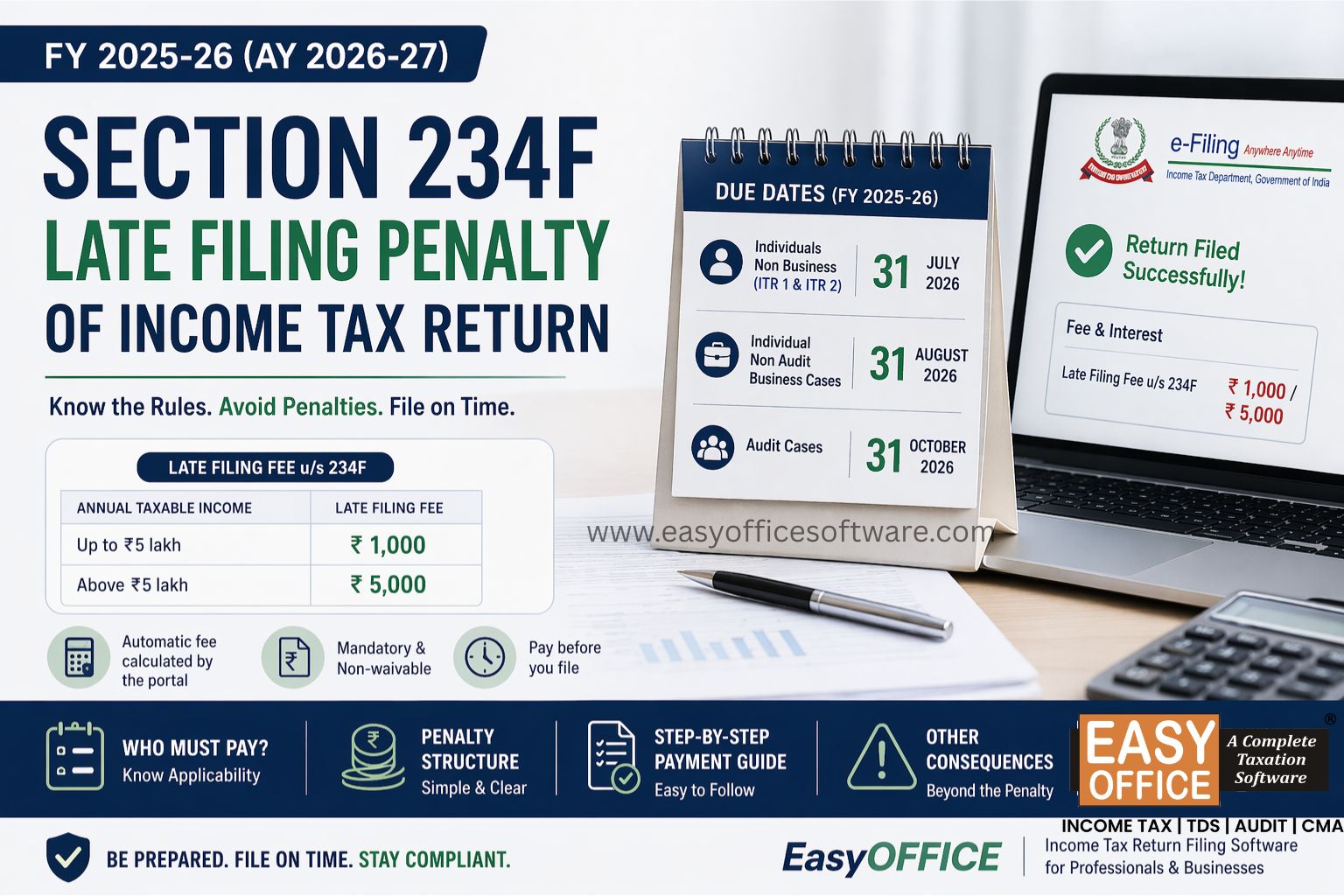
Penalty for Late Filing of Income Tax Return for FY 2025-26 – Section 234F of Income Tax Act 1961
#ITR