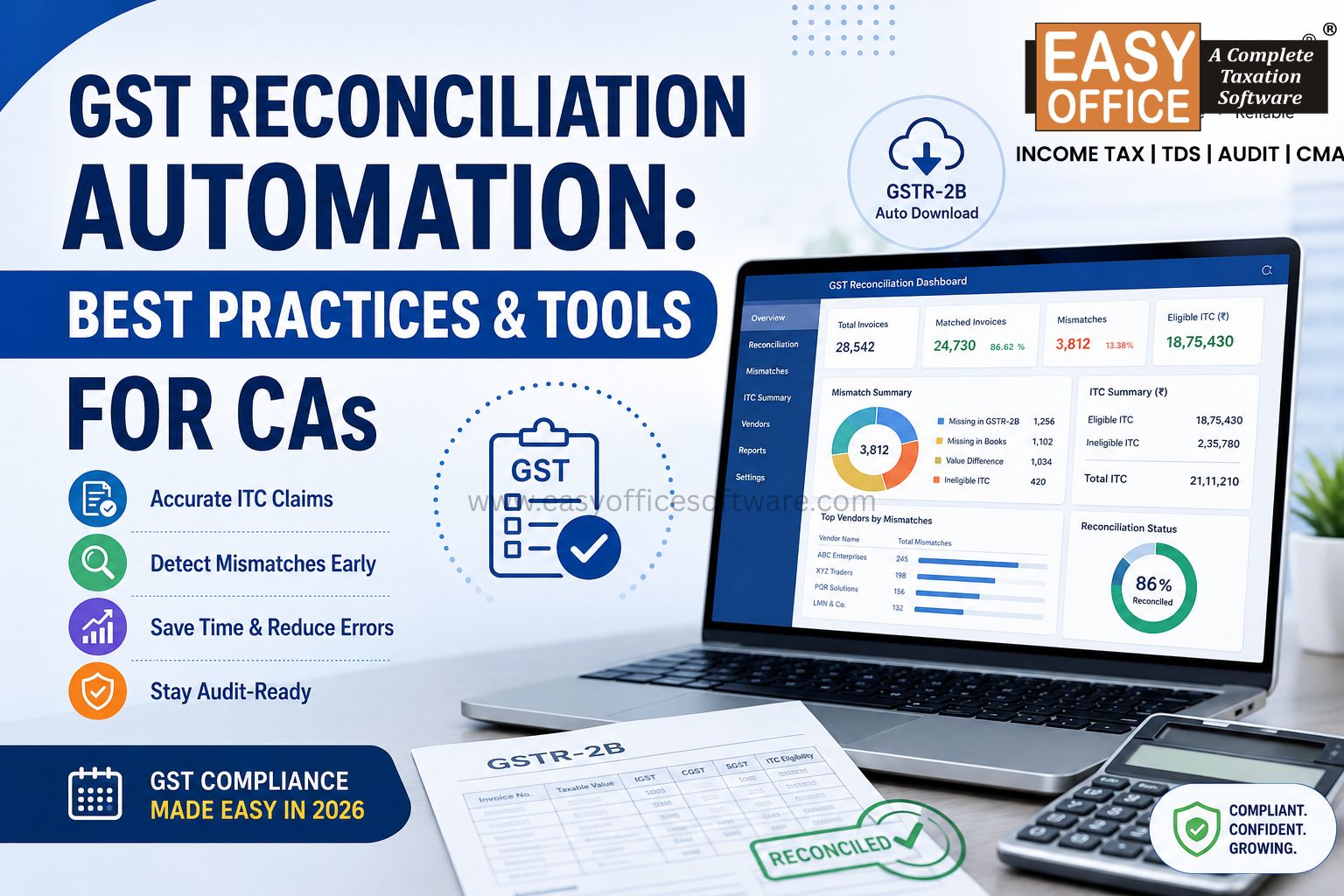
GST compliance in 2026 is about being precise, catching timing right and making sure your data lines up across all your systems. But a lot of people still rely on Excel for reconciliation, that’s asking for trouble, such as mismatches, delays and all those unwanted GST notices.
The shift is clear. If you want to handle GST reconciliation smoothly (and stay out of trouble), you need automated reconciliation in 2026. Good GST reconciliation software takes the pressure off, helps you manage your Input Tax Credit, spots mismatches early and keeps your records ready for audits.
Let’s explore how reconciliation works today - and why automation is no longer optional.
Understanding GST reconciliation in 2026
GST reconciliation refers to verifying your purchase records with auto-populated data from GSTR-2A and GSTR-2B.
GSTR-2A is dynamic and updates continuously as your vendors upload their invoices.
GSTR-2B is static and generated once a month.
GSTR-2B is the legal basis when you claim your Input Tax Credit and GSTR-2A is useful when you want to keep track of your vendors.
Failing to reconcile accurately can lead to incorrect ITC claims, interest, penalties and notices from the GST authorities.
Why is automation no longer optional?
Manual reconciliation:
✔ Cannot handle large datasets efficiently
✔ Is error-prone due to formatting variations
✔ Makes it difficult to track multiple GSTINs
✔ Lacks real-time error detection
By contrast, automated GST reconciliation software offers:
✔ Real-time invoice checks against GSTR-2A/2B data
✔ Automatic ITC eligibility classification
✔ Automated mismatch detection and categorization
✔ Faster reconciliation cycles
✔ Audit-ready reports and dashboards
This reduces risk, speeds up compliance and helps CAs file GST returns accurately and on time.
GSTR-2A vs GSTR-2B: Key differences
| Parameter | GSTR-2A | GSTR-2B |
|---|---|---|
| Nature | Dynamic | Static |
| Update frequency | Continuous | Monthly |
| Cut-off date | No cut-off | Fixed cut-off |
| ITC clarity | Limited | Clear eligible/ineligible ITC |
| Primary Usage | Vendor tracking & early checks | ITC claim basis |
Key insight: Always use GSTR-2B for ITC claims and use GSTR-2A for ongoing tracking and early mismatch detection.
Best practices for GST reconciliation
1. Reconcile monthly, not quarterly
You should perform monthly reconciliations instead of quarterly. The volume of mismatches increases because of delays. It is best to do monthly reconciliation processes to maintain its schedule for ensuring necessary and timely corrections.
2. Match core invoice fields
The verification process must confirm:
✔ GSTIN
✔ Invoice number
✔ Invoice date
✔ Taxable value
✔ Tax amount
The taxable value and tax amount must match for compliance purposes.
3. Categorize mismatches properly
Categorize properly all mismatches into clear groups:
✔ Missing in GSTR-2B
✔ Missing in books
✔ Value differences
✔ Ineligible ITC
A good GST reconciliation software will automate these tax discrepancies and classifications. This way, the process becomes quicker and save hours of manual work.
4. Track vendor compliance actively
The process of matching items to their records creates numerous discrepancies due to delays from suppliers.
Follow up before the submission deadlines. Maintain proof by keeping all records that demonstrate efforts to communicate.
5. Use GSTR-2B as the final reference
Treat GSTR-2B as their ultimate legal reference point. Align your purchase registers and GSTR-2B for ITC verification before GSTR-3B submission.
6. Maintain documentation for audits
You must retain the following documents:
✔ Reconciliation reports
✔ Vendor communication records
✔ ITC calculation sheets
These serve as audit evidence if authorities seek justification for ITC claims.
Step-by-Step Reconciliation Workflow
| Step | Action |
|---|---|
| Data collection | Download latest GSTR-2B and export the purchase register. |
| Matching | Compare invoices across systems. |
| Classification | Categorize mismatches automatically |
| Correction | Follow up with vendors for missing or corrected invoices |
| ITC calculation | Compute the final eligible ITC. |
| Documentation | Maintain reports and audit trail. |
This structured process improves consistency and accuracy.
Common Challenges in Manual Reconciliation
The data mismatch problem occurs due to different formatting standards
✔ The supplier filing process experiences delays when vendors submit their documents.
✔ Chances of duplicate invoices or missing invoices
✔ Excel operations require extended periods to complete
✔ Lack of maintaining any record of their audit activities
These issues can increase compliance risks and reduce the efficiency of your business by slowing down your GST processes.
How GST reconciliation software solves these issues
A modern GST reconciliation software automates all complex tasks.
Key features to look for:
✔ Bulk reconciliation, which enables users to handle large datasets.
✔ ERP connections with Tally, SAP and Excel
✔ AI technology for detecting discrepancies between two data sets
✔ Real-time alerts whenever someone fails to provide required invoices
✔ Reports that display information about each vendor
✔ The ITC tracking dashboard enables users to monitor their ITC expenses.
✔ Automated GSTR-2B downloads and data imports
These features in GST reconciliation software will eliminate repetitive tasks and drastically improve compliance accuracy.
Conclusion
GST compliance in 2026 is all about getting accuracy, speed and following structured processes. Trying to reconcile everything by hand just doesn’t cut it anymore, not if your business or CA firm is on the rise.
With good GST reconciliation software, you claim ITC correctly, cut down on errors and stay ready for audits. You also work faster and make life easier for your clients.
EasyGST is built for CAs and tax professionals who want full automation for reconciliation, mismatch detection, ITC tracking and reporting.
If you’re aiming to handle GST compliance without mistakes and you want your firm to grow smoothly, EasyGST gets you there.
FAQs
What is GST reconciliation software?
GST reconciliation software matches automatically your purchase data with your GST returns, so you can claim ITC accurately.
Why is GSTR-2B important?
It’s the official record you need to claim ITC under GST rules.
How often should reconciliation be done?
Monthly - to maintain accuracy and avoid penalties.
Can the EasyGST software handle multiple GSTINs?
Yes, EasyGST is an advanced tool that lets you reconcile in bulk across several GSTINs.
What happens if you claim ITC incorrectly?
You get hit with interest, penalties and might receive notices from GST authorities.
Related Blogs


All in one Software
- Income Tax Software
- TDS & TCS Software
- Audit e-filing Software
- CMA Data Software





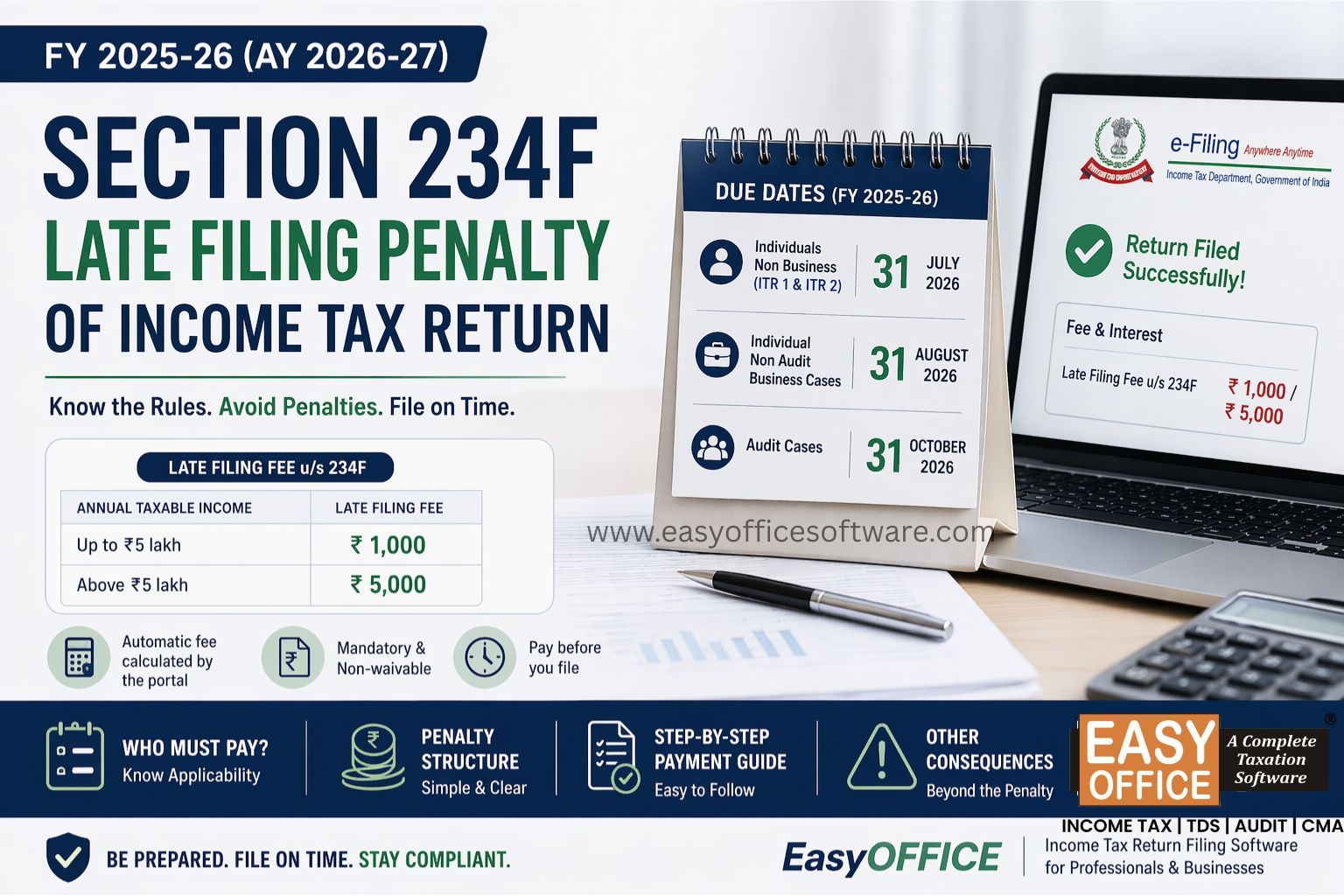
Penalty for Late Filing of Income Tax Return for FY 2025-26 – Section 234F of Income Tax Act 1961
#ITR