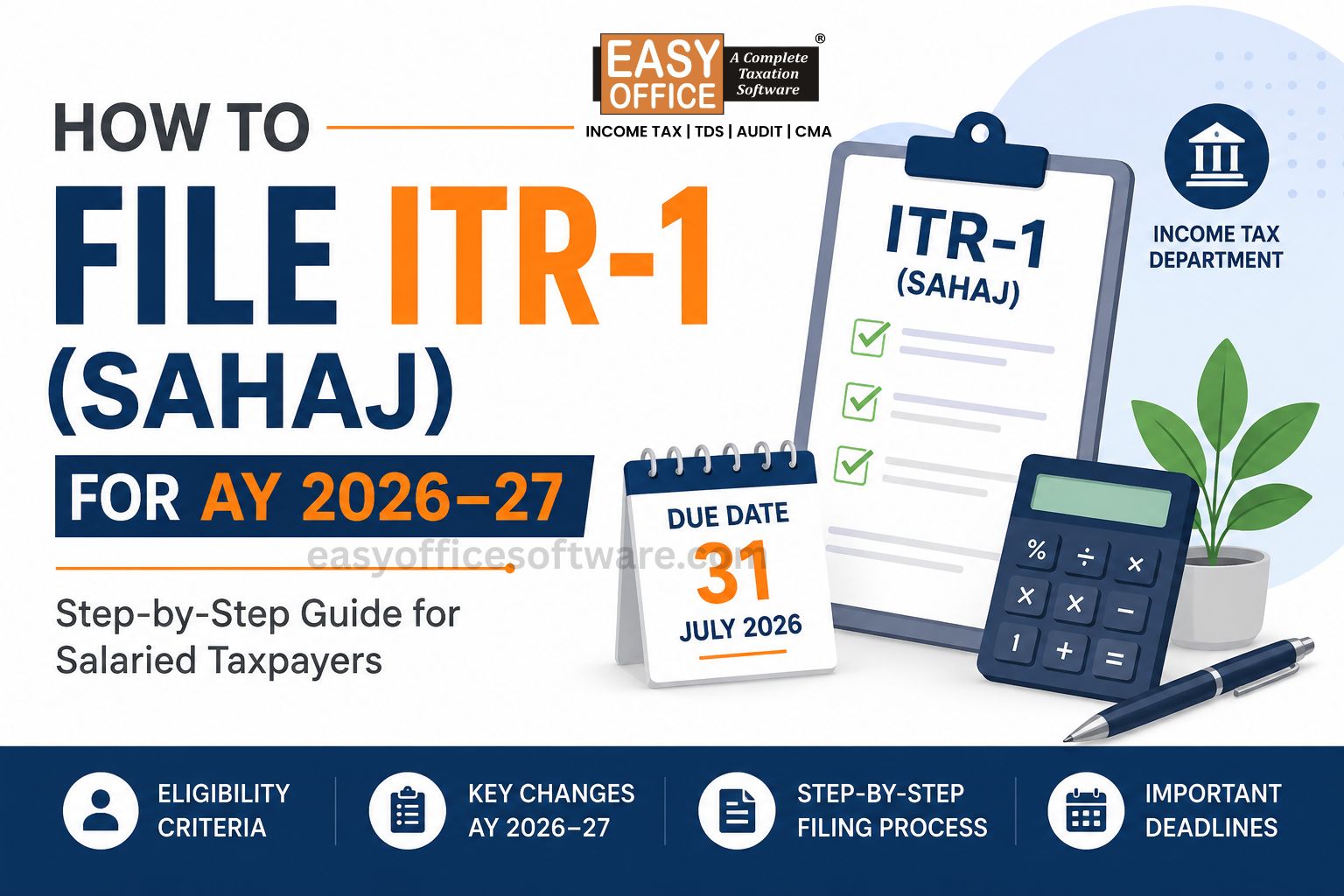
Filing ITR-1 (Sahaj) has always been one of the important yearly activities for the income taxpayers who derive income from salary, pension, one house property, interest, dividends, etc., for up to ₹50 lakhs. The ITR-1 eligibility criteria, structure of the form to be filled, aspects to keep an eye on, together with reliable ITR filing software, are the necessities for a smooth and flawless tax filing experience.
This article takes you through a step-by-step ITR-1 Sahaj Guide guide, a professional walkthrough to stay compliant and error-free.
Who Should Use ITR-1 (SAHAJ)?
“ITR-1 (SAHAJ) is meant ONLY for resident individuals with simple income sources.”
Eligibility Criteria:
You’re eligible to file ITR-1 if, during the financial year:
> You are a resident individual (not RNOR/NRI).
> Your total income ≤ ₹50 lakh.
> Income is from:
> Salary/pension,
> One house property,
> Other sources (interest, family pension, dividend),
> Agricultural income up to ₹5,000,
> Long-term capital gains under 112A up to ₹1.25 lakh (i.e. Exemption limit)
Who Should NOT File ITR-1:
Avoid ITR-1 if:
> You have income > ₹50 lakh,
> Experience business/professional income, multiple house properties, capital gains (beyond ₹1.25 lakh long-term), foreign income/assets, ESOP deferrals, or lottery/racehorse winnings, Director in a company.
Key Points Before You Start
1. Make sure your PAN is active and linked with Aadhaar, as ITR filing is not allowed without this.
2. Refine all your bank accounts for refunds and link your Aadhaar/mobile for e-verification.
3. Collect all your backlog paperwork: Form 16, AIS/TIS, Form 26AS, interest certificates from banks, rent receipts, and proofs of investments.
4. Decide between the old vs. the new tax regime (115BAC), and choose the one that’s beneficial for Assessee.
5. Go for ITR 1 using the offline utility (Excel/JAVA) or just straight through the e-Filing portal or by ITR filing Software.
Step-by-Step ITR-1 Filing Process
1. Registration & Login
Register on e-Filing or log in to the portal with your PAN/Aadhaar. Ensure your status is “Resident” and Aadhaar is e-verified.
2. Prefill & Data Entry
After the confirmation, the portal fetches pre-filled data (salary, TDS, interest, etc.). Check the following to confirm:
I. Salary/pension (Form 16);
II. Annual interest from banks or fixed deposits;
III. House property details (one only) and rent/slab/interest paid;
IV. Deductions under Chapter VI-A (80C, 80D, etc.);
V. Other income (family pension, small agricultural income).
3. Tax Regime Selection
Choose between old and new tax regimes during prefill. Note: the old regime allows deductions; the new one does not, but have slab benefit. Note : New Regime is default from FY 2023-24. If you want Old Regime, you must manually select it.
4. Verification of Tax Paid
Check the AIS/Form 26AS for the TDS on salary, interest, and dividends. Clear off mismatches before filing.
5. Fill Schedules & Claim Deductions
Fill the Income/Deduction in the appropriate schedule:
- Schedule-B1 for salary,
- Schedule-B2 for house property,
- Schedule-B3 for Saving Interest, Dividend Income or any other income,
- Part-C Chapter VI-A deductions.
Ensure deductions are capped accordingly under Sections 80C, 80D, etc.
6. Tax Computation & Self-Assessment Tax
After entering income and deductions, tax, cess, and surcharge are computed automatically by the system; self-assessment tax to be paid (if needed).
7. Verification & Submission
• e-Verify using Aadhaar OTP/EVC/net banking (for incomes up to five lakh rupees); or
• If unable to e-Verify, send the signed ITR-V to CPC Bengaluru within 30 days of filing.
8. Acknowledgement
After verification, you'll receive an acknowledgment and ITR FORM.
Important Considerations
1. Correct Form Selection : Use the "help me decide" tool on the portal to confirm eligibility. The wrongly filed ITR 1 needs to be corrected via a revised return.
2. Maintain Records : Keep proof of investments, rent, interest, and TDS for six years. ITR 1 does not require any attachments; however, documents must be available for future scrutiny.
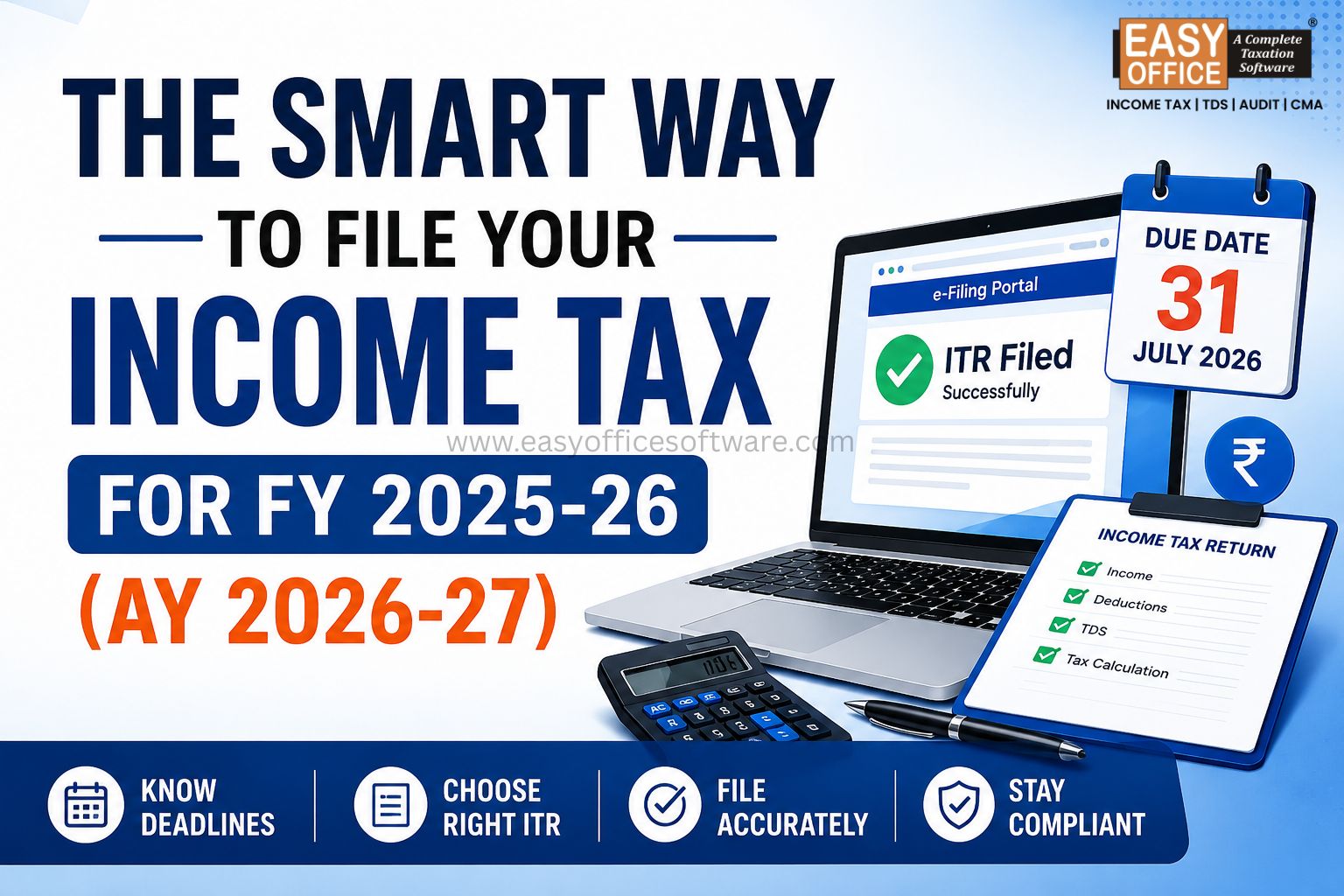
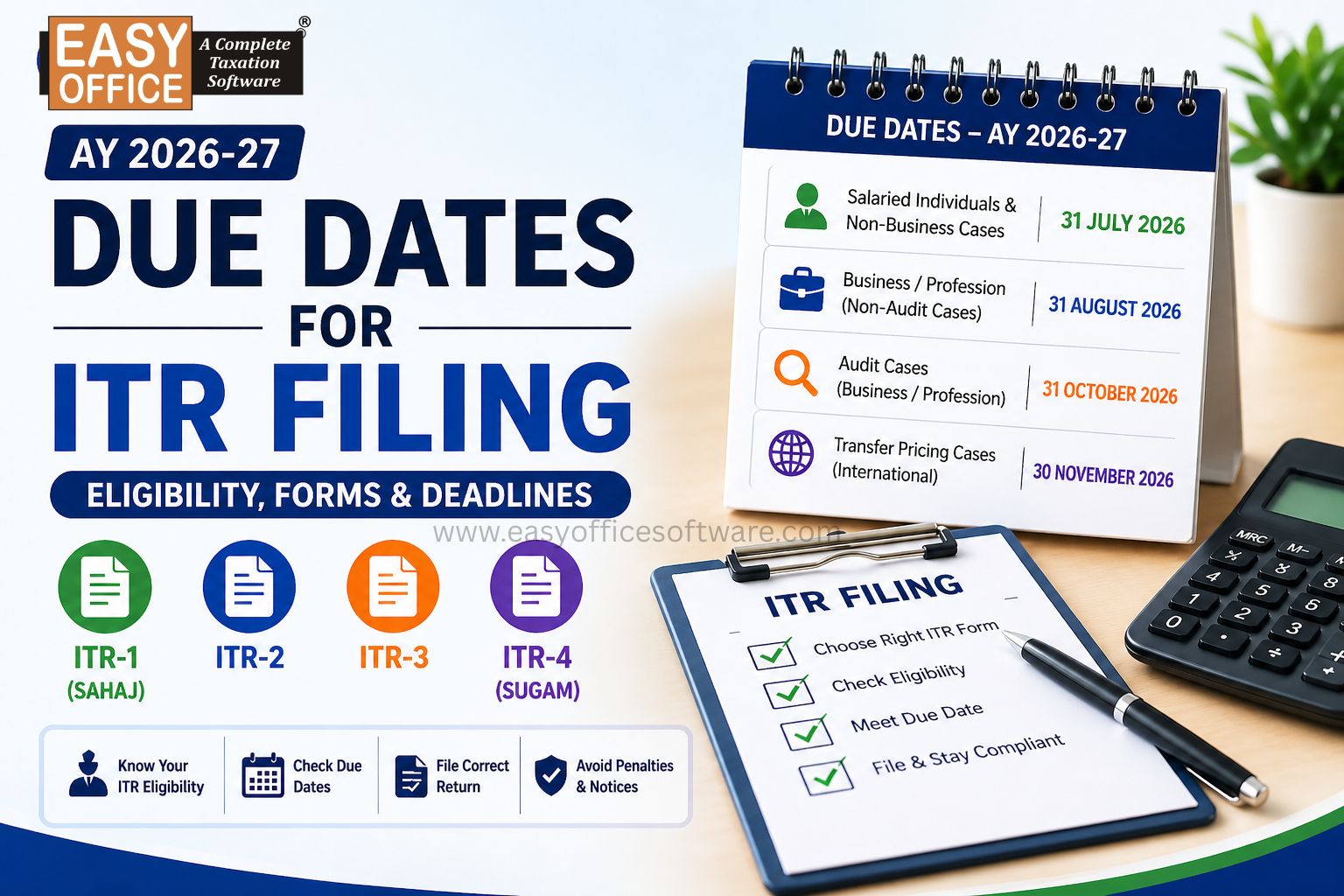
3. Deadline Awareness : File before July 31 or any extended date to avoid late fees and loss of benefits. Penalty for Late Filing of ITR Return may be ₹1000 or ₹5,000.
4. Check Pre-Filled Information : Verify if the following auto-prefilled fields are accurate: TAN, PAN, and tax credit details. Any error here causes a mismatch.
5. Tax Regime Switch Flexibility : You can freely switch between regimes any year, just choose before filing and post-deduction accordingly. Even If your employer has chosen the incorrect tax regime in Form 16, you can still change it during ITR filing.
Boost Efficiency with ITR Filing Software
Some of the basic functionalities to expect from ITR-filing software that you might want to get for a smooth and enhanced filing experience:
> Auto-Prefill and AI-Assisted Data Fetch (salary details, TDS details, and bank interest).
> Deductions summary and tax burden comparison for various regimes.
> Built-in calculations prevent manual errors.
> E-verify seamlessly and track your Return Status (Aadhaar/EVC).
> Reduce the Manual work and save the time.
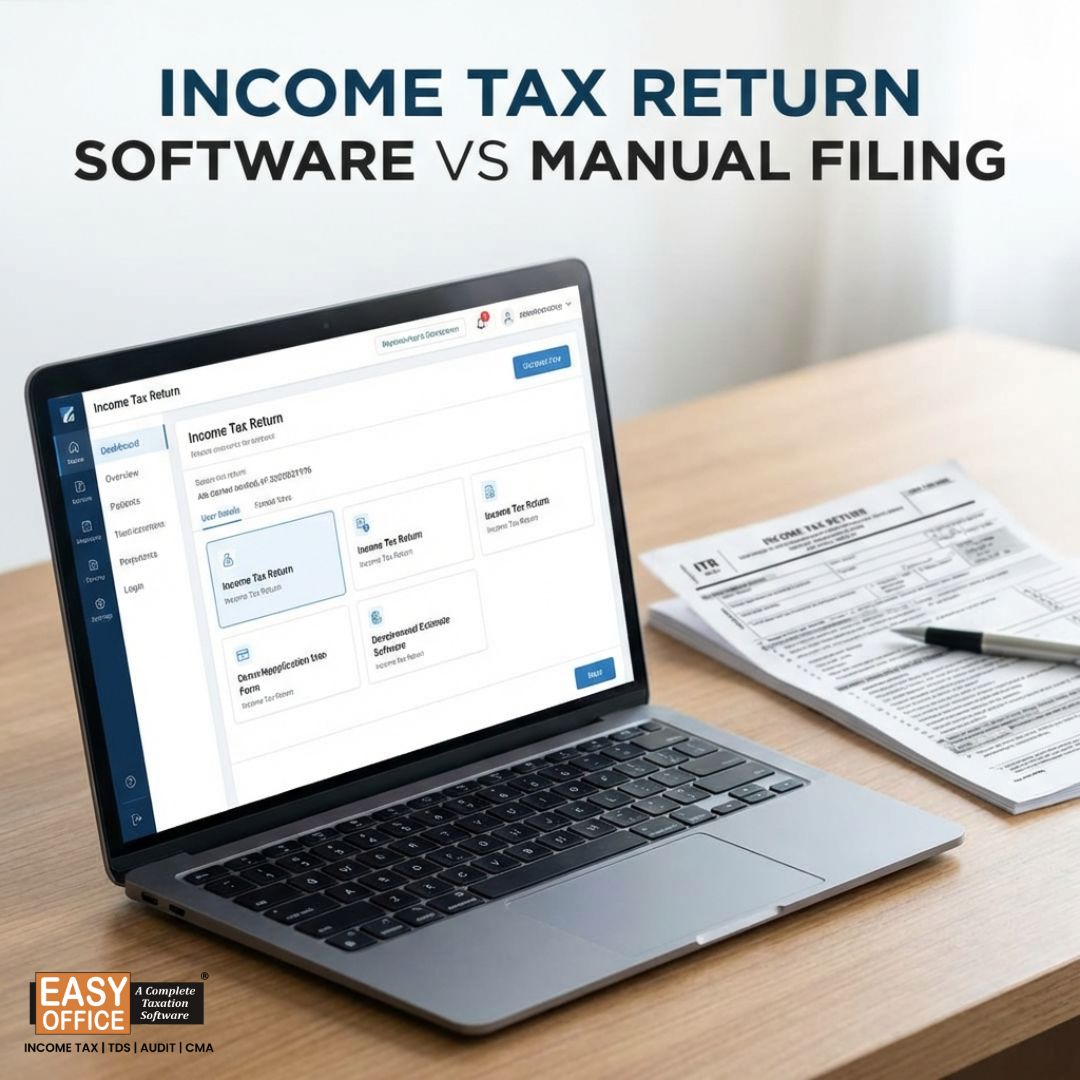
Compared to portal filing, professional software reduces errors, supports bulk entries, auto-selects the correct ITR form, and generates JSON instantly and File ITR online. The recommended ITR filing software is EasyOffice Software, as it supports ITR 1 to ITR 7 and even ITR U (Updated Return) e-filing.
Conclusion
Filing an ITR 1 may be simple, straightforward, and even swift when approached methodically. Factors that contribute to its success include:
1. Confirming eligibility and application type.
2. Reviewing accurate data through pre-filled information.
3. Collecting documents in an organized way.
4. Ensuring that regime and deduction claims are loaded correctly.
5. Filing within the stipulated time and making the e-verification.
6. Making use of top-rated software for ITR filing.
When these factors are put together, one will not just ace their responsibility to pay tax but also make the entire process simple, painless, and rewarding. Here's to effortless ITR-1 filing 2025 and stress-free tax compliance!
FAQ
1. What is ITR-1 (Sahaj) and who can file it for AY 2025–26?
ITR-1, also known as Sahaj, is the simplest income tax return form for resident individuals earning up to ₹50 lakh from salary, pension, one house property, capital gain u/s 112A up to ₹1.25 lakh or other sources like interest or dividends. People having foreign income, multiple properties, or business income cannot file ITR-1.
2. What documents are required to file ITR-1 online for AY 2025–26?
To file ITR-1 online, keep the following documents ready: Form 16, AIS/TIS, Form 26AS, salary slips, bank interest certificates, dividend statements, home loan interest certificates (if applicable), proof of deductions (80C, 80D, etc.), and details of your pre-validated bank account for refunds.
3. How to file ITR-1 online in 2025?
You can file ITR-1 online through the Income Tax e-Filing portal or by using a trusted ITR filing software like EasyOffice. The process includes verifying your personal details, checking prefilled data, selecting the correct tax regime, entering income and deductions, calculating tax, and e-verifying the return.
4. Can I choose between the old and new tax regimes while filing ITR-1?
Yes. While filing ITR-1, you can easily switch between the old tax regime (with deductions) and the new tax regime (lower tax rates without deductions). The tax calculation differs for both regimes, so choose the option that provides a lower total tax liability.
5. Which is the best software for filing ITR-1 in India for 2025?
One of the best and most reliable ITR filing tools is EasyOffice ITR Software, which supports ITR-1 to ITR-7, provides accurate tax calculations, auto-prefill from AIS/26AS, error-free JSON generation, old vs. new regime comparison, and easy ITR-U (updated return) filing. It is widely used by CAs, tax professionals, and businesses across India.
6. Can ITR-1 be filed if I have capital gains?
Yes. From AY 2025-26, capital gains u/s 112A is allowed up to ₹1.25 lakh in ITR-1.
7. Can non-residents (NRI) file ITR-1?
No. ITR-1 is only for resident individuals, not NRIs or RNORs (Resident but Not Ordinarily Resident).
8. Can I file ITR-1 if my employer has deducted wrong TDS or chosen the wrong tax regime?
Yes. Even if your employer selected the wrong regime or deducted incorrect TDS, you can correct it while filing ITR-1.
9. Can I file ITR-1 if I received arrears or relief under Section 89(1)?
Yes. Salary arrears, advance salary, or relief under Section 89(1) can be reported in ITR-1 using Form 10E details.
10. Do I need to report all my bank accounts in ITR-1?
Yes. You must report all active bank accounts and select one account for refund.
Related Blogs



All in one Software
- Income Tax Software
- TDS & TCS Software
- Audit e-filing Software
- CMA Data Software










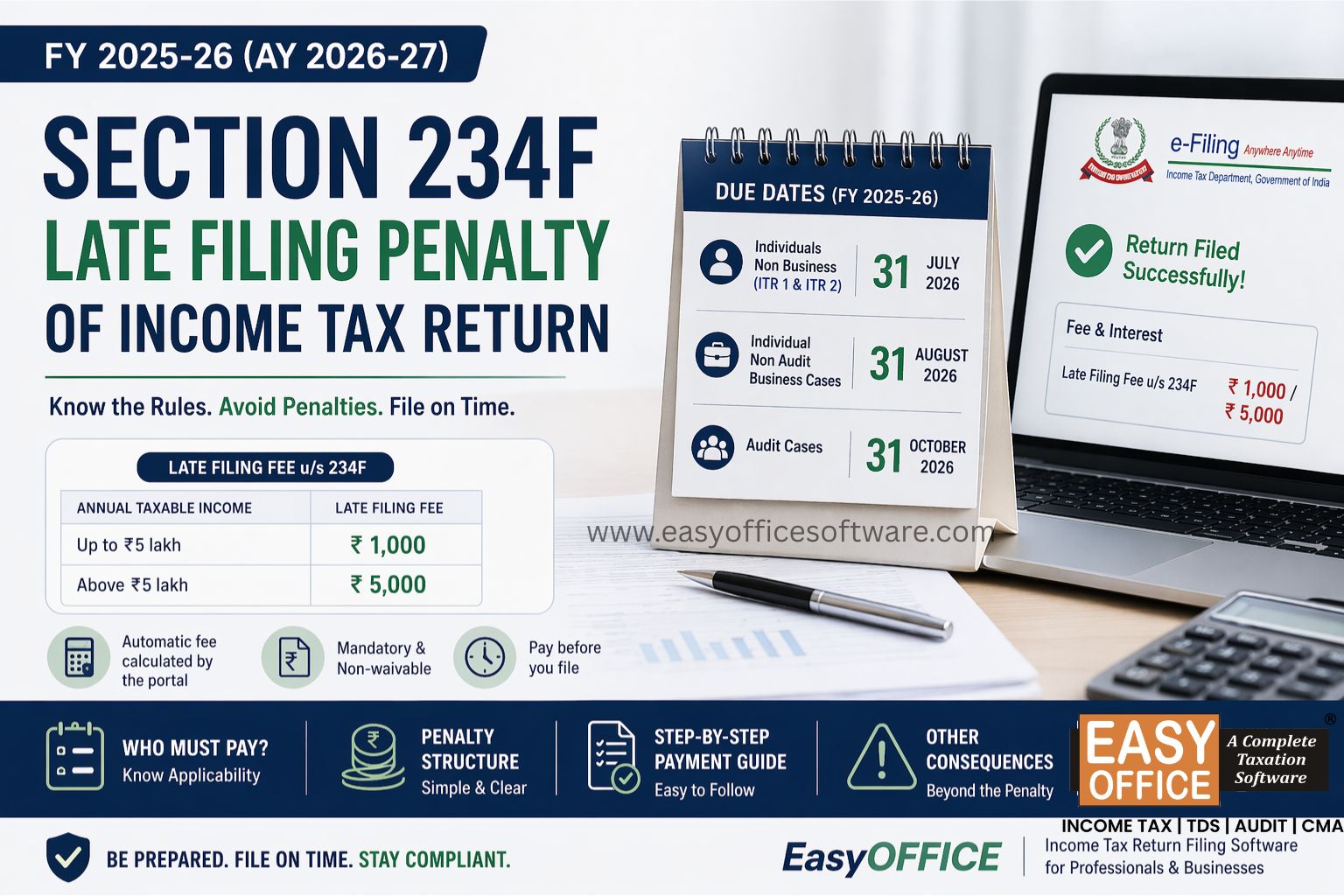
Penalty for Late Filing of Income Tax Return for FY 2025-26 – Section 234F of Income Tax Act 1961
#ITR